
Forensic Engineer Property Damage Assessment in Miami
Visible damage is only the starting point. A forensic engineer property damage assessment examines how and why a building was damaged, using site observations, records, and engineering analysis to evaluate the cause, extent, and severity of the loss. It can help distinguish storm damage from deterioration or other pre-existing conditions, but it does not determine whether an insurance policy covers the loss.
After a storm in Miami, water stains, roof damage, or new cracks may have more than one possible cause. A careful assessment connects physical evidence to the building’s condition and the reported event, rather than treating every visible defect as proof of a single explanation.
This article explains what forensic engineering involves, how engineers assess property damage and distinguish storm effects from pre-existing conditions, and what inspection records and other evidence can show. It also describes the assessment process and when engineering analysis can help clarify an uncertain or disputed cause of damage.
Table of Contents
What Is Forensic Engineering?
Forensic engineering applies engineering principles to investigate building damage and determine its cause, extent, and implications. In storm claims, it connects observed conditions with the reported event and the building’s performance.
Engineering’s Role in Storm Claims
A forensic engineer examines damage patterns, structural behavior, and relevant records to assess whether wind, water, debris, or another mechanism explains the loss. The evaluation may cover roofs, walls, foundations, framing, or building systems. Timely documentation after a catastrophe can preserve evidence while a claim is assessed. An engineer provides technical findings, not a decision about insurance coverage.
Damage Cost Evaluation
An engineering evaluation can define affected areas and the work needed to address documented damage. That technical scope can inform repair planning and insurance claims, while policy interpretation and settlement remain separate decisions. The cost and timeline of a report depend on the issue’s complexity, the building’s size and affected area, the type and extent of testing, and whether litigation support is needed. Site access and available evidence also shape the work sequence.
Reports for Claim Decisions and Disputes
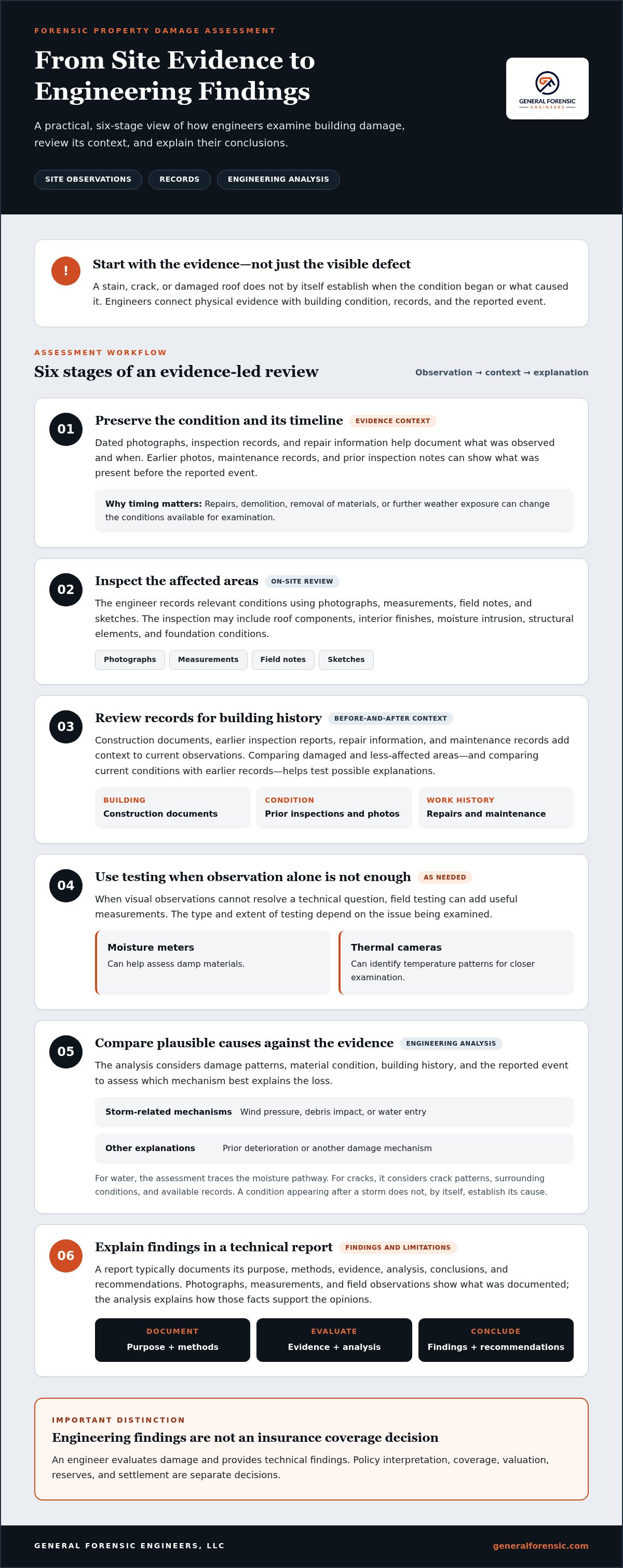
A report typically records its purpose, methods, evidence, analysis, conclusions, and recommendations. Photographs, measurements, and field observations show what the engineer documented; the analysis explains how those facts support the opinions. In Miami, the assessment should apply relevant engineering principles and building requirements, and the report should clearly explain its methods and limitations. A home inspector generally records visible defects, while a forensic engineer investigates why damage occurred. Contractors perform repairs; adjusters handle policy interpretation, coverage, valuation, reserves, and settlement.
When an Engineering Evaluation May Be Needed
Consider an evaluation when the reported cause is uncertain, several damage mechanisms are plausible, or reports conflict. It can also help when structural performance or building-system behavior requires specialized analysis. Delaying documentation, repairing or demolishing affected areas, or removing materials can change the conditions available for examination. Further weather exposure can also alter evidence. After a catastrophe, dated photographs, inspection records, and repair information help preserve the sequence of observed conditions as a claim is assessed.
Distinguishing storm damage from pre-existing conditions
Damage that appears after a storm does not establish when it began or what caused it. Engineers compare physical patterns, material condition, and available records to assess whether storm forces, prior deterioration, or another mechanism best explains the loss.
Assessing Storm and Wind Damage
For hurricane and wind evaluations, the engineer examines affected roof, wall, and framing components for patterns consistent with wind pressure, debris impact, or water entry. The location and distribution of damage matter: a localized opening, displaced material, or related interior moisture may help explain how the building performed during the storm.
Comparisons across damaged and less-affected areas help test whether the observed condition aligns with the reported event. Earlier photographs, maintenance records, and prior inspection notes can establish what was present before the storm. A forensic damage assessment can document these observations and support an accurate, defensible analysis, including when findings may be relevant to litigation.
Evaluating Water, Fire, and Foundation Damage
Water stains require tracing the moisture pathway, not just locating the visible mark. An engineer may assess roof openings, exterior components, and interior conditions to distinguish wind-driven rain from an older leak or another source. Material deterioration and moisture distribution can help establish whether damage is confined to one area or extends into adjoining building components.
For fire damage, the evaluation considers affected materials and structural performance. For foundation or wall cracks reported after a storm, engineers examine crack patterns, surrounding conditions, and available records to assess movement and possible causes. The reported timing matters, but physical evidence and building history must also be considered.
Owners can preserve useful comparison evidence by keeping dated photographs, repair documents, and prior inspection records together. This chronology helps connect observed conditions with storm exposure and distinguish new damage from conditions that were already present.
Inspection, documentation, and evidence analysis
A forensic inspection combines site observations, records review, and evidence analysis. Each step helps investigate building conditions that a visual walkthrough alone may not explain.
Site Inspection and Evidence Collection
At the property, the engineer documents affected areas with photographs, measurements, field notes, and sketches. The inspection may cover roof components, interior finishes, moisture intrusion, structural elements, and foundation conditions relevant to the reported damage. Records add context: construction documents, earlier inspection reports, and repair information help compare current conditions with prior observations. The U.S. Government Publishing Office describes a forensic engineering report that includes damage photographs and analysis of likely cause.
Field Testing and Inspection
When visual observations cannot resolve a technical question, field testing can add useful measurements. Moisture meters can help assess damp materials, while thermal cameras can identify temperature patterns that merit closer examination. These tools support, rather than replace, engineering analysis. The engineer interprets readings alongside building materials, site conditions, and documented damage. Further testing or laboratory analysis may be recommended when the initial inspection cannot adequately address the cause.
Inspection Limits and Preserved Records
A surface-level inspection can record visible defects without explaining why they occurred or whether concealed components are affected. A ceiling stain, for example, shows a visible condition, but tracing the intrusion may require examining the roof, surrounding materials, and moisture pathway. Owners should keep the reported loss date and description, dated photographs, inspection records, mitigation and repair information, and relevant construction documents together. These records help establish the sequence of observed conditions.
Photograph damage before repairs alter the evidence, and retain records of any work already completed. If material removal or destructive examination is necessary, the report should distinguish direct observations from conclusions based on records or testing. Clear documentation lets another reviewer follow how the evidence supports the analysis and understand its limits.
Property loss damage assessment
A forensic engineer property damage assessment connects reported damage with building performance. The engineer identifies affected areas, evaluates plausible causes, and determines how far the observed condition extends. Storms, water intrusion, fire, foundation movement, and mechanical failures can each produce distinct patterns across roofs, walls, framing, and building systems.
The investigation begins with the reported loss and available records. The engineer compares site observations with photographs, inspection records, construction documents, and mitigation or repair information. This comparison helps separate documented defects from assumptions and directs further inspection or testing toward unresolved questions. For example, damage confined to one roof area may call for a different analysis than related distress across framing and interior finishes.
Structural evaluation considers how loads travel through foundations, walls, roofs, and framing, and whether observed failures align with the reported event. Material condition matters: deterioration, prior repairs, or moisture exposure can affect how components respond to new stress. Findings should explain the root cause supported by evidence, distinguish contributing conditions, and define the extent of affected materials without implying policy coverage.
Early engineering involvement can preserve useful information before mitigation, repairs, demolition, weather exposure, or material removal changes the conditions available for evaluation. Owners can gather the loss date and description, photographs, construction documents, inspection records, and repair information. This record helps establish what was observed and when, and supports a more focused site investigation.
When initial observations cannot resolve the technical issue, further testing, calculations, material analysis, or specialist input may be recommended. A second forensic engineer property damage assessment may clarify how competing explanations fit the available evidence. A sound report explains its methods, evidence, analysis, findings, and limitations. If the evidence cannot support a definitive engineering conclusion, the report should say so and explain why. This clarity matters when findings inform repair strategies, claim decisions, or a dispute.
For an engineering evaluation of building damage, request an expert forensic damage assessment focused on the reported loss and the evidence available.
General Forensic Engineers: Expert Forensic Damage Assessment
General Forensic Engineers, LLC provides expert forensic damage assessments to investigate building failures, property damage, and the evidence behind their causes. Consider an assessment when storm damage has an uncertain origin, inspection findings conflict, or a property loss needs technical analysis for a claim or dispute.
For commercial buildings, pre- and post-hurricane assessments can document conditions around a storm event. Residential and commercial property inspections address observed building conditions, while recertification and milestone inspections assess properties within their respective scopes. The appropriate evaluation depends on the property and the engineering questions involved. Findings support technical understanding, but do not determine insurance coverage or provide repairs.
Set the Next Step in Motion
Before commissioning an evaluation, identify the decision the technical analysis needs to inform. A concise description of the reported loss, areas of concern, and unresolved questions about the cause helps define a focused scope. Gather relevant photographs, inspection notes, and repair records so the discussion can begin with the property’s documented history.
A forensic engineer property damage assessment provides a structured technical basis for evaluating building conditions. General Forensic Engineers, LLC offers expert forensic damage assessments, pre- and post-commercial property hurricane assessments, and residential and commercial property inspections. The right scope depends on the property and the specific engineering questions involved.
Share the property concern and the available records with General Forensic Engineers, LLC to discuss an appropriate assessment. Contact General Forensic Engineers, LLC to take that next step with a clear technical question and a documented starting point.
Frequently Asked Questions
What does a forensic engineer do in a property damage assessment?
A forensic engineer analyzes building conditions to develop an evidence-based opinion about damage mechanisms and building performance. For example, the engineer may compare a roof opening, interior water patterns, and material condition to assess whether they fit the reported storm event. This is technical analysis, not a coverage decision: engineering findings can clarify physical causes, while policy interpretation remains separate.
When should a property owner hire a forensic engineer after damage?
Consider an evaluation when the cause remains uncertain, technical reports conflict, or damage continues despite prior repairs. In Miami, recurring roof leaks after a storm or new structural movement may raise questions that require engineering analysis. Arrange the evaluation while relevant conditions remain observable, particularly before damaged materials are removed. If there is an immediate safety concern, address it first and preserve photographs and records of the affected areas.
What are the steps in a forensic property damage investigation?
An investigation generally moves from defining the technical question to reviewing records, examining the property, and analyzing findings. Owners can help by identifying affected locations and providing a clear loss chronology. The engineer then determines whether measurements, calculations, material testing, or further specialist analysis are needed. The final report explains the methods, evidence, conclusions, and limitations so readers can follow how the opinion was reached.
How do forensic engineers assess fire, water, storm, structural, and foundation damage?
Engineers compare observed conditions with plausible damage mechanisms and examine how building materials and components responded. Fire analysis may focus on affected materials and structural behavior; water analysis traces moisture pathways. Storm evaluations consider wind, water, and debris effects, while structural or foundation investigations examine movement, cracking, and load paths. The evidence and testing depend on the damaged component and the engineering question.
How does a forensic engineering report support an insurance claim or lawsuit?
A report gives claim reviewers or legal teams a traceable technical basis for understanding the property’s condition and the engineer’s conclusions. It can help compare competing explanations by connecting documented observations to analysis and identifying limitations that affect interpretation. The report does not decide coverage or determine the outcome of a lawsuit. Its value is in presenting engineering opinions clearly enough for others to evaluate and challenge.
How can I verify a forensic engineer’s license, credentials, and experience in the United States?
For a Miami property, confirm the engineer’s identity and license status through the relevant Florida engineering licensing authority’s public records. Compare the listed credentials with the assigned work, then ask about experience investigating similar buildings and damage mechanisms. Report-writing or expert testimony experience may be relevant in a dispute. Review the engineer’s stated qualifications and client testimonials for context, not as a substitute for license verification.


Comments