
Property Damage Assessment in Miami for Storms and Repairs
Storm damage can extend beyond what a street-level view reveals. A property damage assessment in Miami documents visible impacts, examines roof conditions and signs of moisture, and evaluates evidence to help determine the likely cause. Miami-Dade County’s damage survey records storm impacts, but submitting it does not file an insurance claim.
It is natural to focus first on damage you can see. A thorough assessment also considers how exterior conditions relate to interior symptoms, what may be concealed, and whether a repair estimate addresses the observed damage.
This article explains how to document storm damage, what a roof and mold assessment may involve, and how an independent evaluation can clarify disagreements about cause or repair scope. It also covers when a forensic assessment, testing, or loss estimate may help you understand the evidence and decide what to do next.
Table of Contents
Documenting storm damage and establishing causation
A useful damage record connects the storm, observed building conditions, and resulting repair needs. Keep county damage reporting separate from insurance claim documentation.
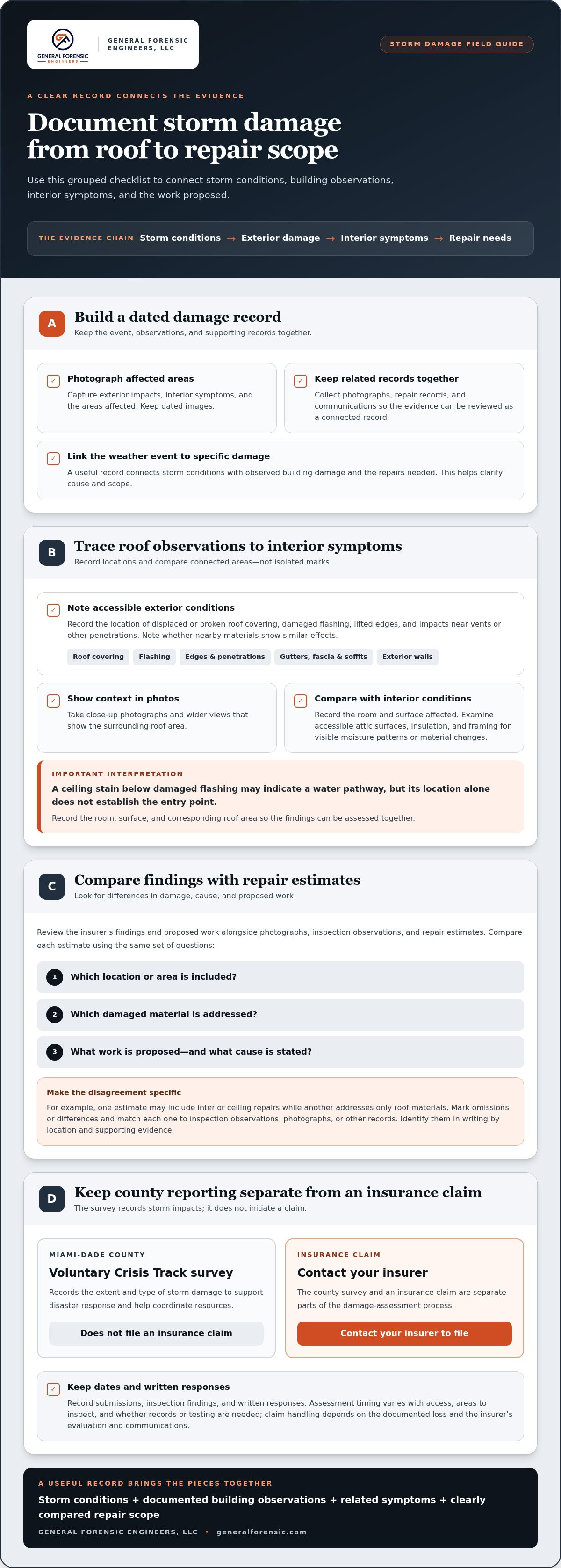
Miami-Dade County’s voluntary Crisis Track survey records the extent and type of storm damage to support disaster response. It does not file an insurance claim. Photograph exterior impacts, interior symptoms, and affected areas. Keep dated images, repair records, and communications together. Linking the weather event to specific damage helps clarify cause and scope.
Insurance Settlement Documentation
Compare settlement documents with your damage record and the proposed repair scope. Review the insurer’s findings, listed damage, and proposed work alongside photographs, inspection observations, and repair estimates. If an item is omitted or differs, identify the location and supporting evidence in writing. Florida insurers must promptly evaluate losses, communicate clearly, and pay valid claims without unreasonable delay.
Florida Hurricane and Flood Assessment Rules
Florida’s damage assessment process involves both local reporting and an insurance claim. Miami-Dade County’s voluntary damage survey helps assess disaster impacts and coordinate resources, but submitting it does not initiate an insurance claim. Contact your insurer to file a claim. If physical damage may significantly affect a property’s use or condition, provide the county survey with as much information as possible.
No single assessment or claim timeline applies to every Miami property. Assessment timing depends on access, the areas to inspect, and whether records or testing are needed. Claim handling depends on the documented loss and the insurer’s evaluation and communications. Keep dated records of submissions, inspection findings, and written responses. This timeline helps distinguish the assessment from claim review and settlement discussions.
Foremost PA explains that documentation connects the weather event to exterior damage, interior symptoms, photographs, and repair scope.
Miami-Dade County’s survey does not file an insurance claim. Contact your insurance provider to file one.
Disputes over repair estimates and independent assessments
Estimate disputes are easier to understand when you compare competing scopes line by line. Focus on omitted damage, the assumed cause, and whether the proposed work addresses the same conditions.
An insurer’s adjuster evaluates a loss for the insurance company. A public adjuster represents the policyholder in presenting and negotiating an insurance claim. An independent assessor examines physical damage, likely cause, and repair scope, providing technical findings rather than adjusting the claim.
To find a licensed professional in Florida, first identify the role you need, then search the state’s official licensing records for that profession. Review the credential, current status, and scope of work. A public-adjuster credential and an inspection qualification serve different purposes.
Repair Estimate Disputes
Compare each estimate by location, damaged material, proposed work, and stated cause. For example, one estimate may include interior ceiling repairs while another addresses only roof materials. Mark each difference and match it to inspection observations, photographs, or other records. This makes the disagreement specific: an omitted area, a different repair method, or a disputed link between storm impact and building damage.
Independent Property Assessments
An independent assessment can document building conditions and test whether the proposed repair scope corresponds to observed damage. The assessor can examine disputed areas, identify evidence supporting or weakening a proposed cause, and explain technical differences between estimates. Ask whether the written findings identify locations, observations, and reasoning clearly enough to compare against each estimate. A forensic damage assessment can help clarify those technical questions.
Some Florida property insurance policies contain an appraisal clause. Under such a clause, each side may hire an independent appraiser; if they cannot agree, an umpire may issue a binding decision. Review the policy language to understand how the clause applies, which issue is submitted, and how the appraisers’ conclusions relate to the disputed repair scope. Appraisal addresses valuation disagreements, while a technical assessment documents damage and cause.
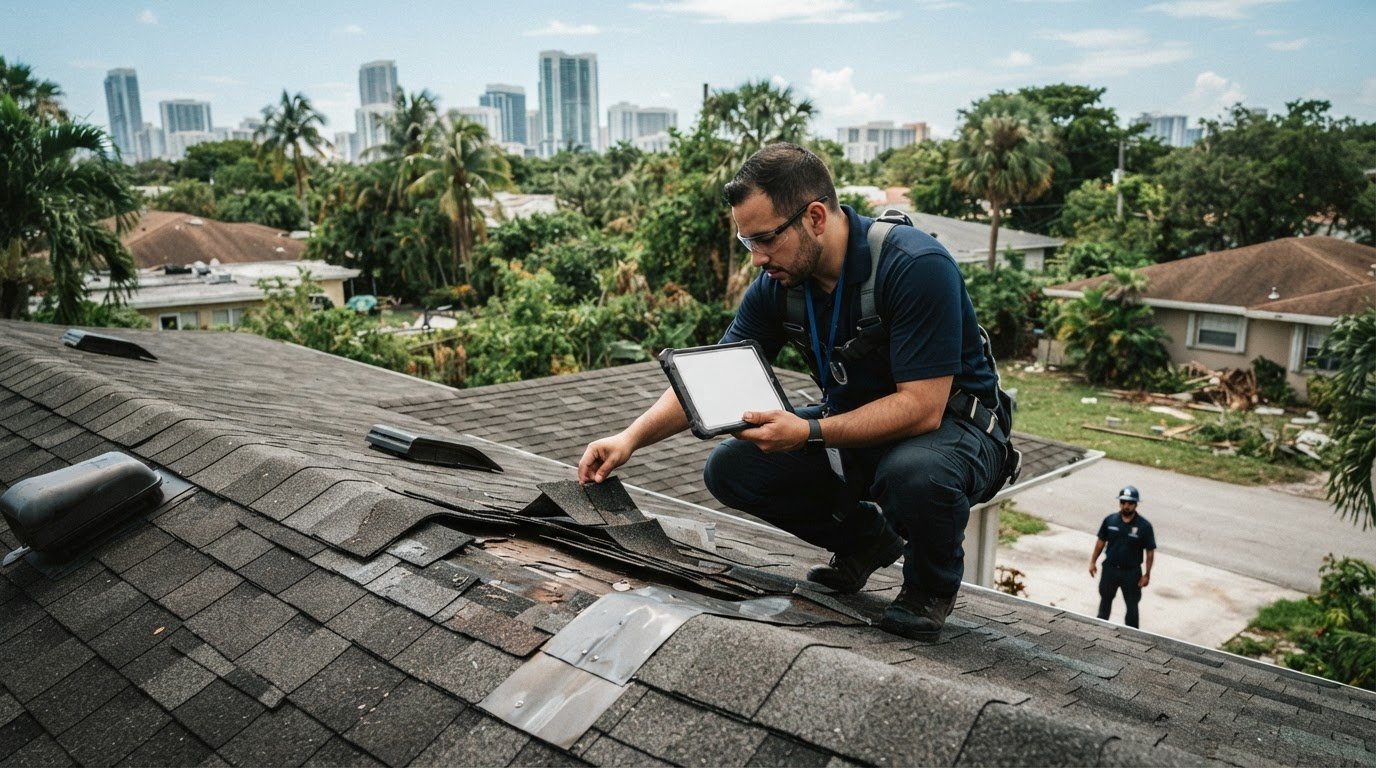
Inspecting storm damage to roofs and property
After a severe storm damages a Florida building, arrange a damage assessment promptly. A property damage assessment in Miami should examine roof conditions alongside related building areas. This helps distinguish visible impacts from symptoms that may appear indoors. A roof inspection also considers whether the damage is consistent with the reported storm conditions.
Start with accessible exterior observations. Record displaced or broken roof covering, damaged flashing, lifted edges, and impacts near vents or other penetrations. Note each condition’s location and whether nearby materials show similar effects. Gutters, fascia, soffits, and exterior walls can provide further evidence of how wind or water affected the structure. Take close-up photographs and wider views showing the surrounding roof area.
Next, compare exterior findings with interior conditions. A ceiling stain below damaged flashing, for example, may indicate a water pathway, but its location alone does not establish the entry point. Examine accessible attic surfaces, insulation, and framing for visible moisture patterns or material changes. Record the room, surface, and corresponding roof area so the findings can be assessed together rather than as isolated marks.
Consider how building components connect. A roof opening may allow water to reach wall cavities or interior finishes, while damage to an exterior opening can create a different pathway. Document the sequence of observed conditions, from roof or wall impact to interior symptom. This provides a clearer basis for distinguishing storm-related damage from unrelated deterioration or earlier repairs.
For each affected area, organize the record by location and condition:
Identify the roof plane, room, wall, or building component.
Describe visible displacement, cracking, staining, or moisture.
Connect related exterior and interior observations without assuming cause.
Note areas that require further examination to resolve the damage pathway.
This structured inspection supports a defensible evaluation of roof and property damage. In Florida, strong winds cause most storm damage to buildings and homes, so roof covering, flashing, and connected surfaces warrant careful examination.
Common property damage in Miami, including mold and hurricane damage
Storm damage is the most common type of building and home damage in Florida. Strong winds cause most of that damage, but wind is only one part of a Miami property investigation. Hurricanes, tidal surges, and tornadoes can cause physical damage that may affect a property’s fair market value in Miami-Dade County.
Inspect beyond obvious roof impacts. Wind can affect roof coverings, flashing, exterior walls, openings, and connected building components. Flooding or tidal surge can leave water damage at lower levels, while wind-driven rain may enter through compromised exterior surfaces. Record the location and condition of each affected area, then compare related exterior and interior observations to trace possible damage pathways.
Mold concerns require attention to moisture evidence, not appearance alone. Water intrusion can affect concealed spaces, so note staining, damp materials, musty odors, or visible growth and identify nearby moisture sources. Record a dark mark by its location and material, then assess it alongside signs of water entry. Mold testing and analysis can help characterize conditions when visible evidence does not resolve the question.
After property damage, review proposed work and communications carefully. Pressure to sign immediately, requests for payment without a clear written scope, or promises of a guaranteed insurance outcome warrant scrutiny. Keep copies of messages, agreements, photographs, and estimates. Record the work proposed for each damaged area.
A methodical record can separate storm impacts from unrelated conditions and clarify what needs further evaluation. Document the affected component, visible condition, moisture evidence, and relationship to nearby damage. For a technical evaluation of disputed cause or building conditions, request an expert forensic damage assessment.
General Forensic Engineers: Expert Forensic Damage Assessment
General Forensic Engineers, LLC conducts Expert Forensic Damage Assessments when storm damage, building conditions, or competing repair estimates require technical evaluation. The assessment examines observed damage, considers possible causes, and documents findings to help property owners and professionals understand the evidence. For commercial properties, pre- and post-hurricane assessments can document conditions before and after a storm; residential and commercial inspections address broader building concerns.
Tools such as FLIR thermal imaging cameras, moisture scanners, and wind modelling support investigations when surface observations alone do not resolve an issue. Findings clarify what was observed and how the evidence relates to the suspected damage mechanism, without replacing claim adjusting or repair work.
For an evidence-based review of storm damage or disputed building conditions, contact General Forensic Engineers, LLC.
Move Forward With a Clear Record
Technical findings are most useful when they clarify what needs further examination and support informed decisions about the property. A property damage assessment in Miami can help organize that process when the cause, extent, or repair scope remains in question.
General Forensic Engineers, LLC provides Expert Forensic Damage Assessment, Pre & Post-Commercial Property Hurricane Assessments, and Residential & Commercial Property Inspections. These services address different building needs, from evaluating storm-related conditions to documenting property status. The right scope depends on the question the assessment needs to answer.
Before proceeding, gather the records that define the issue, such as inspection notes, estimates, and relevant property documents. A focused review can help determine which conditions need technical evaluation and what findings would inform the next decision.
Contact General Forensic Engineers, LLC to discuss an assessment for your property. A clear, well-supported record gives you a sounder basis for moving forward.
Frequently Asked Questions
What does a property damage assessment in Miami include?
A property damage assessment in Miami examines building conditions relevant to the reported loss and documents the findings. The written report may identify inspected areas, observed damage, testing performed, and the reasoning behind a cause analysis. For example, if a roof leak affects more than one room, the assessment can organize observations by location and explain which conditions support a shared source or separate damage pathways.
What steps should I take to document property damage before an assessment?
Preserve original photographs and records, organized by room or building area. Add a brief note about when each image was taken and what it shows. Retain the original file rather than relying only on edited or compressed copies. Keep receipts and written descriptions of temporary protective work, and record any materials removed. Avoid disturbing damaged areas solely to improve photographs.
How can I dispute an insurance company's property damage estimate in Florida?
Identify the specific estimate items you dispute, then explain each difference in writing. For example, note a damaged room missing from the scope or a repair item that does not address the observed condition. Attach relevant records and request a written explanation of the insurer’s evaluation. Compare the response with the policy and submitted evidence. If the policy contains an appraisal clause, review its terms and process.

Comments