
Burst Pipe Damage: What to Document Before Repairs
Documentation can shape how a burst-pipe loss is assessed. Homeowners insurance may cover sudden plumbing failures and resulting damage, depending on the policy and circumstances. Before repairs change the evidence, record the pipe’s location and suspected cause, the affected rooms and belongings, and the condition of damaged materials. This guide to burst pipes and property damage explains what to document before repairs, while keeping urgent steps to limit further damage in view.
It’s understandable to focus first on stopping the leak and restoring the property. Preserve evidence where it is safe to do so, and keep records of when the leak was discovered, mitigation work, invoices, and insurer communications. The sections ahead explain what coverage may apply, how identifying the pipe and the areas it serves can clarify the loss, and how photographs, notes, and repair records can support a clear assessment before damaged areas are rebuilt.
Table of Contents
Who is Responsible When a Burst Water Pipe Damages Your Property?
Responsibility depends on the failed pipe’s location, who it serves, the cause, and applicable property documents. Insurance coverage also depends on the policy, including its exclusions, deductible, and limits.
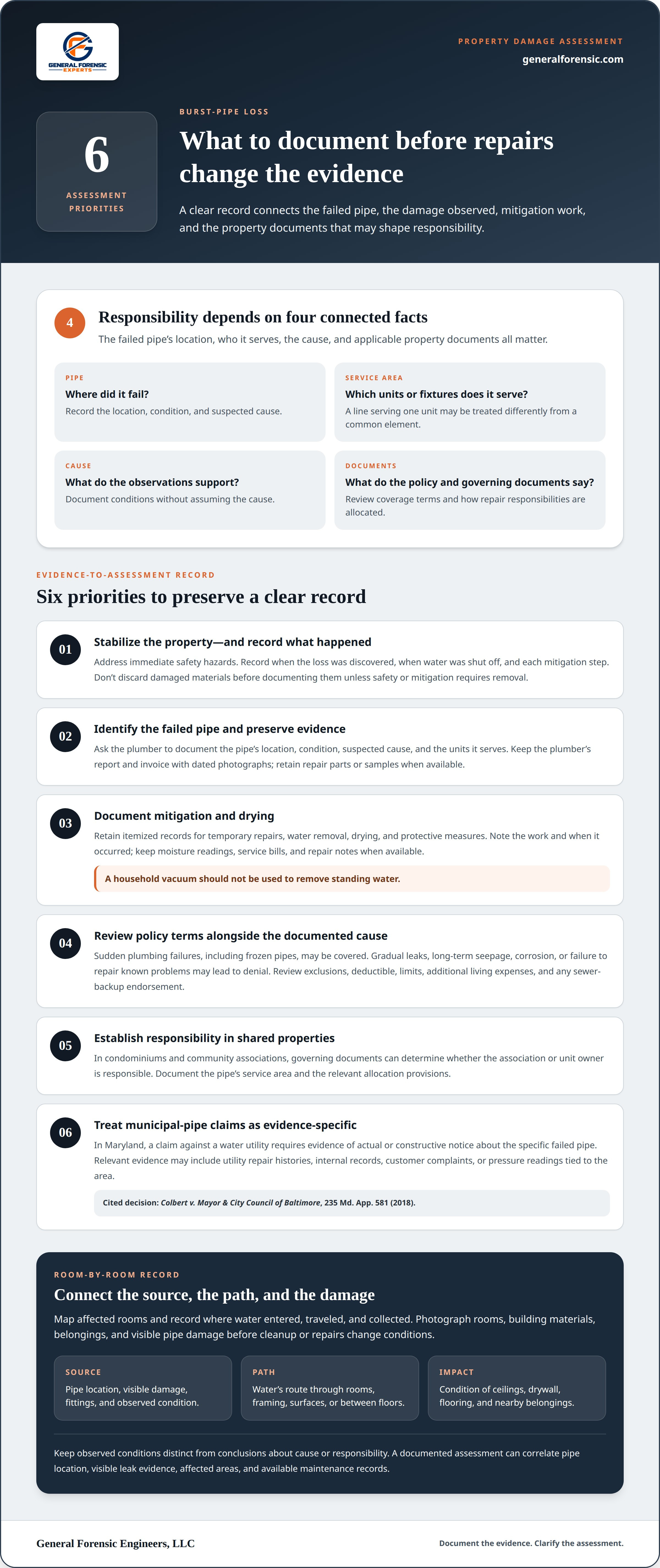
Stabilize the property and record actions. Address immediate safety hazards before cleanup. Contact a plumber or water-removal professional; standing water near electrical equipment requires caution. Record when the loss was discovered, when water was shut off, and each mitigation step. Don’t discard damaged materials before documenting them unless safety or mitigation requires removal.
Identify the failed pipe and preserve evidence. Ask the plumber to document its location, condition, suspected cause, and the units it serves. A forensic professional can record the pipe’s condition, compare the failed section with surrounding damage, and document any retained samples or repair parts. Keep the plumber’s report and invoice with dated photographs.
Document mitigation and drying. Retain itemized records for temporary repairs, water removal, drying, and protective measures. Note the work performed and when it occurred; keep moisture readings, service bills, and repair notes when available. These records connect mitigation costs to the observed damage. A household vacuum should not be used to remove standing water.
Review policy terms and the cause of loss. Sudden plumbing failures, including frozen pipes, may be covered, while gradual leaks, long-term seepage, corrosion, or failure to repair known problems may lead to denial. Review sudden water-damage coverage, deductibles, limits, additional living expenses, and any sewer-backup endorsement. The policy wording and documented cause matter.
Establish responsibility in shared properties. In condominiums and other community associations, governing documents can determine whether the association or unit owner is responsible. A pipe serving one unit may be treated differently from a common element. Document the pipe’s service area and the relevant allocation provisions.
Address municipal-pipe claims carefully. In Maryland, a claim against a water utility requires evidence that it had actual or constructive notice of a problem with the specific failed pipe. The cited decision is Colbert v. Mayor & City Council of Baltimore, 235 Md. App. 581 (2018). Repair permits and reporting rules depend on local jurisdiction and work scope; ask the plumber to identify applicable requirements before permanent repairs.
How a professional locates the burst pipe and determines which units it serves
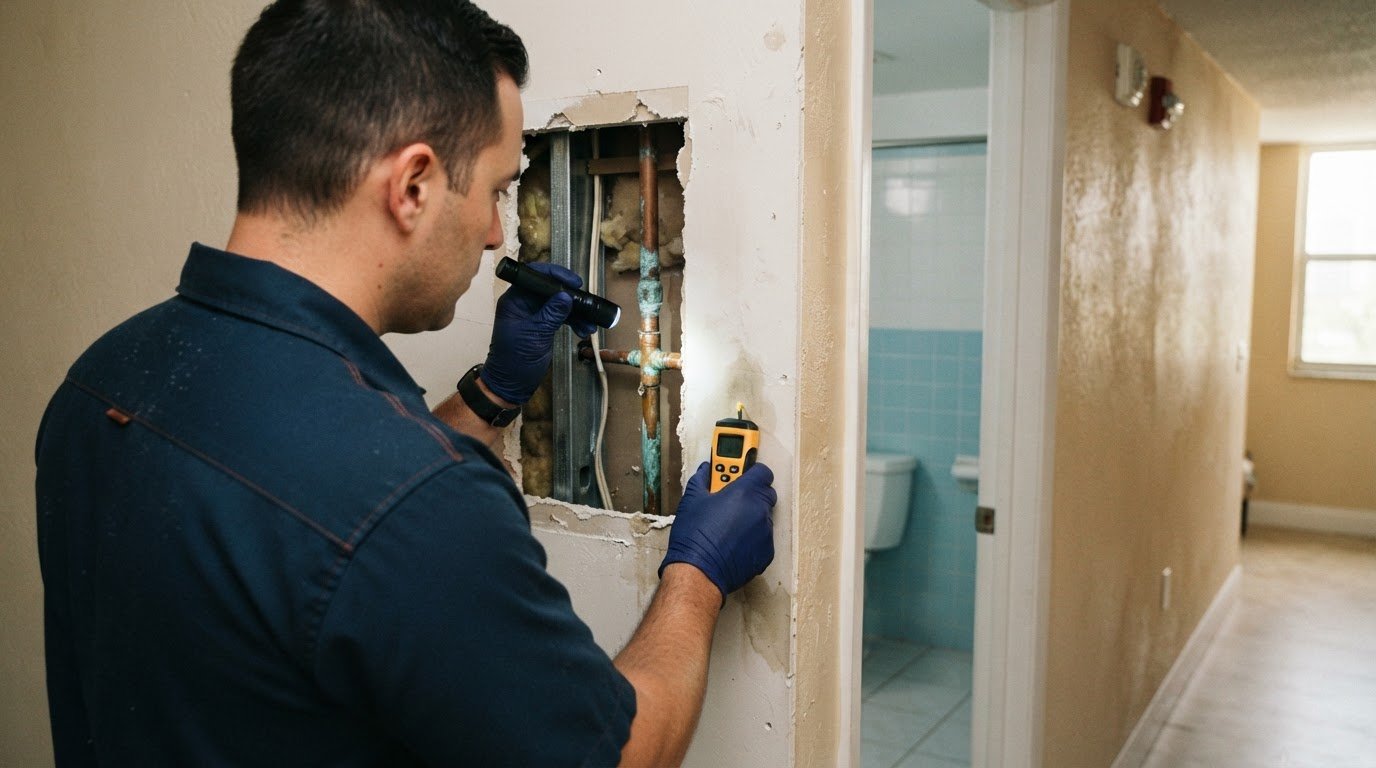
Trace the leak from observed damage. A professional records where water first appeared, then compares that location with visible pipe routes, wet surfaces, and nearby plumbing fixtures. Water can travel along framing or between floors, so the stain itself may not mark the break. The inspection distinguishes the leak source from the places water reached.
Inspect accessible plumbing and document conditions. The professional photographs visible pipe damage, fittings, and leak sources before repairs change them. The record notes pipe location, material when identifiable, and observed condition. For a suspected frozen pipe after winter weather, the assessment documents relevant signs and conditions without assuming freezing caused the failure.
Limit ongoing water damage safely. If the water pipe is still leaking, the immediate priority is controlling the flow and addressing safety hazards. After the water is shut off at the main, opening faucets at the lowest practical point can help relieve pressure in plumbing lines. Electrical or cleanup hazards may require specialized attention.
Determine which units the pipe serves. In a condominium, townhome, or other shared building, the professional traces accessible pipe routes and records which fixtures or units appear connected. A line serving one unit may have different repair implications from a line serving several units. That distinction supports review of governing documents and responsibility for repairs.
Preserve evidence of earlier pipe problems. Actual notice may be shown by utility repair histories or internal records identifying a pipe problem. Constructive notice may be supported by customer complaints or pressure readings showing a loss in the area. In Maryland utility claims, evidence tied to the specific failed pipe matters, not simply a general history of aging infrastructure.
Keep the investigation independent. A documented assessment separates observed conditions from conclusions about cause or responsibility. For a structured forensic damage assessment, the professional can correlate the pipe location, visible leak evidence, affected units, and available maintenance records.
How a professional records affected rooms and damaged belongings
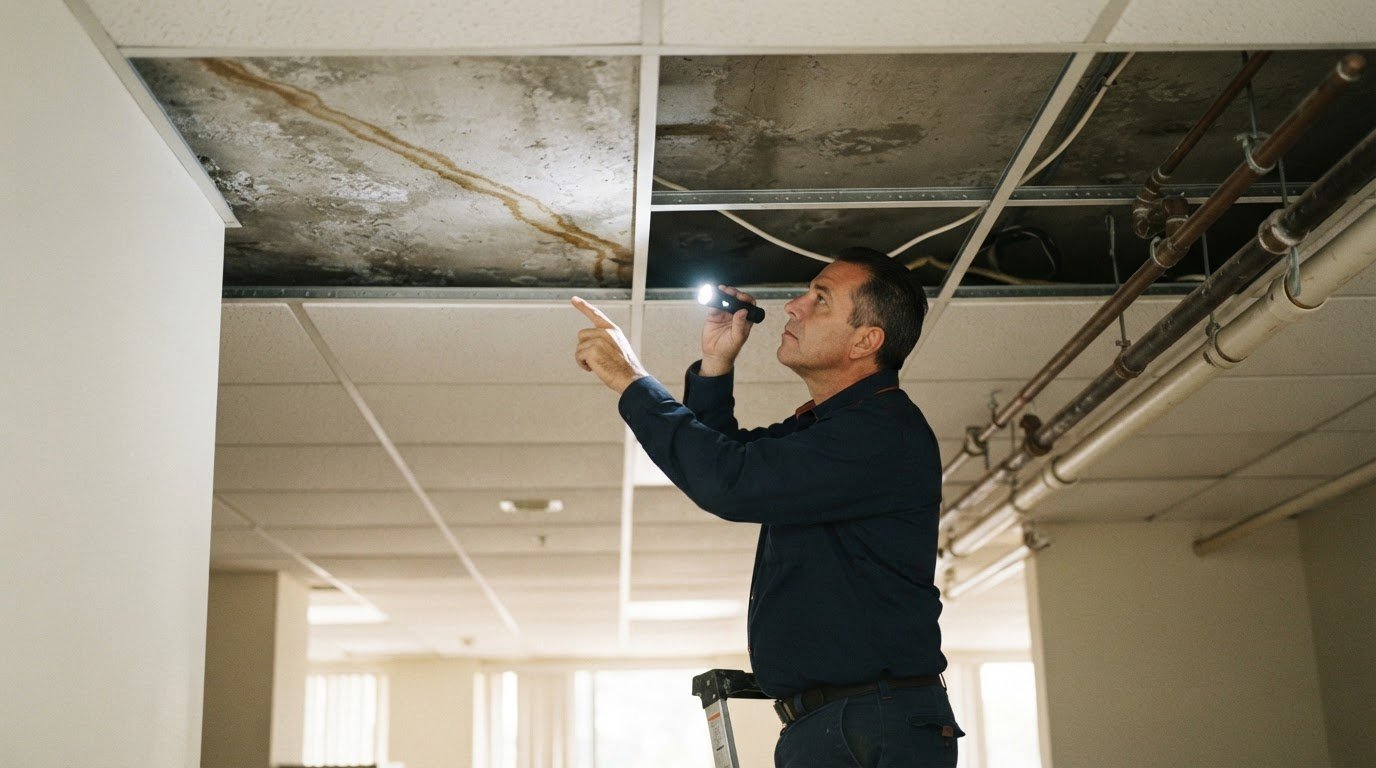
After emergency stabilization, a professional can create a room-by-room record linking the water source, visible damage, and affected contents. This preserves a record of conditions before cleanup or repairs change them.
Documenting Affected Rooms in a Professional AssessmentMap each affected room and record where water entered, traveled, and collected. Note the condition of drywall, ceilings, flooring, and nearby belongings, distinguishing visible wet areas from adjacent areas that may need further assessment. Record when the damage was discovered, the known pipe location, when the main water supply was shut off, and what actions were taken. This timeline connects the supply failure to the observed damage.
Professional Documentation of DamagePhotograph and video the water source, standing water, room overviews, and damaged surfaces before demolition begins. Capture wide views to show location and close views of details such as staining, bubbling, or visible material separation. Keep the original files together with dates and room labels. A sequence showing conditions before and during emergency cleanup helps clarify what changed.
Professional Documentation of Damaged BelongingsRecord each affected item in place before moving it, including its location, visible condition, and identifying details such as make or model, when legible. Photograph furniture, electronics, clothing, rugs, and household goods separately where practical. Note whether each item is wet, stained, or visibly damaged, and retain purchase or repair records when available. This itemized record supports later evaluation.
Professional Documentation of Conditions Before RepairsPreserve the pre-repair condition with photographs, field notes, and available moisture readings before materials are removed. Record temporary protection, cleanup activity, and areas contractors opened, along with dates and reasons. Review relevant utility repair histories and internal records for earlier reports, repairs, or pressure concerns involving the affected supply line. These records can provide context, but do not establish the cause by themselves.
Documenting property damage
A strong claim file connects observed damage to the reported pipe failure and records the response. For burst pipes and property damage, organize assessment findings, repair records, receipts, and insurer communications in a clear sequence.
Preparing Claim Documents with a Professional AssessmentAsk the assessment to record the reported cause, pipe location, affected building materials, and observed damage. Insurers may request the plumber’s report or invoice, contractor estimates, emergency-service bills, and photographs of damaged ceilings, walls, flooring, and belongings. A professional assessment can relate those records to conditions at the property while distinguishing observed facts from conclusions about cause. For a frozen pipe, retain relevant weather and plumbing information alongside the plumber’s findings. Keep copies of claim submissions and communications, dated to show what information was provided and when. Requirements vary by policy and claim circumstances, so organize records without treating any single document as sufficient on its own.
Collect and Organize ReceiptsCollect receipts for emergency purchases, temporary protective measures, water removal, drying, plumbing work, and repairs. If the home becomes unsafe or uninhabitable, retain lodging receipts and related expense records. Match each receipt to its purpose, service date, and affected area. An itemized invoice is easier to assess than an unexplained total. Preserve contractor estimates even when work has not started, and keep final invoices separate from estimates. Record changes between proposed and completed work, including the reasons and supporting paperwork. This creates a traceable record of burst pipes and property damage before repairs, linking expenses to documented conditions.
For a property assessment that correlates physical damage with claim documentation, request a forensic damage assessment.
General Forensic Engineers, LLC: Property Damage Repairs or Remediation
General Forensic Engineers, LLC helps property owners, commercial property owners, and attorneys assess burst-pipe damage and determine what the physical evidence supports. Its Expert Forensic Damage Assessment documents observed conditions and evaluates the cause and extent of damage without presuming responsibility. This service can be useful when the source, affected areas, or repair scope is disputed.
General Forensic Engineers, LLC provides Property Damage Repairs or Remediation to address damaged areas. Its Residential & Commercial Property Inspections can also help evaluate affected buildings. Assessment findings remain distinct from repair work, giving stakeholders a documented basis for understanding the loss and next steps.
Contact General Forensic Engineers, LLC to discuss a property damage assessment.
Move from documentation to a defensible next step
A clear record of burst pipes and property damage before repairs gives owners and attorneys a factual basis for evaluating what happened. The next step is to connect the physical conditions, repair decisions, and claim records without assuming cause or responsibility before the evidence is assessed.
General Forensic Engineers, LLC provides Expert Forensic Damage Assessment, Pre & Post-Commercial Property Hurricane Assessments, and Residential & Commercial Property Inspections. Its independent property assessment can help stakeholders understand the documented conditions, including when findings may differ from initial assumptions.
For an objective assessment of property damage, Contact General Forensic Engineers, LLC. A disciplined evaluation can help clarify the facts and inform the decisions ahead.
Frequently Asked Questions
Does Homeowners Insurance Cover Burst Pipes?
Homeowners insurance may cover sudden pipe failures and resulting damage to the home or belongings, subject to policy terms and applicable facts. A sudden rupture differs from ongoing seepage, corrosion, or a known plumbing problem left unrepaired, which may affect coverage. Review exclusions, deductibles, limits, and sewer-backup endorsements. Flood damage commonly requires separate flood insurance, so identify whether the water came from plumbing, a sewer backup, or external flooding.
What Happens After the Emergency Is Controlled?
Once immediate hazards are addressed, report the loss to the insurer and follow its claim-submission process. The next steps generally involve documenting the loss, assessing affected property, and arranging necessary repairs. Keep a dated record of insurer communications and retain estimates alongside invoices for completed work. For property owners in Miami or Fort Lauderdale, a clear file can keep discussions focused on observed damage and the proposed scope.
Which photos and videos can a professional use to document damage before cleanup or repairs?
Useful footage shows the affected area from several distances: a room overview, the damaged surface, and details that identify the location. Include adjoining areas when water crossed a doorway or traveled between floors. A slow video walkthrough can show how rooms connect, while still photographs preserve details such as staining or material separation. Keep original files, and avoid editing them in ways that remove dates or context.
How can a professional document damaged personal property and support its valuation?
A professional can create an itemized record linking each belonging to its location and observed condition. Make, model, distinguishing features, and available purchase or repair records can help identify an item and support replacement-cost research. Inspection documentation may assist claim evaluation, but does not establish coverage or guarantee claim approval or payment. Every assessment includes recommendations appropriate to the observations and inspection scope.
How quickly must a burst pipe be reported to homeowners insurance, and what are the deadlines?
Notify the insurer promptly after discovering the damage, then follow the notice and documentation requirements in the policy. No single reporting deadline applies to every policy based on the information here. Record when the leak was discovered and when notice was given, including confirmation numbers or written correspondence. If reporting is delayed, preserve an accurate explanation and timeline of the emergency actions taken.
What emergency mitigation steps can homeowners take without jeopardizing an insurance claim?
Prioritize safety, stop the water if it is safe to reach the shutoff, and contact a plumber or water-removal professional. Keep away from standing water near electrical equipment, and don’t use a household vacuum to remove water. Once hazards are addressed, use towels or mops to collect water. Photograph conditions first when it is safe, retain receipts, and document necessary temporary measures without delaying urgent mitigation.
Comments