
Miami Water Damage: Roof Leak vs. Plumbing Failure
A ceiling stain may appear far from the actual leak. In Miami, roof water can travel several feet before becoming visible indoors, while plumbing leaks can occur in any weather. Damage that appears during or after rain may point to a roof leak, but location alone cannot establish the cause. To determine whether a roof leak or plumbing failure caused water damage, investigators trace moisture to its source rather than relying on the stain’s position.
It is reasonable to start by checking the nearest pipe or roof feature, but water can move through insulation, framing, and other building materials before it becomes visible. A musty odor, recurring dampness, or damage that changes with rainfall can help narrow the possibilities, but these signs must be assessed in context.
This article explains how professionals distinguish plumbing failures from roof leaks and assess other possible contributors, including clogged gutters and drains, damaged flashing or sealant, and ice dams in freezing conditions. It also describes how investigators trace water pathways, helping property owners, commercial stakeholders, and attorneys understand the evidence behind a conclusion.
Table of Contents
1. Is it a pipe leak or roof leak?
Brown, yellow, or rust-colored stains on a ceiling or upper wall can indicate that roof water has saturated building materials. Water may travel several feet along framing or insulation before appearing, so the stain’s position does not establish where a roof leak began. Stains or damp patches that appear during or after rain make a roof leak more likely. In a commercial building, water can follow structural elements and emerge far from the roof penetration.
Homeowners insurance coverage depends on policy terms and the cause of the damage. A roof leak and a plumbing failure may be treated differently, particularly when the evidence indicates a sudden event rather than prolonged moisture exposure. The policy wording and documented cause inform how a specific loss is assessed.
Roof leak detection and repair costs depend on the source, roof access, affected materials, and extent of the resulting damage. Repairing a localized entry point is different from work that also involves saturated insulation or damaged interior finishes. The scope of inspection and repair determines the quoted cost.
Plumbing leak detection and repair costs also depend on the pipe’s location, access, failure mechanism, and materials requiring repair. A concealed pipe behind a finished wall may require different investigative and repair work than an exposed pipe beneath a sink. The scope of work determines the quote.
Pipe leaks can occur in dry weather and often affect walls or floors near fixtures, appliances, or concealed pipe routes. Water under an appliance, falling water pressure, discolored water, or persistent dripping or hissing can indicate a plumbing failure. A burst pipe may release a substantial amount of water suddenly, while a smaller leak may cause recurring dampness. Condensation is another possibility: inadequate insulation or ventilation can trap moisture, especially in an attic, and its distribution may not follow a roof-entry path. Musty or earthy odors can accompany hidden moisture from either source, while sewage-like odors may point to wastewater leakage. If prolonged water exposure is not addressed, it can rot wood, saturate drywall, warp panels, and weaken building materials. Comparing rainfall timing, plumbing indicators, moisture patterns, and material deterioration helps distinguish the cause before repairs begin.
2. Clogged gutters, drains, and ice dams
Clogged gutters and downspouts interrupt the route roof runoff should take. Leaves, seed pods, and other debris can restrict drainage, causing water to overflow beside the roof edge. Runoff may then enter gaps in the fascia or openings where the roof meets the gutter, leaving moisture inside without an obvious opening above the stain. The cause may be a drainage failure, not a damaged pipe or shingle.
Blocked drainage can affect more than the roofline. Overflowing gutters may contribute to roof damage, basement flooding, or foundation damage when water collects beside the building. A damaged downspout connection can concentrate runoff near a wall or foundation, while a clogged roof drain can leave standing water on a low-slope roof. Investigators consider the drainage route, visible debris, overflow marks, and the location of interior moisture together.
Ice dams create a different water pathway, but only in freezing conditions. Ice can block melting water at the roof edge, forcing it behind gutters or beneath shingles. Water may then travel through roof materials before reaching a ceiling or wall. In Miami, a leak investigation should consider weather conditions and physical evidence rather than assume ice-related damage based on a stain alone.
Climate, roof design, and applicable local building-code requirements shape the evaluation of drainage and water entry. Rainfall patterns and wind-driven rain affect where runoff travels; roof slope, drainage placement, and the roof-to-gutter junction affect where water can collect or escape. Investigators compare the building’s configuration with observed pathways and consider relevant code requirements when evaluating the repair scope.
Where overflow has damaged roofing or interior finishes, a professional assessment of drainage-related water damage can help distinguish the entry path from the resulting damage. That distinction matters before repairs address only visible symptoms while leaving the drainage source unresolved.
3. Flashing and sealant failures
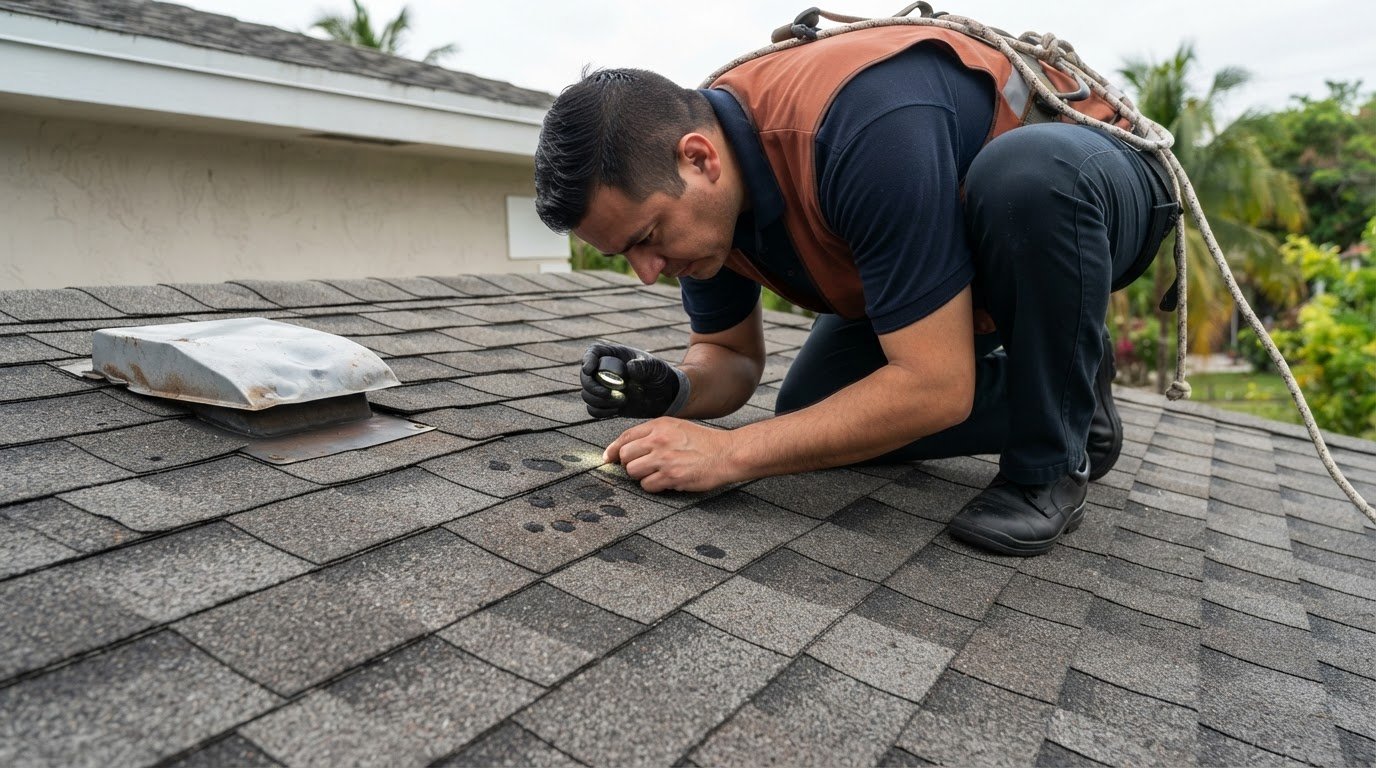
Flashing directs water away from vulnerable roof joints, including edges, penetrations, and transitions between roof sections. A roof vent, chimney, or wall intersection can leak if its flashing is cracked, displaced, or no longer seated correctly. Even a small opening can let repeated rain drive water into roof sheathing and adjacent materials. An inspection examines the junction and the materials along the suspected water path.
Sealant can also fail around a vent, pipe penetration, or other roof detail. Gaps, separation, or cracking can create an entry point, particularly when wind-driven rain presses water against the joint. Sealant does not replace correctly configured flashing; applying material over a defect can obscure the original condition without correcting the water pathway. Investigators distinguish a surface opening from concealed moisture and resulting material damage.
Evidence needs to be considered as a whole. A ceiling stain beneath a chimney may suggest nearby water entry, but water can travel along roof framing before appearing indoors. Investigators compare the stain’s pattern with the chimney flashing, roof surface, and interior materials. They also consider missing or damaged shingles and leaks around vents, since these can provide separate paths into the same area.
A thorough inspection documents relevant joints before repairs alter their condition. Observations may include the location and continuity of flashing, visible sealant separation, nearby roof damage, and interior moisture patterns. The investigator then assesses whether these conditions align with the reported timing and observed damage. If water intrusion is confirmed, repair planning should address the verified entry mechanism and affected materials, not simply cover the visible stain. This matters in residential and commercial properties, where interior finishes may conceal the route from a roof penetration to the damaged area.
4. Finding the source of a water leak
A reliable investigation connects visible damage to a plausible point of entry. The assessment compares rainfall timing, plumbing symptoms, roof conditions, and moisture patterns rather than treating the ceiling stain as the source. Missing shingles, cracked flashing, or openings around vents can support a roof-entry explanation. A pressure change, discolored water, or pooling near an appliance may instead point to plumbing.
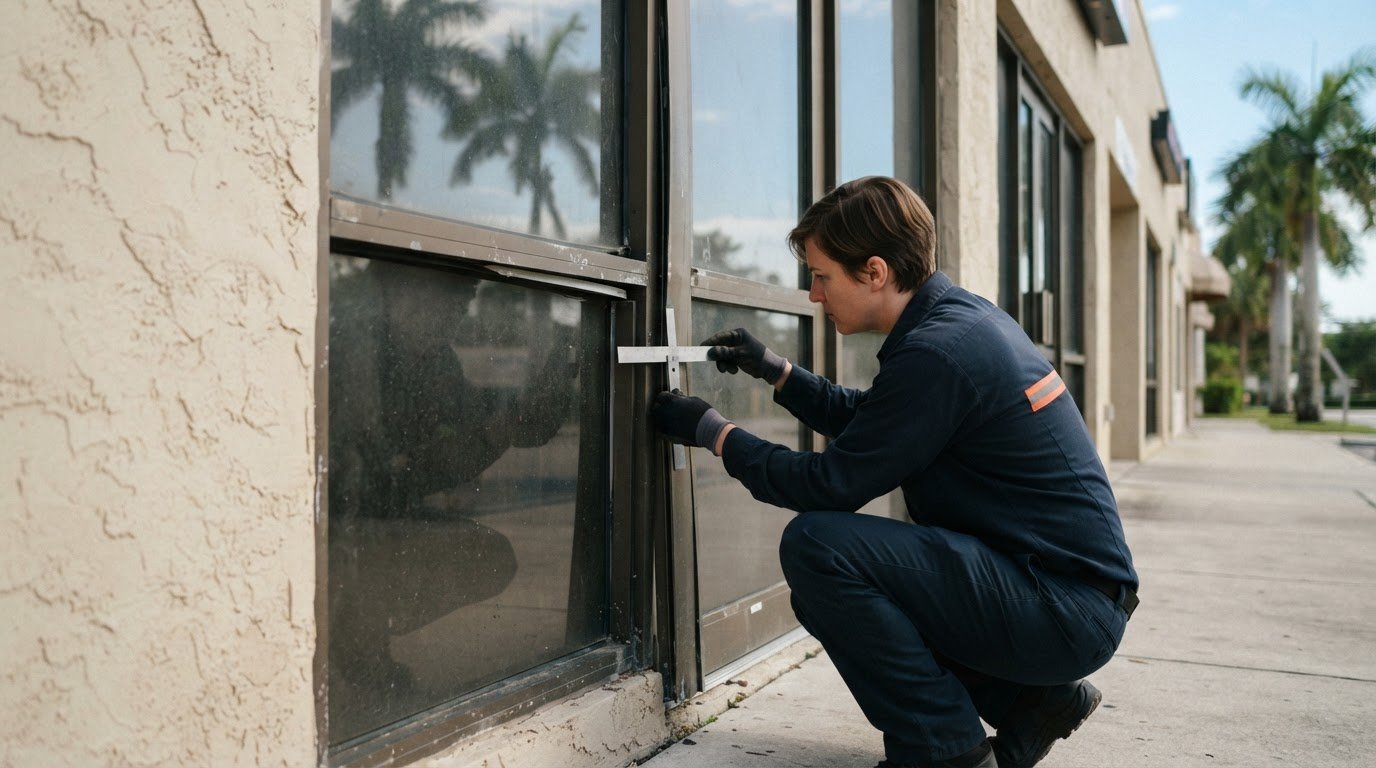
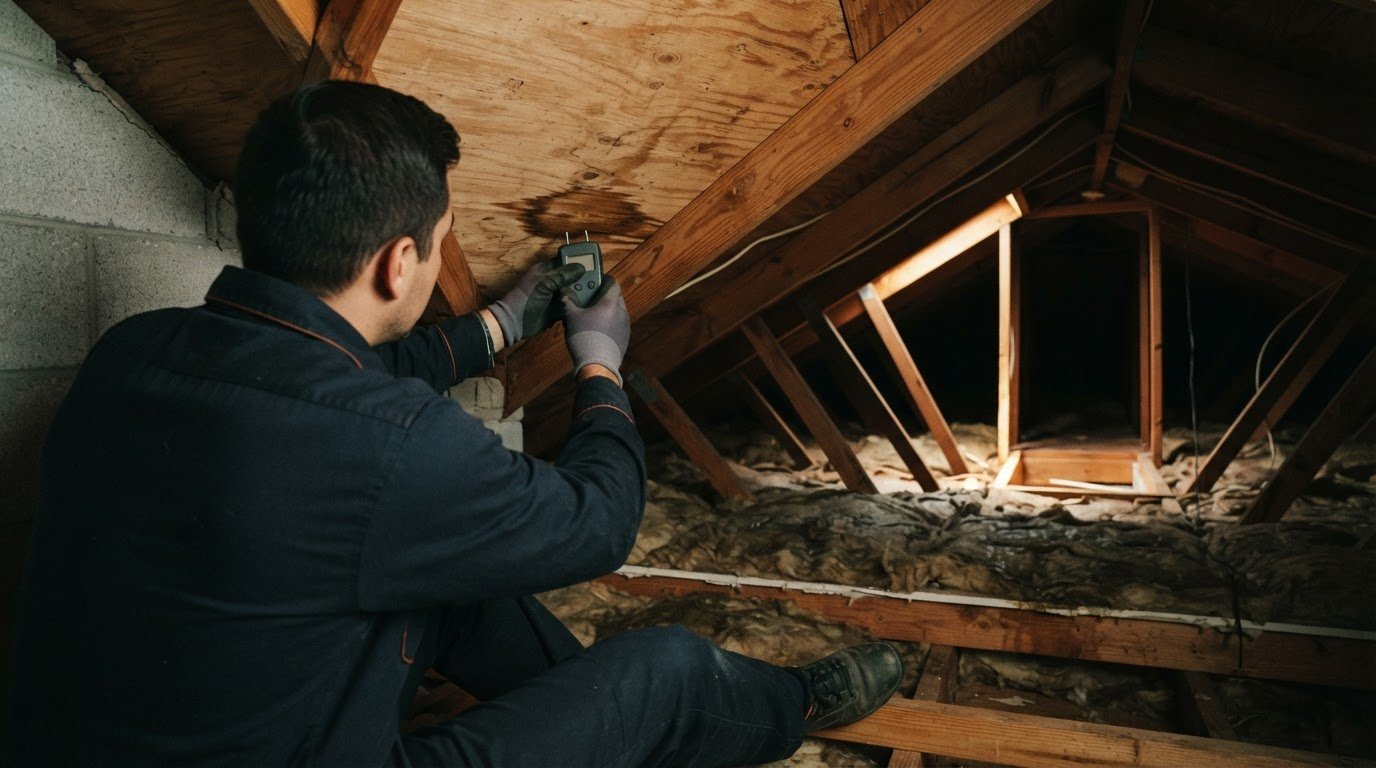
Investigators trace water through the building, including framing, wall cavities, and insulation. Moisture-detection equipment can help locate concealed wet areas above ceiling tiles or behind walls. When visual access is limited, a small inspection opening can allow a borescope view inside a wall. Investigators compare cavity findings with surface staining and the suspected exterior entry point.
Controlled testing can help distinguish between possible pathways when initial observations are inconclusive. During a roof water test, one person applies water outside while another observes indoors; each small section is wetted for several minutes before testing moves on. Plumbing lines and nearby fixtures are assessed separately, so evidence from one system is not mistaken for another. The test sequence and recorded observations help establish which condition corresponds with water entry.
If you discover an active leak, keep people away from affected areas, contain dripping water, and move valuables or equipment out of reach. If water coincides with flickering lights, tripped breakers, or other electrical problems, shut off power to the affected area and contact electrical and roofing professionals. Photograph the damage with timestamps and measurements, and monitor any container collecting water to prevent overflow. These records preserve the condition for later assessment.
When roof and plumbing indicators conflict, request a forensic water-damage source assessment to connect observed conditions with the likely pathway and document the evidence objectively.
General Forensic Engineers: Drone Roof Accessments
General Forensic Engineers provides Drone Roof Accessments and Expert Forensic Damage Assessment when roof access is difficult or the source of water intrusion is disputed. Its assessment considers roof conditions alongside interior damage, helping residential and commercial property stakeholders evaluate the evidence without assuming the cause in advance.
For property owners and attorneys, an independent assessment can document property conditions and inform decisions about disputed damage. Pre- and post-commercial property hurricane assessments are also available when storm-related conditions are relevant. Plaintiff’s attorneys evaluating a property-damage matter are invited to contact General Forensic Engineers to discuss an assessment.
Property owners and their legal counsel can use documented findings to evaluate the matter and consider appropriate next steps.
Use the Findings to Guide Your Next Decision
After the cause of water intrusion has been assessed, the findings can help property owners, commercial stakeholders, and attorneys identify remaining questions and consider next steps. Investigating whether a roof leak or plumbing failure caused the damage is most useful when observations are clearly documented and conclusions follow the physical evidence, even when that evidence does not support an expected explanation.
General Forensic Engineers provides Expert Forensic Damage Assessment, Residential & Commercial Property Inspections, and Pre & Post-Commercial Property Hurricane Assessments. These services help stakeholders evaluate property conditions and understand documented damage without assuming the cause in advance. For attorneys, an independent assessment can contribute technical findings to the evaluation of a property-damage matter; it does not replace legal advice or representation.
If you need a property assessment to clarify water-damage evidence, contact General Forensic Engineers. A well-supported understanding of the building’s condition gives you a clearer basis for the decisions ahead.
Frequently Asked Questions
Is it a pipe leak or roof leak?
Weather timing and nearby building systems can help distinguish between a roof leak and plumbing failure, but neither proves the source on its own. Damage that worsens after a storm may warrant examining roof areas and exterior openings, while recurring dampness near a bathroom or appliance directs attention to plumbing. In multi-unit or commercial buildings, investigators also consider shared pipes and drainage routes before attributing damage to a particular space.
How can you tell if water damage is from a roof leak or a plumbing failure?
Compare the damage pattern with the building’s roof layout and plumbing routes, then assess whether the evidence supports either pathway. A recurring stain beneath a roof penetration after storms differs from dampness near a supply line that persists in dry weather. Professionals can assess both systems and document which conditions correspond with moisture, rather than infer the cause from the room where damage appears.
What signs indicate a roof leak in an attic, ceiling, or walls?
In an attic, wet or discolored insulation, damp roof sheathing, and moisture near a vent or chimney can indicate roof entry. Indoors, brown or yellow ceiling marks, peeling paint, and sagging panels may reflect water exposure. Unusual moss or mildew growth on exterior walls may also warrant examination. These signs identify areas to investigate, but do not establish the leak’s origin on their own.
How do professionals trace the source of a water leak safely?
Professionals begin by documenting visible conditions and checking accessible roof, plumbing, and interior areas before selecting tests. They assess electrical hazards first, since moisture near electrical components can be dangerous. A controlled test isolates a suspected area while an observer watches for changes indoors. Investigators record the sequence and results, then compare them with moisture readings and building conditions to support a defensible conclusion.
What tools do professionals use to detect roof leaks and hidden plumbing leaks?
Investigators may use FLIR thermal imaging cameras and GE Protimeter or Tramex scanners to assess temperature patterns or material moisture. These instruments can identify areas for closer examination, but a reading alone cannot establish whether water came from a roof or pipe. Professionals interpret results alongside visual observations, construction details, plumbing routes, and evidence from controlled testing.
When should you call a roofer versus a plumber for water damage?
Roof-related evidence, such as damage associated with roof penetrations or storm conditions, points toward a roofing evaluation. Dampness concentrated near plumbing fixtures, appliances, or pipe routes supports plumbing investigation. If evidence implicates both systems, remains unclear, or is disputed, an independent forensic damage assessment can examine causation before repair decisions are made. This is especially useful when property owners, managers, or attorneys need documented findings.
Comments