
Detecting Hidden Plumbing Leaks in Miami Walls
The first visible sign of a plumbing leak may appear far from the failed pipe. Investigating hidden plumbing leaks and damage behind walls and ceilings starts with recognizing clues such as unexplained stains, bubbling paint, warped drywall, musty odors, or water sounds when fixtures are off. A water bill that rises without a change in household use can also point to a leak.
These signs are easy to dismiss when the surface feels dry or the source is out of sight. Yet water can travel through wall cavities, ceiling materials, and flooring, so visible damage may not mark the leak’s location.
This article explains how to assess warning signs, consider possible damage to building materials, and decide when professional leak detection may help. It also distinguishes an observed symptom from a verified cause, an important step when property owners, residential or commercial stakeholders, or attorneys need an impartial assessment of what happened.
Table of Contents
WHAT ARE SOME SIGNS OF WATER DAMAGE?
Follow these steps to identify visible clues, assess possible sources, and respond without obscuring evidence. A stain can appear away from a leaking pipe because water travels through building materials.
Inspect for Visible Water DamageScan ceilings and walls for yellow or brown stains, peeling paint, bubbling finishes, and warped or soft drywall. Record each location and photograph the visible condition before cleaning or painting; covering a stain too early can conceal continuing moisture. For example, a ceiling mark below an upstairs bathroom may point toward plumbing above, but the mark alone does not locate the leak.
Review Water Bills and PressureCompare the water bill with the same month last year, then notice whether household use explains any increase. According to the U.S. Environmental Protection Agency, household leaks can waste nearly 1 trillion gallons of water annually nationwide. The U.S. Environmental Protection Agency identifies monthly water use above 12,000 gallons per month during cooler seasons in a household of four as a sign of serious leaks. With fixtures off, observe whether the water meter moves. Also note reduced pressure, sputtering, or running sounds when no fixture is operating.Check toilets, faucets, appliances, and the water heater for visible drips or damp connections. A hidden leak may still be present when these fixtures look dry.
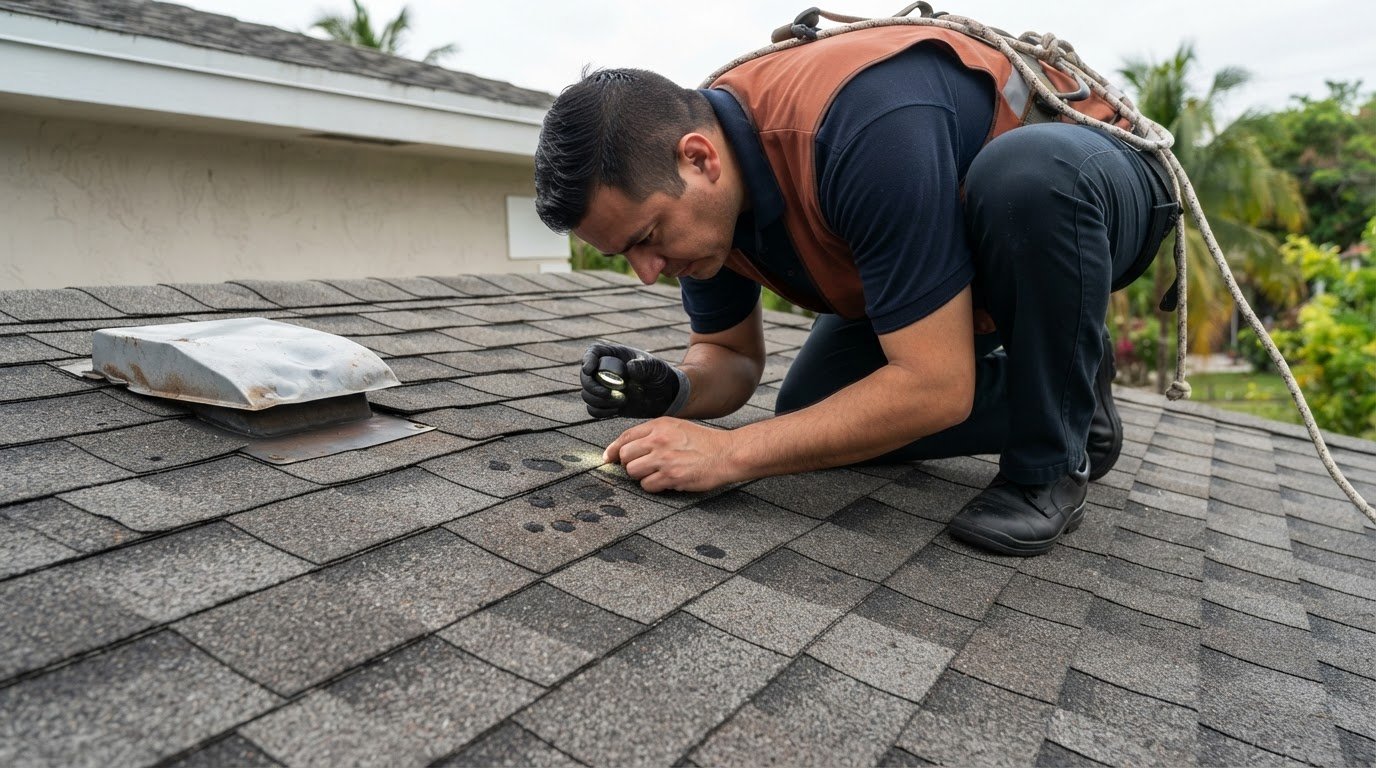
Check Floors, Pipes, Attics, and RoofsInspect flooring near baseboards for swelling, loose tiles, or damp edges; a dry surface can conceal moisture underneath. Examine exposed pipes, attic ceilings, and roof areas for staining or wet materials. Water can travel along framing or pipes, so the damaged area may be separate from the source. Compare related rooms and levels, such as a bathroom with the ceiling directly below it.
If water damage has no obvious source, photograph it, avoid electrical areas, and stop the water supply if safe. Don’t cut into walls or paint over stains before locating the source. Keep people clear of a sagging ceiling, since trapped water can make ceiling materials heavy.There is no single average repair cost: the leak’s location, access, pipe damage, and extent of affected drywall or ceiling all influence the work. Homeowners insurance may cover sudden, accidental damage such as a burst pipe, but may exclude long-term neglected leaks or gradual leakage from wear. A plumber can use leak-detection methods to narrow the source and limit exploratory openings; repair access depends on the pipe location and surrounding materials.
Potential structural damage and mold growth
Moisture can affect concealed materials before damage becomes visible in a Miami property. Inspect systematically and document changes that may indicate a continuing leak.
Inspect for Mold and DiscolorationLook for mold spots, mildew, and discoloration on walls, ceilings, floors, and around plumbing penetrations. Record each location and compare nearby surfaces for spreading marks or changes. A hidden plumbing leak can wet insulation or framing inside a wall, even when the room-facing surface shows only a small patch. Avoid scraping, sanding, or pulling suspected mold away, since disturbing it can spread particles nearby.
Assess Humidity, Odors, and Health ConcernsNote musty odors in enclosed spaces, including closets, cabinets, and rooms beside bathrooms. A persistent damp smell can indicate trapped moisture even without visible mold or dripping. According to the U.S. Environmental Protection Agency, mold growth can begin within 24 to 48 hours of water exposure under warm-climate conditions.Record where odors occur and whether occupants report discomfort in those areas. An odor alone does not establish mold growth or identify a plumbing source. Keep observations specific to each room.
Assess whether moisture may have weakened building materials. Wet drywall can soften, insulation can remain damp, and wood framing can deteriorate with continued exposure. Check floors near affected walls for warping, loose finishes, or changes extending beyond the original damp area. A musty smell beside a bathroom, paired with new wall discoloration, provides more context than either observation alone.
Document conditions before repairs change the evidence. Photograph affected surfaces, note odor locations, and record any ongoing dripping or newly appearing stains. If the moisture source or extent remains unclear, an independent assessment of moisture-related damage can help evaluate observed conditions without assuming where the findings will lead.
Need Professional Leak Detection?
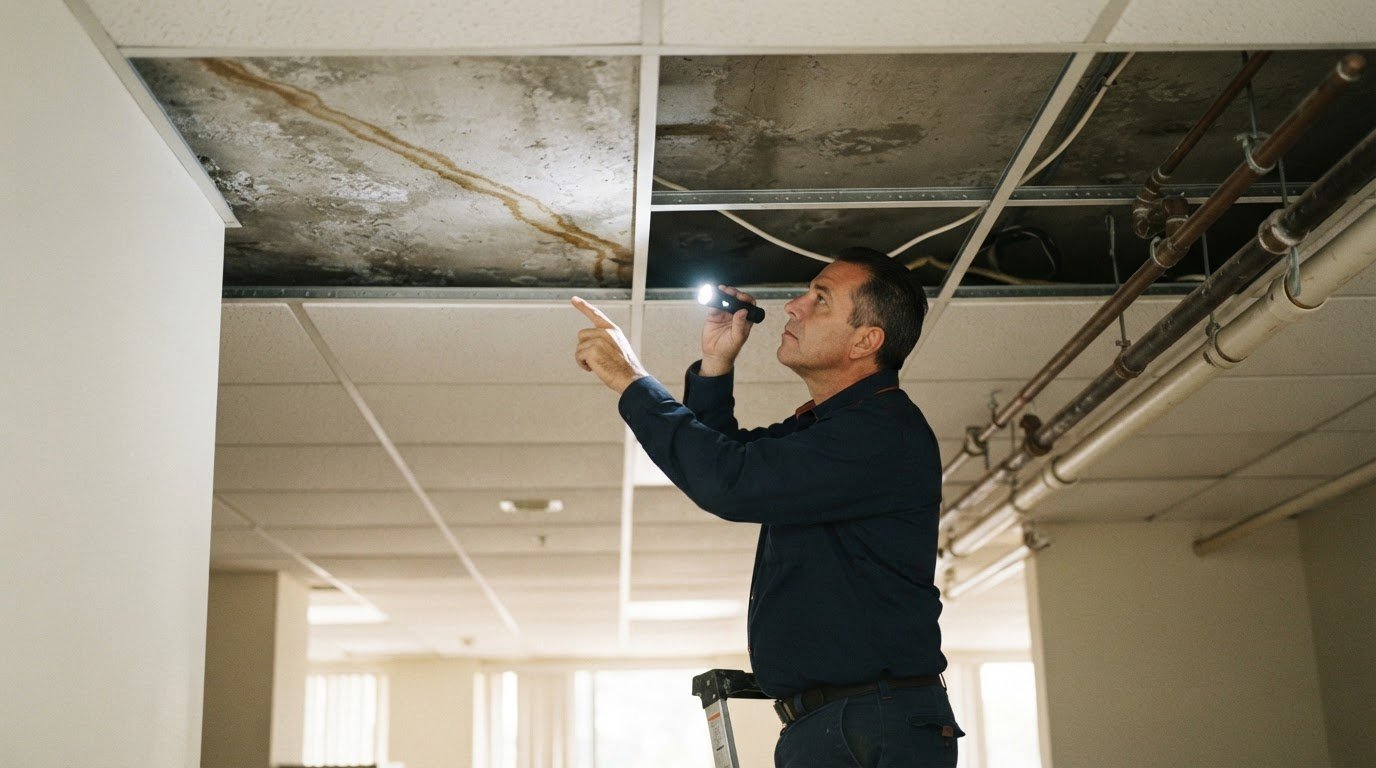
Use a structured inspection when stains persist, fixtures behave inconsistently, or the plumbing source remains concealed. Investigating hidden plumbing leaks and damage behind walls and ceilings combines observations with instruments to narrow the search before opening building materials.
Document affected rooms and plumbing conditions before testing begins. Record where moisture appears, whether stains change, and which fixtures were recently used. A bathroom ceiling below an upper-level bathroom, for example, may direct attention toward nearby supply or drain lines. This record helps the investigator compare symptoms with test results instead of relying on one isolated mark.
Use moisture meters to measure conditions in affected and nearby materials. Readings across drywall, flooring, or other surfaces can help map where moisture is concentrated. A professional compares readings between areas rather than treating one measurement as proof of a plumbing leak. This distinction matters when humidity, prior spills, or another source may explain dampness.
Apply infrared imaging where surface conditions and building layout make it useful. Thermal patterns can help identify temperature differences behind thin walls; wet areas may appear colder during a scan. Infrared results show patterns, not the pipe itself, so they need to be compared with visible conditions and moisture readings. Acoustic equipment can help investigate sounds from concealed pressurized pipes.
Consider slab or underground lines when moisture appears at floor level or suspected leakage has no visible wall source. During an investigation of hidden plumbing leaks and damage behind walls and ceilings, professionals can compare meter readings, thermal patterns, and acoustic indications to narrow the affected area. Plumbing layout, material layers, and access conditions shape the investigation. Conflicting readings call for reassessing possible routes before recommending invasive access.
Professional leak-detection costs in the United States vary with the suspected location, access, diagnostic methods, and inspection scope. Pricing is provided after a quote request. Request documented findings about tested areas so decisions about plumbing repair or opening finishes are based on evidence rather than assumption.
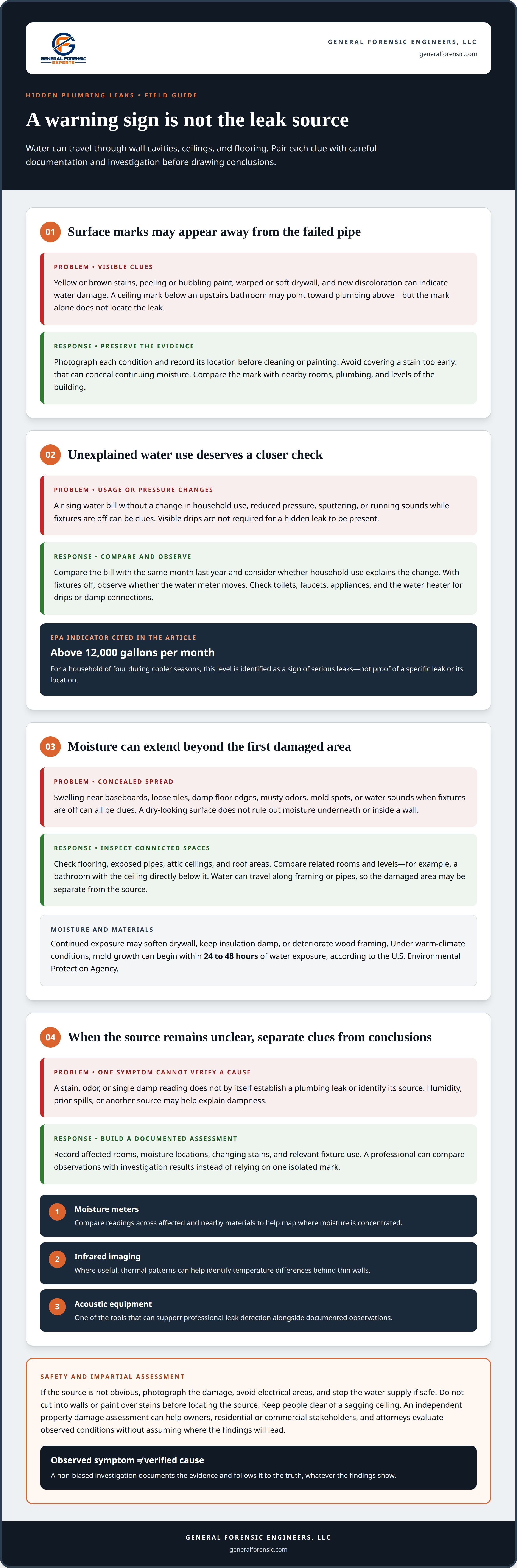
Warning signs of hidden plumbing leaks
Warning signs are more useful when assessed together and in relation to the plumbing layout. Track where each symptom appears, including areas that seem unrelated to fixtures.
Listen for running, dripping, or hissing sounds when faucets and appliances are off. Note the room and whether the sound continues; a concealed pipe may carry water beyond the obvious wet area. A ceiling below an upstairs bathroom or bubbling drywall beside a pipe can help narrow the likely route, but neither identifies the source alone.
Look for symptoms in unexpected places, such as mildew on a wall outside a shower or a damp patch near a cabinet. Water can travel along pipes, inside wall cavities, and around ceiling materials before becoming visible. Compare patterns across nearby rooms. A single symptom may have several explanations, while related changes can indicate hidden water damage.
Consider common failure points when signs cluster near plumbing. A toilet flapper or valve seal may decay over time or fit poorly when mineral buildup interferes. Pipes and connections can also develop leaks, allowing water to escape behind finishes. The location of bubbling, sound, or dampness can guide further detection, but does not establish the cause by itself.
Test a toilet tank for a silent leak by adding about 6 drops of food coloring and waiting 30 seconds without flushing. If color appears in the bowl, water is passing from the tank. This check helps distinguish a toilet leak from a concealed pipe issue when water use seems unexplained.
Reduce the chance of delayed detection by recording recurring sounds and changes around plumbing fixtures. Recheck toilet seals and visible connections during routine household checks, and note symptoms that return after surfaces dry. If signs persist or the source remains unclear, request an independent assessment of suspected property damage to help determine the cause and extent.
General Forensic Engineers, LLC
General Forensic Engineers, LLC helps property owners, residential and commercial stakeholders, and attorneys assess suspected building damage through impartial investigation. When a plumbing leak’s source or effects remain disputed, an Expert Forensic Damage Assessment examines observed conditions and helps distinguish evidence from assumption. Findings may clarify the extent of damage and which conclusions the property’s condition supports, regardless of where the evidence leads.
For broader property concerns, Residential & Commercial Property Inspections and Recertification & Milestone Inspections provide assessment options suited to those needs. These services assess property condition and damage, rather than perform plumbing repairs.
Contact General Forensic Engineers, LLC to discuss a property assessment.
Move From Suspected Leak to Property Assessment
When a plumbing concern becomes a property dispute, the next step is to distinguish observed damage from conclusions about its cause. A focused investigation of hidden plumbing leaks and damage behind walls and ceilings can give property owners, residential or commercial stakeholders, and attorneys a clearer basis for evaluating a building’s condition. Findings should follow the evidence, even when they do not support an initial assumption.
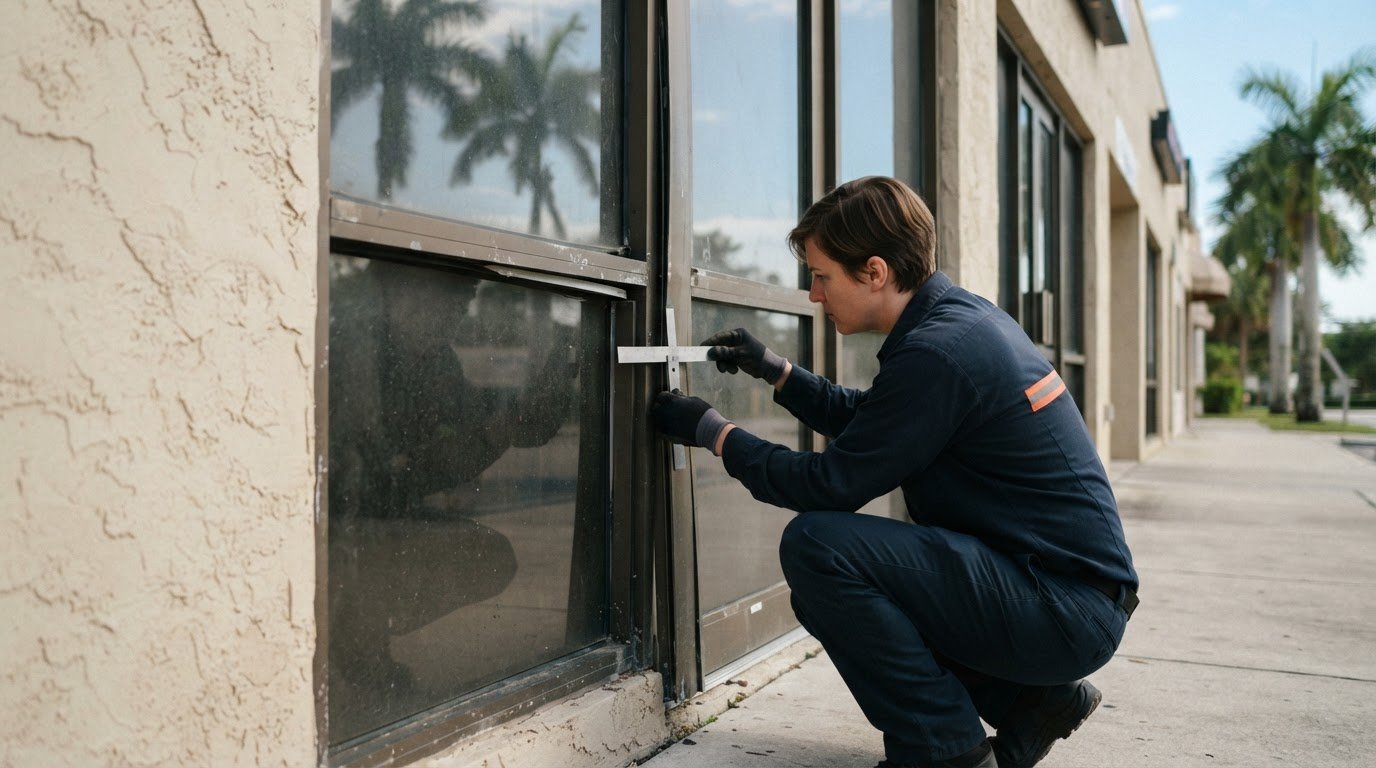
General Forensic Engineers provides Expert Forensic Damage Assessment and Residential & Commercial Property Inspections. For commercial properties, its Pre & Post-Commercial Property Hurricane Assessments address building condition in relation to hurricane events. These assessment services help stakeholders examine property conditions without substituting for legal representation or insurance claim adjusting.
For property owners and plaintiff’s attorneys considering an impartial assessment, contact General Forensic Engineers to discuss the property concern and the appropriate next step. A sound evaluation begins with the physical evidence and remains guided by what that evidence shows.
Frequently Asked Questions
What Is a Hidden Plumbing Leak?
A hidden plumbing leak is water escaping from a pipe or plumbing connection concealed within a wall, ceiling, floor, or slab. In a Miami property, the leak may remain out of sight while moisture moves through cavities or along framing. The damaged surface may therefore be distant from the failed pipe, and visible evidence alone may not establish the leak’s exact origin.
What are the common signs of a hidden plumbing leak behind walls or ceilings?
Look for a pattern of changes rather than relying on one symptom: recurring dampness, a stain that expands after plumbing use, or a persistent sound near a particular wall. A room-specific pattern can help distinguish a possible plumbing issue from moisture entering elsewhere. Record when the change occurs and which fixtures were used; that timeline can help narrow the investigation.
How can you locate a hidden plumbing leak without opening walls?
Start by turning off fixtures and appliances, then observe the water meter. Movement can indicate that water is still flowing somewhere in the system. Note which areas show moisture and whether symptoms correspond with use of a nearby fixture. A professional can compare moisture readings and thermal patterns across adjoining surfaces to narrow the suspected location before deciding whether an access opening is necessary.
What tools do plumbers use to detect leaks behind walls and ceilings?
Plumbers may use moisture meters to compare readings in building materials, infrared cameras to identify temperature patterns, and acoustic equipment to listen for leak-related sounds. Each tool provides a different type of evidence, not automatic confirmation of the source. For example, a thermal pattern near a bathroom pipe can guide further testing, while readings and plumbing knowledge help refine the location.
What steps should homeowners take immediately after discovering a hidden leak?
Protect occupants first: keep clear of wet electrical areas and any ceiling that appears to sag. If safe, close the relevant shut-off valve or main water valve to limit continued flow. Photograph the affected area, note when it was found, and avoid cutting into finishes or covering marks. These records preserve the observed condition for later assessment.
When should you shut off the water or call an emergency plumber for a hidden leak?
Shut off the water if active leaking continues and you can reach the appropriate valve safely. Contact a plumber promptly if water keeps flowing, damage is spreading, or the source cannot be isolated. If water is near electrical equipment or a ceiling is sagging, keep people away and avoid touching the affected area. A plumber can address the plumbing source; a property damage assessment addresses resulting building conditions.
Comments