
Miami Roof Hail Damage: When to Request Inspection
Hail damage to roofs and building exteriors warrants a professional inspection after hailstones reach 1 inch or larger. Dents in soft metal components, missing shingle granules, cracked siding, and damaged window screens can indicate impact, but visible signs alone may not reveal the extent of roof damage. In Miami, a careful assessment can distinguish surface marks from damage that affects the building envelope.
It’s reasonable to seek clear evidence before deciding what to do next. Hail affects roofing materials differently: an impact pattern that matters on asphalt shingles may mean something else on a metal roof or exterior cladding. Photographs, storm details, and a systematic record of observed conditions can also preserve information for an insurance review.
This article explains how hail damage may appear on roofs and building exteriors, when to request a professional assessment, and how material type and documentation shape the evaluation. It also describes what an inspection can establish, including whether observed conditions are consistent with hail impact and whether possible water intrusion needs further assessment.
Table of Contents
What is hail damage?
Hail damage is physical impact to roofing or exterior materials, from bruised shingles to dented metal. A professional inspection for hail damage to roofs and building exteriors is appropriate after hailstones reach 1 inch or larger. A ground-level view can reveal marks on gutters, vents, siding, and screens, but cannot establish the full condition of roof surfaces. Property owners should not climb onto a potentially damaged roof.
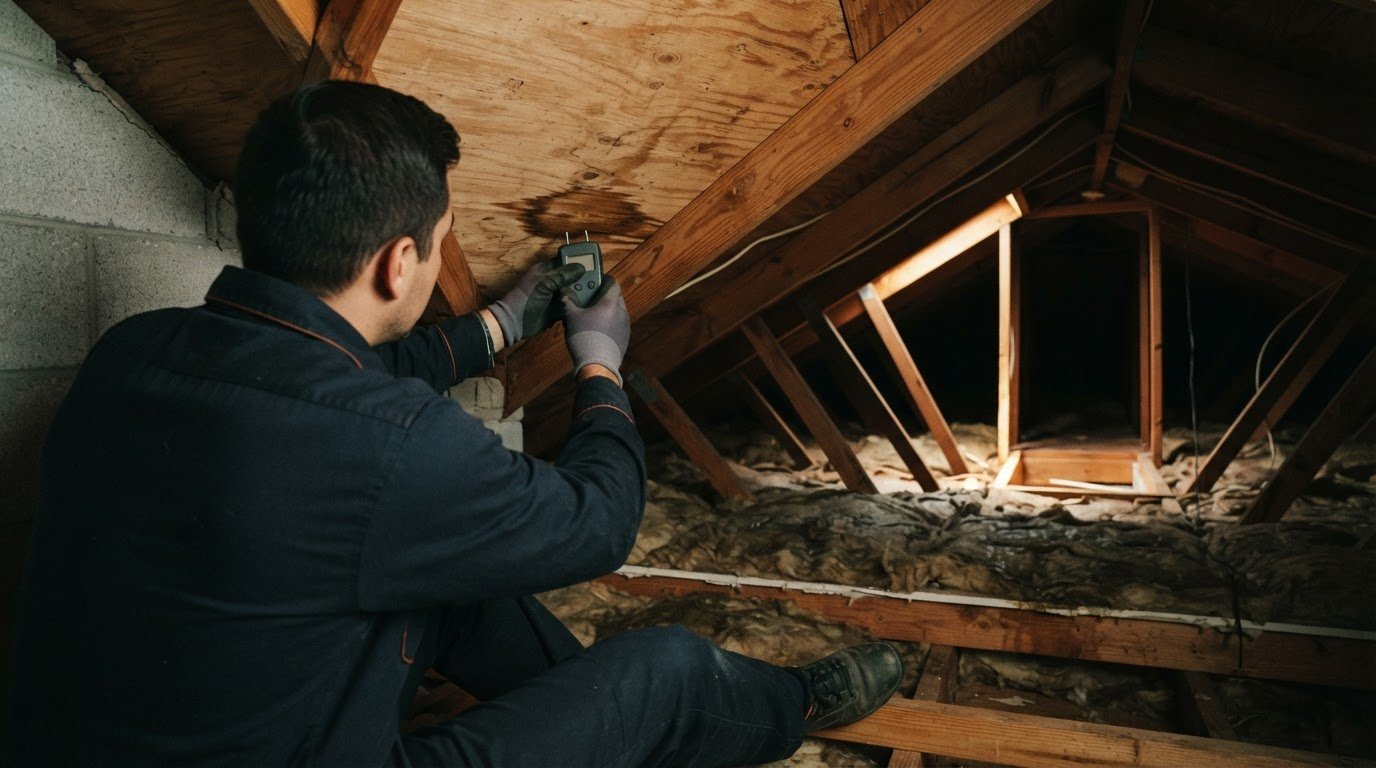
A professional assessment examines roof edges, penetrations, skylights, and flashing, where impact or displaced components can affect drainage. The inspector documents dents, fractures, granule loss, and other conditions, then evaluates whether they are consistent with hail exposure. On commercial properties, the assessment may cover larger roof areas and drainage paths. Moisture mapping can help identify water intrusion beneath the roof assembly that a surface review alone may miss.
Hail-size thresholds vary by material and shape. S-shaped concrete tiles usually require hailstones of 2 inches to cause damage, compared with 1¼ inches for flat concrete tiles. These figures provide context, not a substitute for assessing actual conditions. A professional evaluates impact patterns alongside material type, existing wear, and observed defects. Findings can help distinguish damage that may call for repairs or replacement from marks that are primarily cosmetic.
The decision about when to request an inspection for hail damage to roofs and building exteriors depends on storm conditions and observed signs. An inspection is appropriate after hailstones reach 1 inch or larger, or when ceiling stains suggest water intrusion. There is no single typical total for hail inspections and repairs; costs depend on assessment scope, roof material, access, and damage extent. Roof age and condition affect how marks are interpreted, while applicable local building codes can influence repair requirements. Reports and dated photographs can support an insurance claim review.
Professional damage assessments and insurance documentation
A professional assessment documents observed damage and evaluates its likely cause. Organized evidence can help property owners report conditions clearly to their insurance company.
Assessing Damage for Insurance
A damage assessment evaluates whether hail impacts affected roof performance or exterior materials. Property owners may consider filing a claim when documented conditions indicate that repairs or roof replacement may be needed. An assessment can distinguish hail-related marks from pre-existing wear, clarifying the basis for a report. Severe visible damage or signs of water intrusion call for prompt attention, since delays can make it harder to document conditions accurately.
Professional Damage Documentation for a Claim
Professional documentation links observed conditions to their locations, materials, and storm information. An assessment may include dated photos, descriptions of impact patterns, and notes identifying affected roof areas or exterior components. These records give the insurance company specific evidence to review instead of broad descriptions such as “storm damage.” A clear report can also explain how documented defects relate to potential repairs.
Useful supporting records include the storm date and time, reported hail size, wind direction, and weather alerts received. Photos taken from a safe position can document visible conditions, while a professional report adds systematic observations and findings. For commercial properties, identifying affected roof sections and building areas helps tie the assessment to the property’s actual condition.
Insurance policies set their own reporting requirements and deadlines for hail damage. Review the applicable policy promptly, and preserve storm records and assessment documents for the claim file. A professional assessment does not determine coverage; it supplies factual observations for consideration. For property owners or attorneys needing an impartial evaluation, documented property damage assessment can help establish what the evidence supports.
Recognizing hail damage to shingles and other roofing materials
Hail marks vary with roofing material, impact size, and the roof’s existing condition. An inspection evaluates visible signs alongside less obvious changes that may affect performance.
Visible Signs on Asphalt Shingles
On asphalt shingles, dark circular spots can show where hail removed protective granules. A bruise may appear as an indentation with a fractured mat, feel soft, and have displaced granules nearby. Granules collecting in gutters can also indicate impact. These signs matter because a visible mark alone does not establish whether the shingle’s water-shedding function is impaired.
Damage to Laminated Shingles
Hailstone size can help frame an assessment, but it does not prove damage by itself. A hail-damage study found that 1.5-inch ice stones damaged thicker laminated shingles half the time. Thicker, 30-year laminated shingles can handle hailstones up to 1½ inches before showing damage. An experienced roofing contractor considers the actual impact marks, shingle condition, and surrounding pattern.
Hidden Damage to Roof Components
Damage to shingles, flashing, or waterproofing may not be easy to see from the ground. A professional assessment examines roof penetrations, seams, and transitions where flashing protects joints. It also looks for fractures or loosened components that could allow water entry. On a commercial roof, larger surface areas and drainage details may call for a systematic review rather than isolated spot checks.
Distinguishing Hail Damage from Other Wear
Hail damage is evaluated by its impact pattern and physical characteristics, while normal aging often appears as broader, gradual deterioration. Wind damage may involve lifted, creased, or missing shingles rather than localized impact marks. For example, an inspector can compare a suspected bruise with nearby shingles and check whether damage follows a consistent pattern. This helps distinguish storm-related findings from pre-existing wear before repairs are considered.
Hail damage to asphalt and metal roofs
Asphalt and metal roofs show hail impacts differently, so an assessment must account for the material and the roof’s function. A dent, displaced granules, or damaged seam is an observation, not automatic proof that the roof needs replacement. The key question is whether the impact compromises the roof’s ability to shed water or affects appearance alone.
On asphalt shingles, hailstones as small as 1 inch in diameter can cause damage. Inspectors assess impact locations, granule displacement, and whether the shingle mat is fractured. Granule loss alone does not establish reduced service life; the pattern and underlying condition matter. A bruise with a soft indentation and fractured mat is more consequential than scattered surface marks without visible functional change.
Metal roofs require a different kind of review. Dents in softer metal components, such as vents and flashing, can indicate hail impact, but a dent alone does not establish roof failure. A thorough assessment considers panels, seams, fasteners, penetrations, and drainage paths. For example, an inspector evaluates whether deformation affects a joint’s continuity or creates a route for water intrusion, rather than judging severity by appearance alone.
Hailstone size provides context, not a universal damage verdict. Golf-ball-sized hail, 1.75 inches or larger, often leads to full roof replacement. Actual findings still depend on roofing material, impact distribution, and existing condition. Residential and commercial roofs may also differ in layout and drainage, so a recent storm’s evidence must be matched to the specific assembly.
Functional damage can impair water shedding; cosmetic damage affects appearance without impairing performance. That distinction helps property owners understand whether repairs, further investigation, or replacement merit consideration. A professional review documents impact marks and evaluates the possibility of intrusion, including signs beyond the roof surface. For a neutral assessment of storm-related roof conditions, request a forensic roof damage assessment.
General Forensic Engineers: Drone Roof Accessments
General Forensic Engineers, LLC provides drone roof assessments and Expert Forensic Damage Assessment when hail impact calls for a documented, impartial evaluation. Residential and commercial property owners can use an assessment to clarify observed roof conditions, while attorneys can consider the findings when evaluating a property damage dispute. Flights are subject to FAA regulations and site conditions.
A forensic assessment examines available evidence and evaluates whether observed conditions are consistent with hail damage. Conclusions follow the evidence, whether it supports, qualifies, or does not support a suspected cause. For broader commercial property needs, the company provides Pre & Post-Commercial Property Hurricane Assessments and Residential & Commercial Property Inspections.
Contact General Forensic Engineers, LLC to discuss a hail damage assessment for your property.
Move Forward With a Clear Property Assessment
After a storm, uncertainty about a roof’s condition can complicate decisions for property owners, insurers, and attorneys. An impartial assessment provides a factual basis for evaluating the property, whether the evidence supports hail damage or points to another cause. This clarity can help stakeholders choose an appropriate next step without treating visible marks as proof of a particular outcome.
For hail damage to roofs and building exteriors, an inspection can provide a more reliable basis for understanding the observed conditions and their implications. General Forensic Engineers offers Expert Forensic Damage Assessment, Pre & Post-Commercial Property Hurricane Assessments, and Residential & Commercial Property Inspections to address property assessment needs.
Property owners and attorneys can contact General Forensic Engineers to discuss an assessment. A careful, evidence-based evaluation can help move the matter forward with greater clarity.
Frequently Asked Questions
When Should You Act After a Hail Storm?
Act promptly by recording the storm date, approximate hail size, and visible effects on the property. During the first 1–14 days, observations from the ground can capture changes to gutters, siding, screens, and outdoor fixtures. In Miami, note any indoor water stains that appear after the storm. Keep dated photos and weather alerts with your records, and avoid accessing a potentially damaged roof.
What signs of hail damage should I look for on a roof and building exterior?
Look beyond roof surfaces for impact evidence on the rest of the building. Hail can leave chips or bullseye marks on windows, punctures in screens, and dents in garage doors. Cracks in vinyl siding or damage to an outdoor air-conditioning unit’s thin metal fins can also be relevant. Ceiling stains, peeling paint near a skylight, or damp attic materials may indicate water entry.
How large does hail need to be to damage roofing, siding, windows, or gutters?
There is no single hail-size threshold for every roofing and exterior material. Hailstones as small as 1 inch can damage asphalt shingles, while S-shaped concrete tiles usually require hailstones of 2 inches to cause damage; flat concrete tiles may be affected at 1¼ inches. For siding, windows, and gutters, actual impact evidence and material condition matter alongside hail size.
When should I request a professional roof inspection after a hailstorm?
Request an inspection after hailstones reach 1 inch or larger, or sooner if you observe signs of water intrusion. For hail damage to roofs and building exteriors, an assessment within 1–2 weeks can help document observed conditions while storm details are recent. Inspection timing also matters when visible marks leave uncertainty about damage extent or whether the roof’s function has been affected.
How soon after hail damage should I contact my homeowners insurance company?
After discovering suspected damage, contact your insurance company promptly and review your policy’s reporting requirements. The time to request an inspection for hail damage to roofs and building exteriors is separate from the policy’s claim deadline, so preserve evidence while reviewing both. Keep the storm date, photos, and assessment documents together to support an accurate account of observed conditions.
Does homeowners insurance cover hail damage to roofs and building exteriors?
Coverage depends on policy terms and applicable facts, including the reported cause and documented property condition. Inspection documentation may assist claim evaluation, but does not establish coverage or guarantee claim approval or payment. Every assessment includes recommendations appropriate to the observations and inspection scope. The insurer evaluates the claim under the applicable policy; an inspection alone does not determine whether repairs or replacement are covered.

Comments