
Forensic Engineering Expert Witnesses for Property Disputes
A visible crack does not, by itself, establish why a building moved. A forensic engineering expert witness applies engineering principles and scientific methods to investigate property damage or failure, evaluate the evidence, and explain technical findings in legal proceedings. The analysis considers possible causes and contributing factors rather than assuming one explanation from the outset.
Construction disputes often turn on how a defect developed, whether calculations reflect conditions at the property, and what the physical evidence can establish. Clear, impartial analysis helps decision-makers understand the technical issues and distinguish observations from conclusions.
This article explains the expert’s role, how investigations assess construction disputes, engineering calculations, and building failures, and how findings may be presented in a legal matter. It also outlines what to consider when a dispute calls for a detailed property damage assessment.
Table of Contents
Forensic Engineering Expert Witness: Role and Definition
A forensic engineering expert witness investigates property damage and explains technical findings for legal proceedings. The work connects physical evidence to a defensible account of how a failure occurred.
Forensic Investigation Goals
Forensic engineering applies engineering principles and scientific methods to failures, accidents, and alleged defects. Investigations aim to identify root causes, document contributing conditions, and test competing explanations. Reviewers should look for a clear connection between observed evidence and each conclusion. Structural movement, for example, may involve several interacting causes rather than one isolated defect.
An investigation typically moves from site assessment and evidence collection to analysis of the failure. Engineers may examine construction conditions, materials, calculations, and relevant records. The resulting opinion can clarify disputed technical issues and support legal or regulatory proceedings. It may also identify measures that could reduce the risk of recurrence.
The specialist’s discipline matters. Fire and explosion investigations assess damage patterns, affected materials, and available incident evidence. Electrical investigations examine damaged components and system conditions relevant to the reported failure. Structural investigations address buildings and other load-bearing systems, while geotechnical analysis considers soil, foundations, drainage, and ground movement. For example, an assessment of wall displacement may examine both structural calculations and site drainage.
Expert Testimony Rules and Costs
In U.S. federal courts, Federal Rule of Evidence 702 governs expert testimony. State court proceedings follow applicable state evidence rules. A forensic engineering expert witness should explain the basis of an opinion clearly and distinguish measured observations from interpretations.
The price depends on the case and is provided after a quote request. Scope, site visits, records review, testing, analysis, report preparation, and testimony affect the work required.
An expert without relevant qualifications may overlook key disciplines or misread technical evidence. Bias can undermine the independence and credibility of an opinion. Before relying on testimony in a property dispute, review the expert’s relevant engineering experience, credentials, and impartiality.
Construction quality, cost, and schedule disputes
Construction disputes often involve disagreements about defective work, added costs, or missed milestones. An investigation can compare contract documents, approved plans, change orders, invoices, schedules, and observed site conditions. For example, if a project finished late after repeated corrections, the analysis can examine whether design changes, workmanship, material delivery, or rework contributed to the delay. Each finding should be supported by evidence.
For construction quality claims, the investigator documents the alleged defect and evaluates how it developed. A cracked slab, water intrusion, or failed connection may require review of installation details, materials, drainage, and maintenance history. The assessment distinguishes visible damage from the underlying construction condition. This helps parties evaluate disputed repair scopes and cost estimates without treating every observed defect as proof of the same cause.
Accident reconstruction uses a similar evidence-led method to examine an incident involving injury or property damage. Investigators may review site photographs, equipment condition, work sequencing, and witness accounts to assess how events unfolded. In a fall near unfinished stairs, for example, the analysis could consider stair geometry, temporary protection, lighting, and documented work conditions. Findings can clarify technical issues relevant to liability and litigation support.
Construction safety concerns also require careful separation of engineering observations from legal conclusions. An expert can document a hazardous condition, examine relevant design or construction details, and explain how those facts relate to the reported accident. The expert’s role is technical analysis, not legal representation. For project documentation, drone construction photos can record visible site conditions at different stages, supporting comparisons between progress records and later observations.
Preserve useful evidence promptly. Site conditions can change as repairs proceed, damaged materials are removed, or construction continues. A focused record of locations, dates, photographs, and available project documents gives later analysis a clearer basis. This is particularly relevant when quality, schedule, and safety issues overlap, since a change in site conditions may affect several disputed explanations.
Engineering calculations and failure modeling
Failure modeling tests whether a proposed cause fits the observed damage. Engineers define the structure, loads, materials, and boundary conditions before calculating expected behavior. Structural calculations or finite element analysis can compare predicted stresses with measured distortion. The specialist then evaluates whether the assumptions match site evidence. For property claims, this helps distinguish plausible mechanisms from explanations unsupported by the physical record.
Retaining wall and pavement assessments often consider soil, drainage, loading, and construction details together. A leaning retaining wall may reflect pressure behind it, inadequate drainage, foundation conditions, or design defects. Pavement cracking may call for review of subgrade support, water movement, traffic loading, and repair history. Testing and site measurements help determine whether distress is localized or consistent with broader ground movement.
Ground movement can involve interacting site and building conditions. In a design-build investigation, contributing factors included design flaws, inadequate foundation drainage, backfill conditions, and drainage from a large commercial flat roof. This shows why analysis should test more than one hypothesis. Comparing calculations with site observations helps assess how those conditions relate to structural movement.
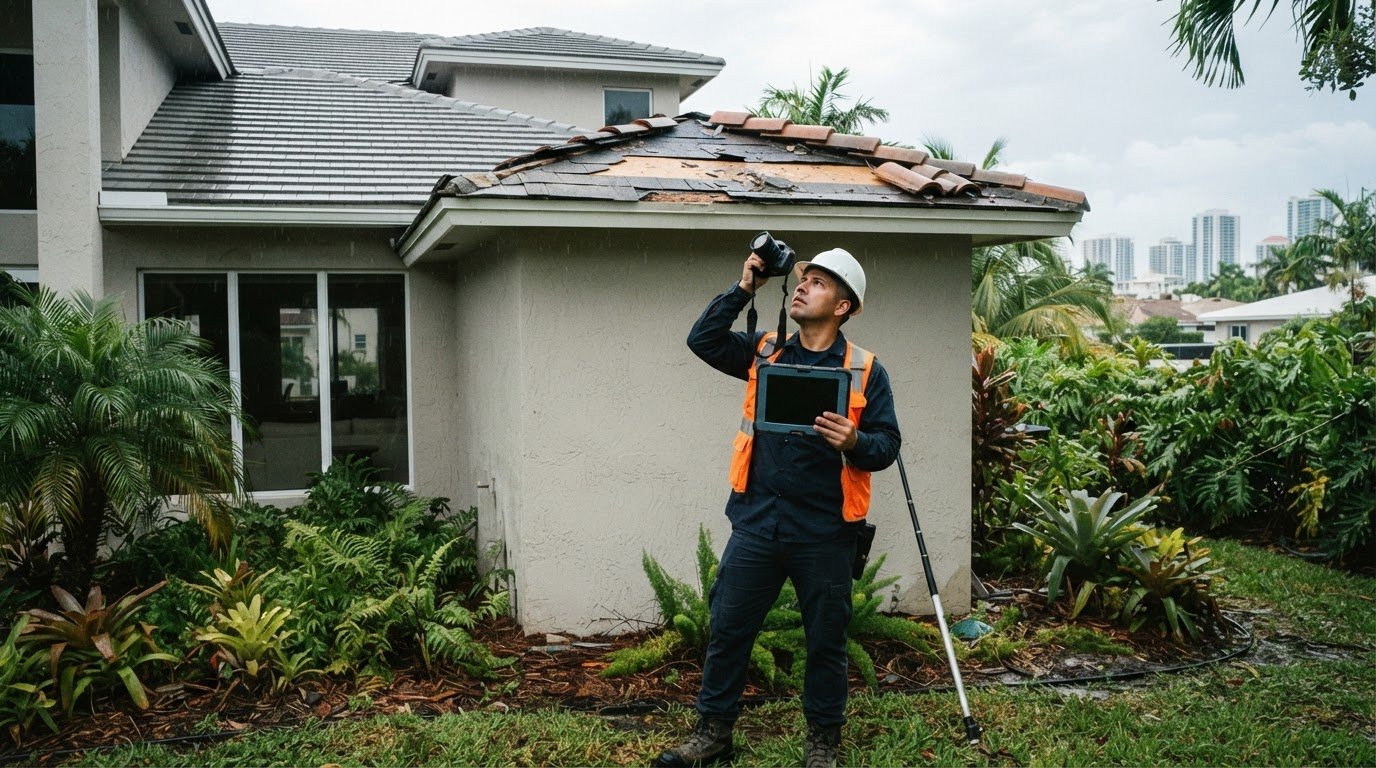
Roof and building enclosure failures require examination of both exterior components and interior effects. Investigators can document roof connections, openings, water pathways, and damaged materials, then compare findings with available weather records. One property investigation identified elevated wind speeds and surge flooding as contributing causes of structural movement. The assessment did not attribute the damage to a single cause.
Mechanical systems may also interact with building defects, particularly when equipment loads or drainage affect adjacent components. A disciplined assessment records the failure pattern, identifies relevant inputs, tests competing explanations, and states limitations in the model. This lets decision-makers see how calculations support conclusions and clarifies what additional evidence could resolve remaining technical questions.
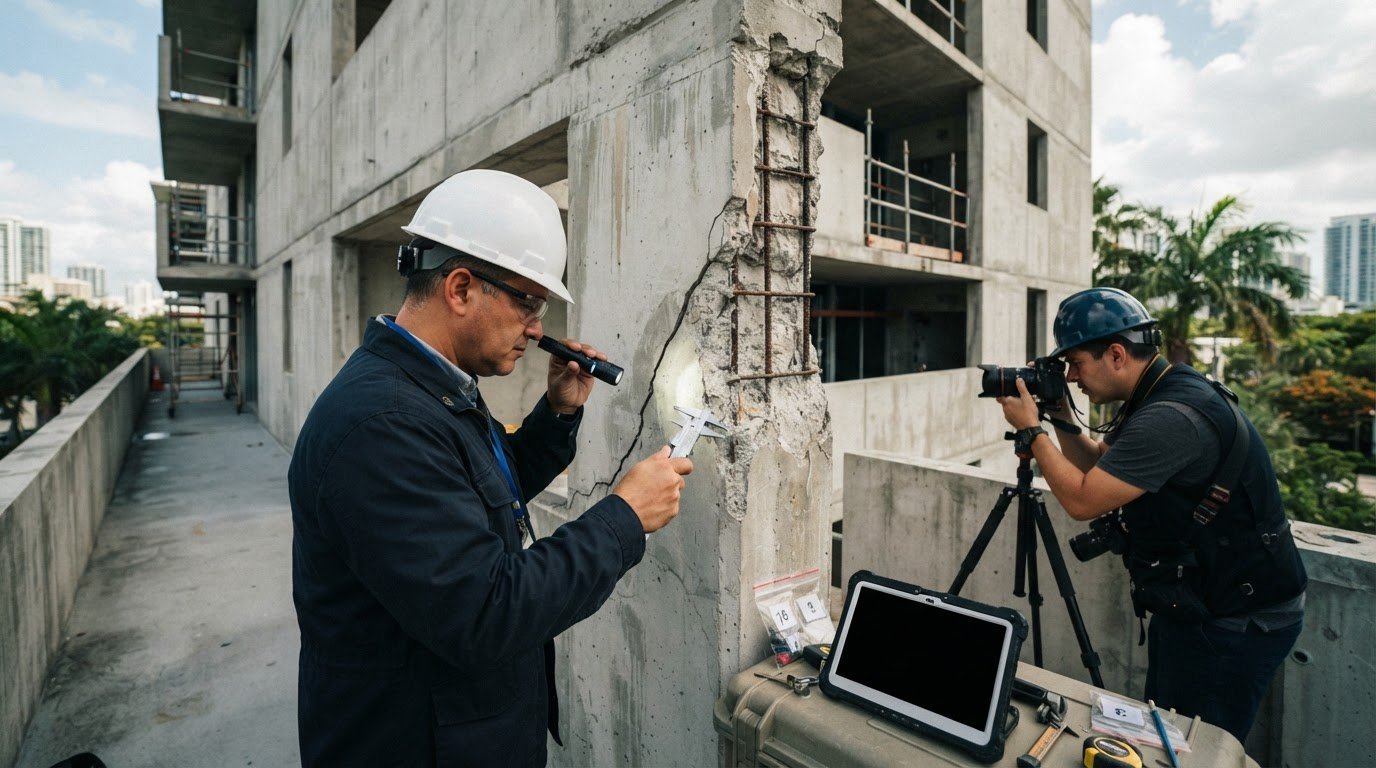
Forensic engineering expert witness roles and responsibilities
The expert connects engineering evidence to the disputed property condition. Clear scope, relevant qualifications, and impartial communication are central to that work.
Expert Qualifications
Match the expert’s engineering discipline to the issue under investigation. Structural movement may call for structural experience, while equipment failure may require mechanical expertise. Relevant qualifications can include professional licenses, advanced engineering degrees, industry experience, and prior trial testimony. Consider whether the expert can assess interacting factors, explain technical conclusions clearly, and remain independent from either side’s preferred outcome. The specialist’s experience should fit the property dispute, not just the broad field.
Evidence and Documents for Review
Provide materials that establish the property’s condition before and after the reported damage. Useful records include original plans, specifications, change orders, inspection reports, repair invoices, maintenance history, and dated photographs. For an insurance dispute, include relevant claim correspondence and damage documentation. Identify affected locations and equipment, then organize records by date. Environmental testing results or foundation assessments can inform the technical review when they relate directly to the alleged failure. Preserve damaged components and site records where possible.
Preparing and Using Expert Reports
An expert report generally sets out the assignment, evidence reviewed, methods, observations, analysis, and opinions. It should distinguish measured conditions from interpretations and explain how the evidence supports each conclusion. In litigation, counsel may use the report to understand technical issues, prepare questions, or present expert testimony. The expert can also explain complex engineering details to decision-makers. Reports are most useful when their reasoning can be traced from source records through analysis to conclusions, without overstating what the evidence establishes.
For a property dispute requiring technical evaluation, discuss an expert forensic damage assessment as a next step.
General Forensic Engineers: Expert Forensic Damage Assessment
General Forensic Engineers, LLC provides Expert Forensic Damage Assessment to clarify the cause and extent of property damage. Turn to this service when observed failures, conflicting explanations, or construction conditions call for a systematic technical evaluation. The findings can help property owners and legal professionals understand what the evidence supports.
For storm-related concerns, Pre & Post-Commercial Property Hurricane Assessments document property conditions around a hurricane event. Residential & Commercial Property Inspections assess building conditions, while Recertification & Milestone Inspections evaluate properties at relevant inspection stages. The appropriate assessment depends on the property and the issue under review.
Move the Dispute Toward a Clearer Record
Define the unresolved technical issue and preserve relevant records. A forensic engineering expert witness can assess whether the available evidence supports a cause, identifies contributing conditions, or points to where further investigation could help. Keep project documents, dated photographs, inspection findings, and repair records organized for review.
General Forensic Engineers, LLC offers Expert Forensic Damage Assessment, Pre & Post-Commercial Property Hurricane Assessments, and Residential & Commercial Property Inspections. These services document property conditions and support technical evaluation when damage or construction issues are disputed. A forensic engineering expert witness can explain how the findings relate to the questions at issue. Engaging a forensic engineering expert witness is a practical next step when technical opinions need a clear evidentiary basis.
For a focused assessment of a property dispute, contact General Forensic Engineers, LLC. A well-defined technical record gives the next decision a stronger factual foundation.
Frequently Asked Questions
How do expert witness directories help locate a suitable specialist?
Directories can narrow candidates by location, engineering discipline, credentials, and case experience. Use those filters to find professionals whose background matches the disputed issue, such as foundation movement or roof damage. Then compare relevant experience and communication skills. A directory is a starting point, not a measure of an expert’s suitability. Let the case’s technical questions guide the final selection.
What distinguishes forensic engineering from traditional engineering in litigation?
Traditional engineering generally concerns design, construction, or project performance, while forensic engineering examines existing failures and disputed damage. In litigation, the engineer evaluates physical conditions and records to explain how a failure may have occurred. For example, an investigation may examine a completed building component after damage appears. The distinction is the assignment: analyzing an existing event rather than designing a future system.
What work does an engineering expert witness perform?
An engineering expert witness assesses technical questions and may prepare an opinion for a legal matter. A forensic engineering expert witness may examine a disputed building condition, analyze relevant records, and explain the reasoning behind the findings. For example, the expert can clarify whether observed cracking aligns with the proposed cause. The role is to provide technical analysis, not determine legal responsibility.
How can I locate an expert near my property?
Start with the property’s location and the engineering discipline relevant to the dispute. For a building in Miami, identify experts with experience in the specific condition and an approach that accounts for site evidence. Compare credentials, related project experience, and the ability to explain technical opinions. Whether a property is in Miami, Tampa, St. Petersburg, Fort Lauderdale, Key West, Key Largo, Coral Gables, Pinterest, or Doral, technical fit should remain central to the decision.
Which disputes may need engineering expert testimony?
Expert testimony may be useful when a property dispute turns on a contested technical cause. Examples include structural movement, alleged construction defects, roof damage after a storm, or a building system failure. A forensic engineering expert witness can assess whether the evidence supports one explanation or indicates interacting factors. The need depends on the engineering question, not the type of party involved.
How does an expert witness differ from a consulting engineer?
A consulting engineer may advise on design, project decisions, or proposed repairs. An expert witness evaluates technical facts in a dispute and may communicate an opinion through a report or testimony. For example, a consultant might review a planned foundation repair, while an expert assesses the cause of existing foundation movement for a legal proceeding. The assignment, evidence, and intended audience distinguish the roles.

Comments