
Structural Failure Investigation for Building Defects and Damage
A visible crack is evidence, not a diagnosis. A structural failure investigation examines how and why a building component or system failed, assesses the extent of damage, and considers whether the condition can be remedied. The assessment may consider cracking, movement, settlement, water intrusion, deterioration, and possible design, material, construction, or environmental causes.
When damage appears, uncertainty about its cause can complicate decisions about a building and any resulting dispute. A careful investigation separates observed conditions from assumptions by examining the structure and relevant evidence, rather than treating every defect as proof of a single cause.
This article explains what building failure analysis involves, which signs call for an engineer’s assessment, and how investigators evaluate possible construction defects alongside other causes. It also outlines the records, site observations, testing, and engineering analysis that can support a clear, evidence-based conclusion.
Table of Contents
What is building failure analysis?
Building failure analysis examines how a building or component lost its intended function, stability, or capacity. A structural failure investigation connects physical evidence with engineering analysis to identify the cause and sequence of events.
Building Failure Causes
Failure may involve collapse, excessive movement, or damage that compromises a building system. Investigators assess environmental forces, loading, and construction conditions together. For example, wind or flooding may impose loads that exceed a component’s capacity, while deterioration may have reduced that capacity beforehand. Construction collapse causes can include design flaws, unsuitable materials, construction errors, or departures from drawings. The assessment considers the affected component and its relationship to the larger structure.
Failure Hypotheses and Root Causes
Investigators develop competing hypotheses, then test each against site observations, records, and physical evidence. A roof collapse, for example, may involve excessive loading, weakened connections, deterioration, or interacting causes. The analysis compares the expected failure pattern under each explanation with the damage observed on the ground. ASTM International states that ASTM E1188-11(2017) provides guidance on evidence collection and preservation protocols. Timely photographs, notes, and preserved samples help maintain a reliable basis for evaluating hypotheses and identifying root cause.
Liability Determination
Investigators evaluate evidence, design and construction records, and events throughout the building’s life to determine the technical cause. This analysis can clarify whether design decisions, material conditions, construction work, maintenance issues, or external events contributed to the failure. It does not, by itself, assign legal liability. Contractors’ work, project documents, and the failure sequence may inform insurance claims or legal proceedings, while responsibility depends on the evidence and legal assessment. Findings should distinguish established facts from interpretations and explain how conclusions follow from documented evidence.
When Should You Call a Structural Engineer for an Investigation?
Call a structural engineer when damage involves unexpected movement, deformation, connection failure, or collapse, or when its cause affects safety or repair decisions. The investigation moves from site observations and records to testing, structural calculations, and a documented conclusion.
Structural and Load Analysis
Structural analysis compares the building’s observed condition with its load path and capacity. Calculations examine load effects, yielding, nonlinear behavior, ultimate capacity, and redistribution after a member weakens. Finite element methods can divide a complex structure into smaller analytical parts. When material strength or another input is uncertain, sensitivity analysis tests how changing that assumption affects the result. Review the assumptions and measured conditions behind each calculation.
Field and Laboratory Testing
Field testing helps assess material condition and identify areas for closer examination. Investigators choose methods based on the material and question, such as screening concrete for variation or documenting corrosion-related deterioration. Laboratory analysis can examine retained samples when visual observations cannot distinguish between possible explanations. Destructive or invasive testing may be warranted when non-destructive methods cannot resolve a specific issue. Its location and scope should reflect the investigation’s evidence needs.
Investigation Steps and Safety Response
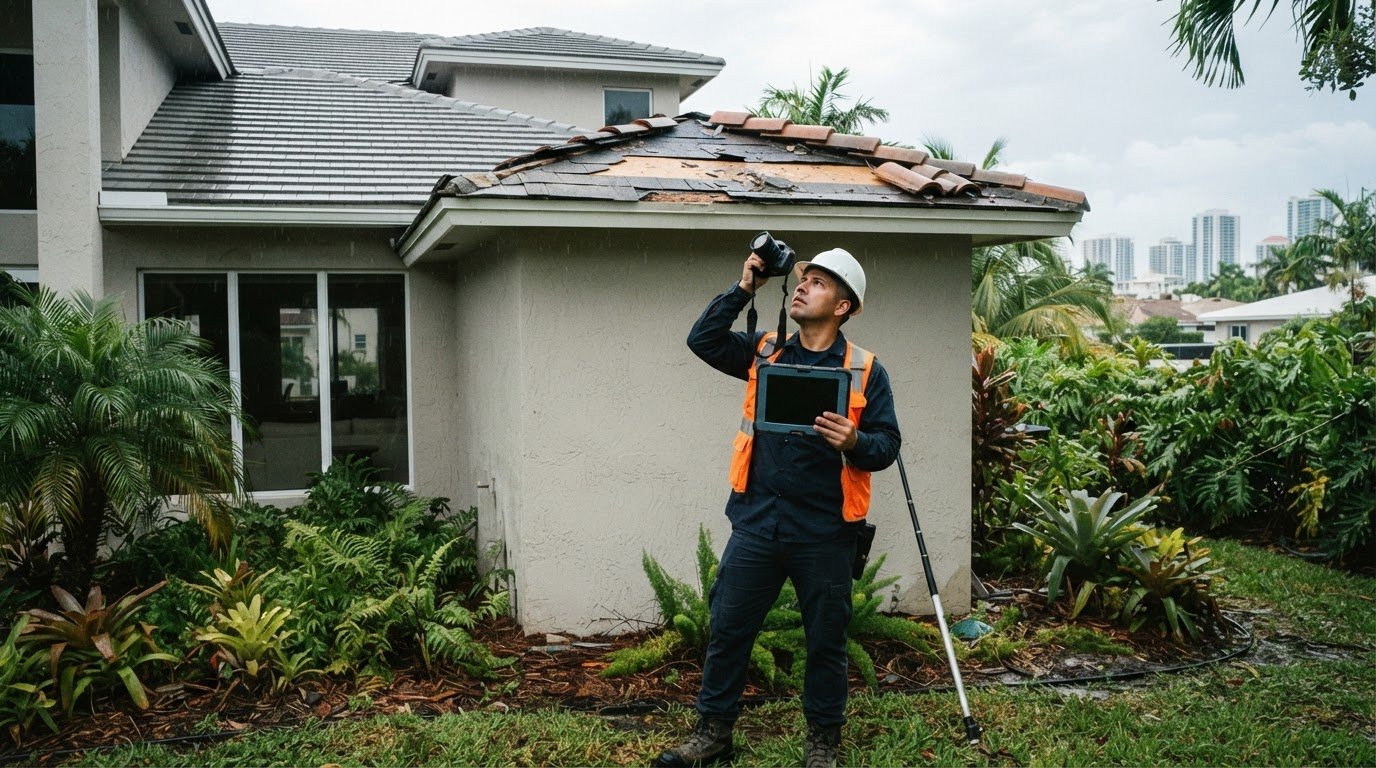
After a failure, prioritize safety: keep people away from unstable areas and have qualified responders assess access and components at risk of further collapse. The investigation then documents conditions, gathers available drawings and repair records, examines the structural system, tests relevant materials, and evaluates possible failure scenarios. Duration depends on site access, the number of components, record availability, testing requirements, and the scope of analysis and reporting. These factors shape the schedule.
Engineering Reports and Expert Qualifications
Structural engineers and other design professionals investigate building failures. A defensible report explains the structure, field observations, tests, calculations, reasoning, conclusions, and recommendations. Forensic engineering requires the investigator to distinguish measured facts from interpretation and address plausible alternatives. Expert reporting may support insurance or legal review, but technical findings explain causes rather than independently assigning legal responsibility. For an evidence-based evaluation of building damage, Expert Forensic Damage Assessment is a relevant next step.
Need a Structural Failure Consultant?
Compare forensic engineering firms by their independence, relevant material expertise, site methods, and ability to explain conclusions for insurance claims or litigation. In the United States, building codes are established and enforced primarily at state and local levels, not through one federal building code. Applicable requirements depend on the jurisdiction and project.
Failure Site and Material Examination
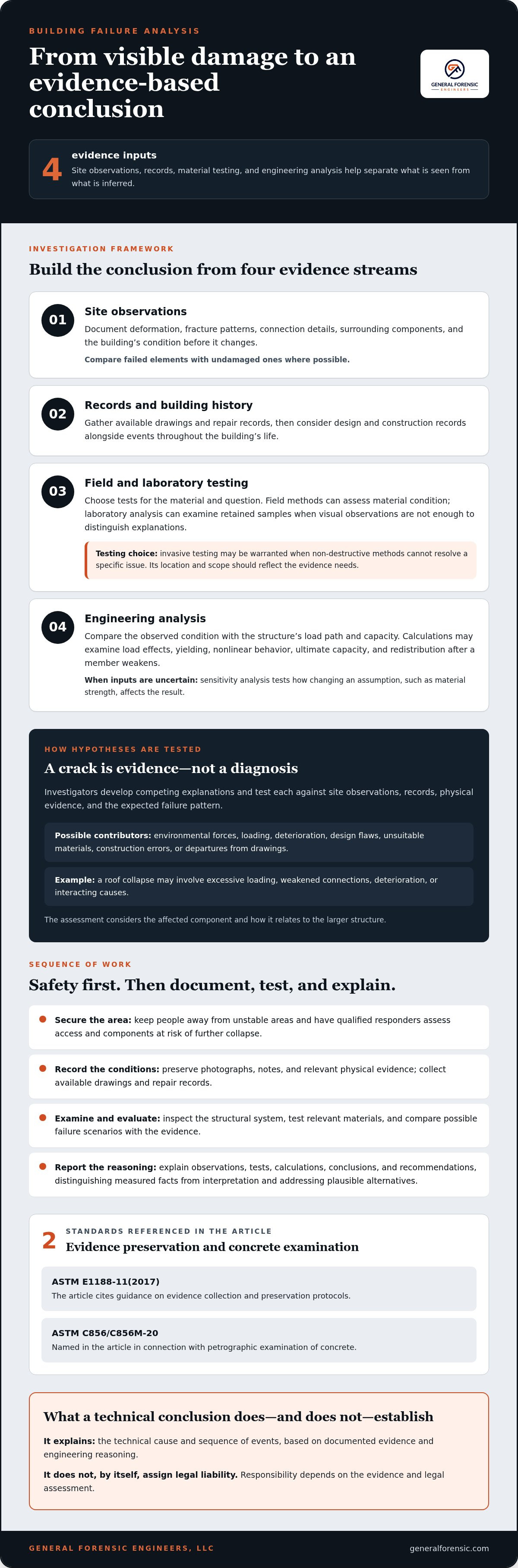
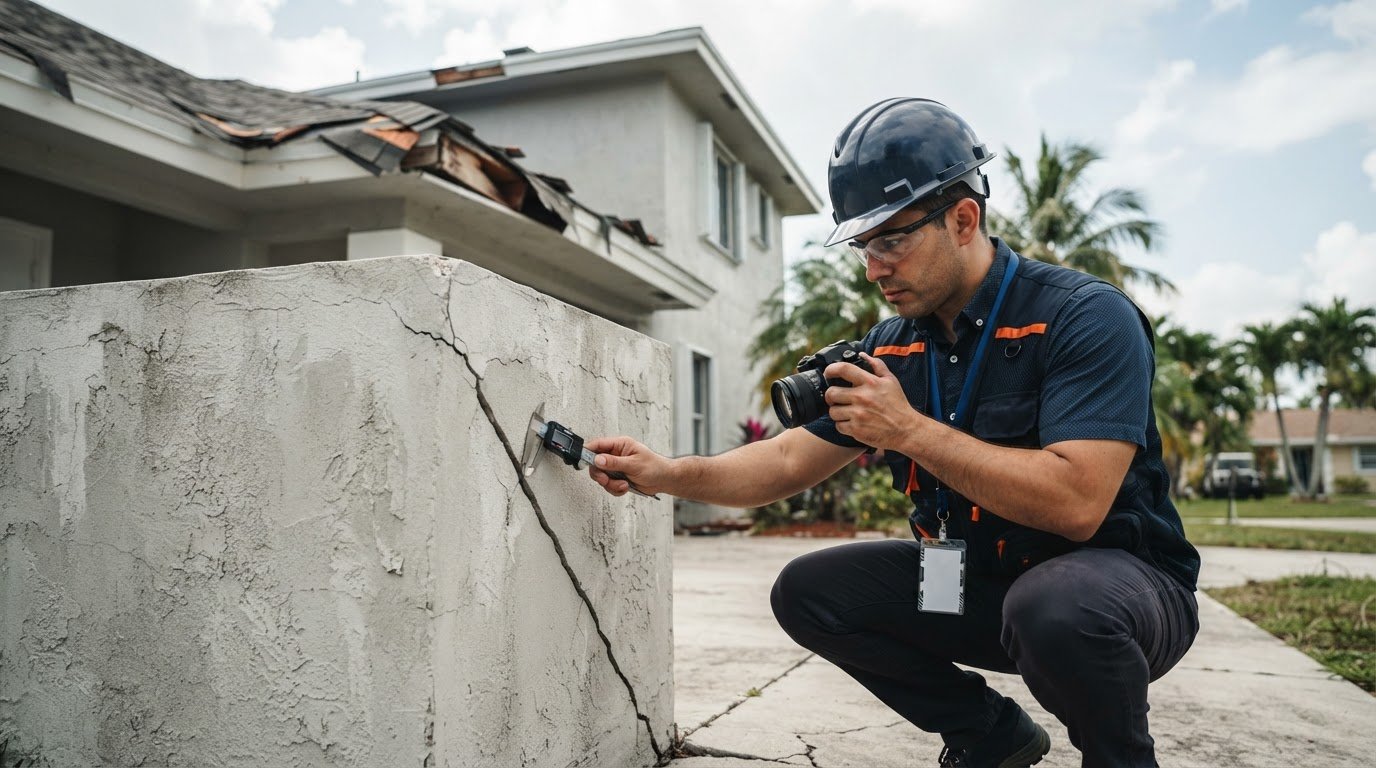
A forensic examination documents the failure site, construction methods, and physical evidence before conditions change. Investigators photograph deformation, fracture patterns, connection details, and surrounding components, then compare failed elements with undamaged ones. When retaining an entire structure is impractical, sampling both failed and non-failed elements can help distinguish a localized defect from a broader material condition. ASTM C856/C856M-20 petrographic examination may identify concrete characteristics such as alkali-silica reaction or sulfate attack.
Building Systems and Structural Materials
The assessment should trace the affected material through its connected building system. For concrete, investigators may examine cracking, reinforcement, and signs of corrosion; for steel, they may inspect connections and deformation; for wood, they may assess moisture, infestation, or member deterioration. Soil conditions can also contribute to structural movement. Relate each observation to its function and connections, rather than treating one damaged component as an isolated explanation.
Material Degradation and Serviceability
Material degradation can reduce capacity over time, while serviceability problems may appear as movement, cracking, or persistent deformation before collapse. Investigators assess whether exposure, moisture, corrosion, workmanship, or material properties explain the observed condition. ASTM C876-22b half-cell potential testing is used in reinforcement corrosion assessment. The resulting analysis distinguishes deterioration that contributed to failure from damage that followed it, helping clarify causation for claims and litigation without treating a visible defect alone as proof of responsibility.
Construction defects
Construction defect analysis compares the building’s current condition with its design documents, specifications, and construction records. Investigators assess whether poor material selection, calculation errors, inadequate consideration of loads, or design flaws contributed to the damage. They also examine workmanship and deviations from approved plans. An inspection should connect each observed defect to the affected structural element and explain whether it contributed to failure or occurred afterward.
Physical evidence helps distinguish a design issue from a construction error. For example, investigators may compare installed connections with drawings, then review fabrication, erection, and inspection records. IBC Chapter 17 special inspection records may be subpoenaed in defect cases involving disputed connection adequacy. Failure analysis can also consider material defects and external events, rather than presuming that one visible construction flaw caused the entire problem.
Nearby construction may also contribute to damage. Vibration from excavation, demolition, or other work can cause cracking or movement in an adjacent building. Investigators compare the damage pattern with construction activity, available records, and site observations to assess this possibility. The timing and location of distress help determine whether vibration is a plausible contributor, but do not establish causation on their own.
Field screening can help locate areas for closer examination. ASTM C597-22 pulse-velocity testing assesses concrete uniformity and can help detect defects; ASTM C805/C805M-18 rebound-number testing also assesses uniformity and helps identify areas for further review. ASTM C1383-15(2022) impact-echo testing can help detect defects or determine thickness. These methods inform an assessment, but their results must be interpreted alongside drawings, calculations, material conditions, and the wider structural system. A defensible conclusion separates confirmed observations from causal interpretations and explains how each bears on potential liability.
General Forensic Engineers: Expert Forensic Damage Assessment
General Forensic Engineers, LLC provides Expert Forensic Damage Assessment when building damage needs a documented evaluation of its condition and likely causes. The assessment helps property owners, attorneys, and insurance professionals understand observed damage and the engineering evidence relevant to next steps. It is appropriate when cracking, movement, deterioration, or storm-related damage calls for an independent technical assessment.
For broader property concerns, General Forensic Engineers, LLC also conducts Residential & Commercial Property Inspections, Pre & Post-Commercial Property Hurricane Assessments, and Recertification & Milestone Inspections. These services address different needs, from evaluating property conditions to documenting hurricane-related effects.
Move From Uncertainty to an Evidence-Based Decision
Turn unresolved building concerns into a defined assessment scope. Identify the areas of concern, gather relevant property records, and clarify whether the priority is determining damage causes, assessing current condition, or documenting a claim. A structural failure investigation can provide a technical basis for decisions when findings are tied to observable evidence and conclusions are clearly stated.
General Forensic Engineers, LLC offers Expert Forensic Damage Assessment, Pre & Post-Commercial Property Hurricane Assessments, and Residential & Commercial Property Inspections. The appropriate service depends on the property concern and the evidence that needs evaluation. An engineering assessment is separate from repair work, claim adjusting, or legal representation.
For an independent evaluation of building damage or property conditions, contact General Forensic Engineers, LLC. A clearly defined next step can help move the matter toward a more informed decision.
Frequently Asked Questions
What distinguishes forensic investigation from routine inspection?
A routine inspection records a building’s condition for maintenance, a transaction, or compliance; a forensic investigation addresses a specific failure or disputed damage. For example, after a ceiling collapse in a Miami property, investigators may compare the damaged area with unaffected spaces and available repair records. The focus is not simply what needs attention, but which evidence supports each explanation for the failure.
What root causes do forensic investigations typically uncover?
An investigation may identify several initiating events and contributing conditions rather than one isolated cause. A connection, for example, could have been vulnerable because of its design, then failed under load after corrosion reduced its capacity. Investigators distinguish the event that triggered damage from conditions that made the building more susceptible. This sequence can clarify technical issues in insurance claims or litigation.
Why is evidence preservation the most time-sensitive element of a forensic building investigation?
Evidence can change quickly when debris is removed, emergency shoring is installed, or damaged materials are discarded. These actions may be necessary for safety, but can obscure the original failure pattern. Before conditions change, document locations, orientations, and visible damage, and record work already completed. Keep photographs, site notes, and retained material samples organized with details about how and where they were collected.
What is a structural failure investigation?
A structural failure investigation is an engineering examination of why a structural component or building system lost its intended performance. It connects site conditions and available records with technical analysis to assess the failure mechanism and its extent. The scope may focus on one failed connection or examine how damage affected connected parts. In Miami, wind or flooding may be considered when the evidence makes them relevant.
What are the common causes of structural failure?
Common causes include design errors, construction defects, material deterioration, excessive or redistributed loads, and environmental forces. Failures can also involve interacting conditions, such as moisture-related deterioration followed by severe loading. For a Miami building, investigators can assess whether wind or flooding contributed by examining the actual damage and building records. A cause should fit the evidence, not merely an event that occurred nearby.
What evidence and tests are used to investigate structural failures?
Investigators may review design drawings, construction and maintenance records, prior inspection reports, photographs, and witness accounts. Site documentation can capture crack patterns, deformation, displaced components, and the relationship between damaged and intact areas. Testing is selected to answer specific material or structural questions. For example, concrete screening can help identify areas for closer examination, while laboratory analysis can characterize retained samples.

Comments