
Pool and Spa Structural Inspection for Home Buyers
A pool that looks serviceable may still have defects a general home inspection won’t identify. Buyers should arrange a dedicated pool and spa structural inspection when a property includes a pool or spa. ASHI’s residential pool and spa inspection standards do not require inspectors to determine structural integrity.
A separate assessment helps clarify the condition of the pool shell, visible surfaces, decking, plumbing, and accessible components before you make a purchase decision. This article explains what a structural inspection can cover, how it differs from a general inspection, which conditions deserve attention, and what to consider when choosing a qualified inspection service.
Table of Contents
Inspector qualifications and technical specialists
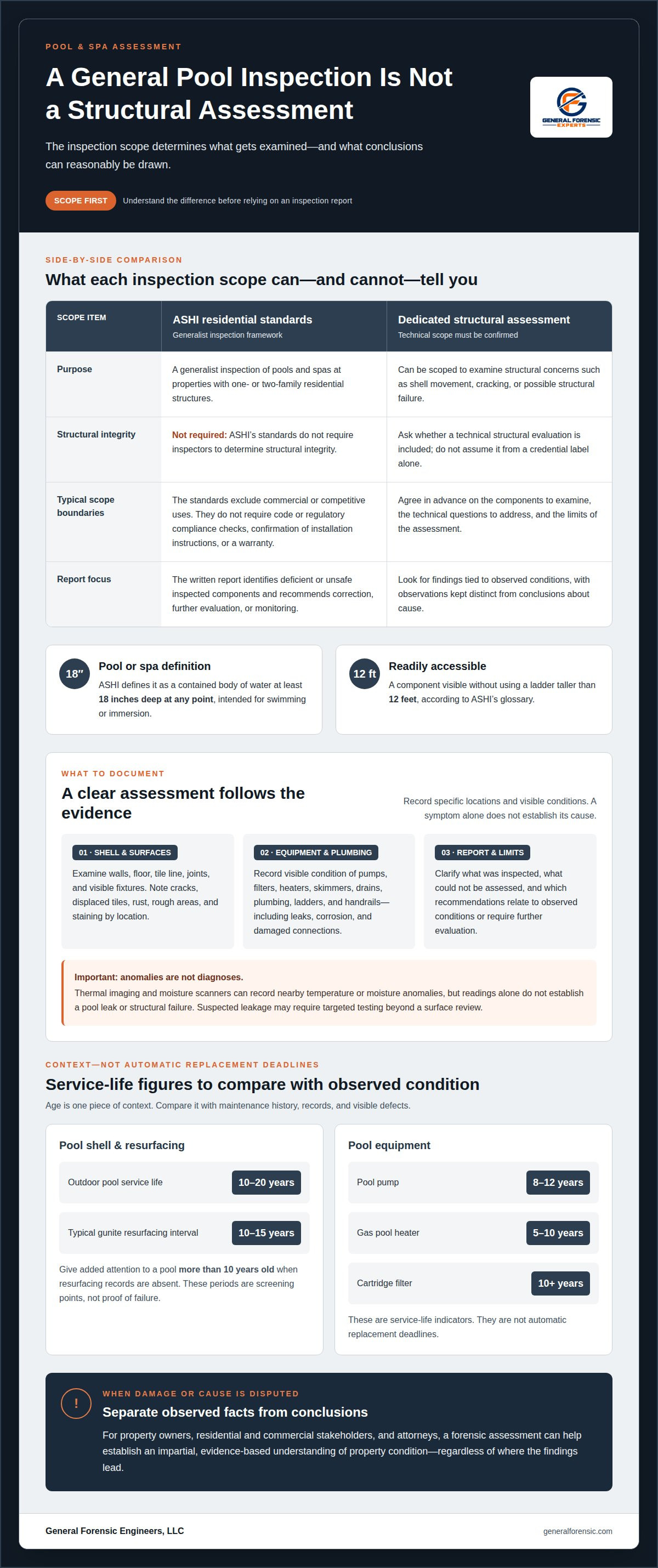
ASHI’s residential pool and spa inspection standards describe a generalist inspection, not a technical-specialist assessment. According to ASHI, the standards apply to pools and spas at properties with one- or two-family residential structures, and exclude commercial or competitive uses.
ASHI’s glossary defines a swimming pool or spa as a contained body of water at least eighteen inches deep at any point, intended for swimming or immersion. It defines a readily accessible component as one visible without using a ladder taller than twelve feet. These boundaries help clarify what a visual inspection can reasonably cover.
Scope matters more than a credential label alone. ASHI says it does not verify the qualifications of inspectors who use its residential pool and spa standards, and those standards do not require a determination of structural integrity. If you are concerned about shell movement, cracking, or structural failure, establish whether the inspection includes a technical evaluation of those conditions.
ASHI’s standards do not require inspectors to confirm compliance with building codes, other government regulations, or manufacturers’ installation instructions. They also provide no warranty or guarantee about a pool’s condition. A pool and spa structural inspection should clearly state its limits and distinguish visible observations from conclusions that require further technical analysis.
Before the inspection, clarify the scope and look for specific findings in the report, not broad assurances. According to ASHI, the written report identifies deficient or unsafe inspected components and recommends correction, further evaluation, or monitoring. Check that each recommendation is tied to an observed condition.
Confirm whether the inspector’s scope is generalist or includes technical structural evaluation.
Establish whether the property’s use falls within ASHI’s residential standards or outside their stated scope.
Use the written report to identify findings, limitations, and recommended next steps.
Pool shell and surface condition
A first-pass assessment uses visual examination and crack mapping to document shell and surface defects. Thermal imaging cameras and moisture scanners can record nearby temperature or moisture anomalies, but readings alone do not establish a pool leak or structural failure.
Inspect the pool in a consistent sequence: examine the walls, floor, tile line, joints, and visible fixtures. Record cracks, displaced tiles, rust, rough areas, and staining by location. For example, a crack with nearby tile displacement merits closer evaluation than an isolated surface mark. The report should distinguish observations from conclusions about their cause.
Age and maintenance history add context. Outdoor pools face exposure that compounds over a 10-20 year service life. Buyers should give added attention to a pool more than 10 years old when resurfacing records are absent. A typical gunite pool needs resurfacing every 10 to 15 years. These periods are useful screening points, not proof that a particular shell has failed.
Surface deterioration can affect use and signal a need for further investigation. Rough spots on the floor or walls may create contact hazards, while algae or other contaminants may point to maintenance concerns. Rusted fixtures and cracks in walls or tiles also warrant documentation. Photograph affected areas and note whether a defect appears isolated or extends across adjoining surfaces.
If leakage is suspected, assess visible water loss alongside shell and plumbing observations. A dedicated pool leak evaluation may require targeted testing beyond a surface review. The pool and spa structural inspection should document tested areas, observed evidence, and limitations, helping buyers distinguish a cosmetic repair from a condition that needs specialist evaluation.
Pumps, filters, heaters, plumbing, and visible electrical components
A pool’s operating equipment deserves attention separate from its shell. A dedicated inspection may examine pumps, filters, heaters, skimmers, drains, plumbing, ladders, and handrails. Record visible conditions such as corrosion, leaks, damaged connections, or unusual wear. A pump that operates does not, by itself, show that the entire circulation system is functioning properly.
Equipment age provides useful context for observed wear. Pool pumps typically last 8-12 years, while gas pool heaters typically last 5-10 years. Cartridge filters typically last 10 or more years. These figures are service-life indicators, not automatic replacement deadlines. Compare them with the equipment’s condition, maintenance history, and any visible defects.
Plumbing observations should identify visible leaks, damaged fittings, and connections around the pump and filter. Pool inspections may include these systems, but specialist leak detection is a separate evaluation. Note where water is present and whether it appears near equipment, plumbing, or the pool structure. Its location helps distinguish an observed symptom from an established cause.
Visible electrical components also warrant careful observation. Faulty wiring is a pool safety concern, so document exposed damage or deterioration without treating a visual review as a complete electrical assessment. Check ladders, handrails, drains, and other safety equipment for secure attachment or visible defects. For example, a loose handrail should be recorded as a specific finding.
Identify each pump, filter, and heater, then record its visible condition and available age information.
Document plumbing leaks by location, rather than assuming the source from water presence alone.
Separate visible electrical concerns from conclusions requiring specialist evaluation.
This equipment record helps buyers distinguish routine wear from documented defects. A report that names the affected component and describes its observed condition gives readers a clearer basis for deciding which issues need further evaluation before purchase.
How much does a pool and spa structural inspection cost in the United States?
The cost depends on the inspection’s scope and the property’s conditions. A pool and spa structural inspection focused on suspected shell damage may involve different work from a general visual review. The price depends on the case and is given after a quote request.
Scope is a key consideration. Account for the pool’s construction, access to relevant areas, visible damage, and requested documentation. For example, visible cracking may call for closer examination of the shell and adjoining surfaces, while suspected leakage may require targeted testing beyond a standard inspection. Clarify whether that specialized testing is included in the pool and spa structural inspection.
Before comparing proposals, identify the components to be examined, such as the shell, decking, equipment, plumbing, and visible electrical components. Clarify what the written report will document and whether it will identify observed deficiencies and recommended next steps. Proposals with different scopes are difficult to compare on equal terms.
Keep inspection work separate from repairs. Resurfacing, equipment replacement, and leak repairs are separate work, with costs depending on the defect, materials, access, and extent of repairs. An inspection documents conditions; it does not establish a repair price. If the assessment identifies work that may be needed, obtain a separate, itemized repair estimate.
For a meaningful comparison, provide each inspector with the same property details and requested scope. Include relevant records or photographs of concerns, such as recurring water loss or visible cracking. Then compare scope, deliverables, and limitations, not just the quoted amount. This helps establish whether the proposals address the same evaluation needs.
If damage is disputed or its cause remains unclear, request an independent property assessment to help document the condition and evaluate the evidence.
General Forensic Engineers: Expert Forensic Damage Assessment
General Forensic Engineers, LLC provides Expert Forensic Damage Assessment when visible pool damage, suspected failure, or conflicting accounts call for a focused property evaluation. The assessment helps property owners, commercial stakeholders, and attorneys examine observed conditions and determine what the evidence supports, without presuming where the findings will lead.
For buyers, owners, and legal professionals, a forensic assessment can clarify whether reported damage warrants further investigation and how it relates to the property’s condition. General Forensic Engineers, LLC also conducts Residential & Commercial Property Inspections, which can document broader concerns alongside pool-related observations. Findings support an evidence-based understanding, not a predetermined conclusion.
Make the Next Property Decision With Evidence
A purchase decision should be based on a clear understanding of the property’s condition, not appearance alone. A pool and spa structural inspection can clarify which observations need attention, while a documented technical assessment can distinguish visible symptoms from evidence about cause. That distinction matters to buyers weighing a purchase, property owners addressing damage, and attorneys evaluating a dispute.
General Forensic Engineers, LLC provides Expert Forensic Damage Assessment, Residential & Commercial Property Inspections, and Pre & Post-Commercial Property Hurricane Assessments. The company assesses conditions objectively and reports findings, whether or not they support an expected explanation. For plaintiff’s counsel, an impartial assessment can provide a grounded basis for evaluating property damage allegations and next steps.
Bring property concerns and available records into the discussion. Contact General Forensic Engineers, LLC about a property assessment and move forward with evidence at the center.
Frequently Asked Questions
Should I get a pool inspection when buying a house?
Yes, arrange a dedicated pool inspection before making your purchase decision. A general home inspection may not establish whether structural concerns exist, so a separate assessment can identify issues that need further review. If findings include a crack or unexplained water loss, use the report to clarify what was observed and whether additional technical evaluation would help inform your decision.
What does a pool and spa structural inspection include?
The scope can include visible pool surfaces, decking, plumbing, equipment, and safety components. ASHI’s residential standards call for inspection of safety barriers and entrapment-prevention components, but do not require inspectors to determine structural integrity. Request a written report identifying inspected components and findings. For a spa, confirm that the scope covers its construction and accessible equipment.
When should a pool or spa structural inspection be performed?
Schedule an assessment before buying a property with a pool or spa, particularly if your decision depends on its condition. An inspection is also appropriate after a new crack appears, tiles shift, or water loss raises concern. If damage follows a storm or another event, document the visible condition promptly so it can be considered alongside available records.
What are common signs of structural damage in a pool or spa?
Cracks in the shell, separated or displaced tiles, rusted fixtures, and changes around the pool’s edges can warrant closer evaluation. A rough area or stain alone does not establish structural failure, but its location and pattern may provide useful context. Record where each condition appears, whether it extends across adjoining surfaces, and when it was first observed.
How do inspectors check pool shells, decks, coping, and retaining walls?
Inspectors examine accessible surfaces for visible cracking, separation, displacement, deterioration, and uneven transitions. At the coping, they can document gaps or loose sections; across the deck, they can note cracking or movement near the pool edge. Retaining-wall observations should record visible displacement or cracking. These findings describe observed conditions but do not, by themselves, establish the cause or structural capacity.
What qualifications or licenses should a pool structural inspector have?
Confirm that the inspector’s qualifications and experience match the requested scope, especially if you need structural conclusions rather than a general visual review. ASHI says its residential pool and spa standards describe generalist inspections and that it does not verify users’ qualifications. The standards do not require structural-integrity determinations, so clarify whether the inspector’s training covers that technical evaluation and what the written findings will address.


Comments