
Building Recertification Inspections in Miami Under the New Law
The new Florida milestone-inspection law adds requirements; it does not replace Miami-Dade’s building recertification program. A building recertification inspection in Miami remains a separate local compliance process, while Florida’s milestone-inspection requirements apply to condominium and cooperative association buildings at least three stories tall, effective May 26, 2022. Miami-Dade County requires recertification reports within 90 days of the notice and may grant an extension of up to 60 days for a qualifying written request from an engineer or architect.
For property owners, residential and commercial stakeholders, and attorneys, distinguishing these processes is essential to understanding which requirements apply and what an inspection report establishes. Requirements may overlap, but the processes are not interchangeable.
This article explains how the new law relates to local recertification, how recertification differs from milestone inspections and Structural Integrity Reserve Studies, and what the applicable schedules, inspection scopes, and findings mean for a property. It clarifies the compliance issues and how an impartial property assessment can help when building conditions or reported deficiencies are disputed.
Table of Contents
How are building recertifications affected by the new law?
Miami-Dade County and City of Miami requirements are administered separately, so jurisdiction determines the applicable process. Inspection fees can vary depending on the scope of the review.
Repairs and Permit Requirements
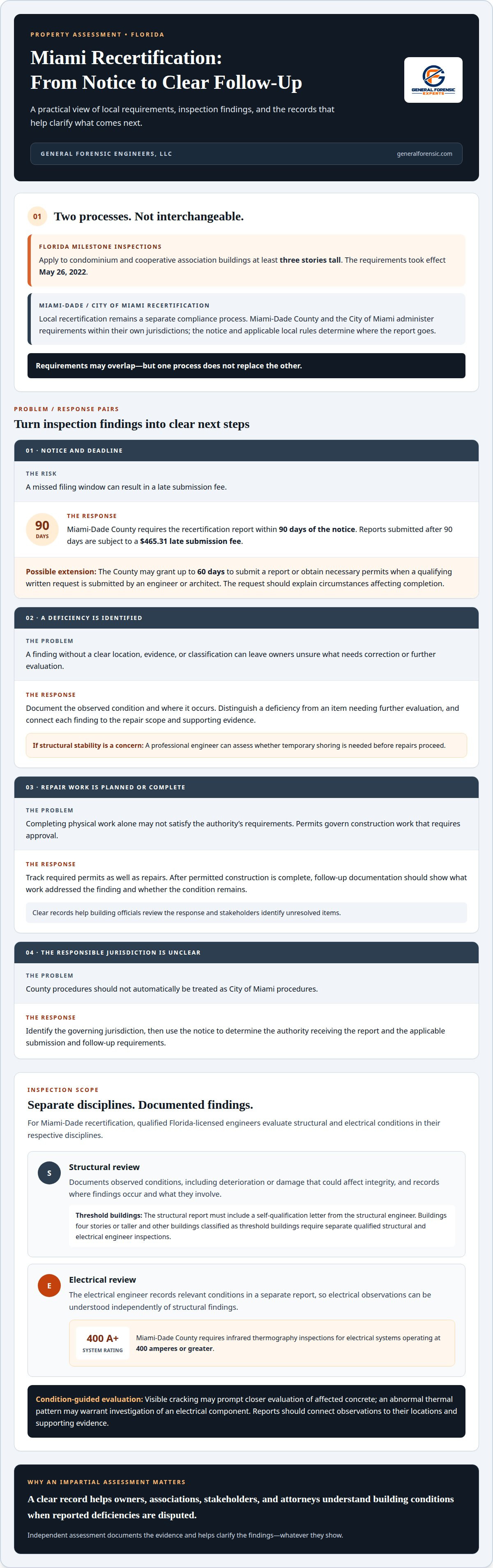
Recertification repairs address deficiencies identified in the inspection, while permits govern construction work requiring approval. The distinction matters because completing physical work alone may not satisfy the authority’s requirements. Miami-Dade County may grant an extension of up to 60 days to submit a recertification report or obtain necessary permits when an engineer or architect submits a qualifying written request. The request should explain the circumstances affecting completion. Where structural stability is a concern, a professional engineer can assess whether temporary shoring is needed before repairs proceed. The report should connect each finding to the repair scope.
Deficiency Reporting and Repair Follow-Up
A deficiency report records observed conditions and identifies items that need further evaluation or correction. This documentation gives owners and associations a clear basis for planning repairs, permits, and follow-up. The responsible professional can distinguish structural concerns from other findings and explain the evidence behind each conclusion. After permitted construction is complete, follow-up documentation should show what work addressed the reported condition and whether the issue remains. Clear records help building officials review the response and stakeholders understand unresolved items. They also create a traceable record for future assessments of the same area.
Local Recertification Rule Differences
Miami-Dade County and the City of Miami administer requirements within their respective jurisdictions; county procedures should not automatically be treated as city procedures. This distinction matters for owners of buildings in the City of Miami, including properties reaching the 30-year recertification threshold. Each municipality is responsible for its own recertification process. Therefore, the notice and applicable local requirements determine the authority receiving the report. The professional preparing an assessment should identify the governing jurisdiction and address its submission requirements. That prevents an owner or association from relying on the wrong forms, review process, or repair follow-up expectations.
Structural and electrical inspections
For a building recertification inspection in Miami, Miami-Dade County requires threshold buildings to undergo structural and electrical inspections by qualified Florida-licensed engineers. Qualifications depend on the building’s classification and the discipline being certified: a structural engineer evaluates structural conditions, while an electrical engineer evaluates electrical systems. Buildings four stories or taller and other buildings classified as threshold buildings require separate inspections by qualified Florida-licensed structural and electrical engineers.
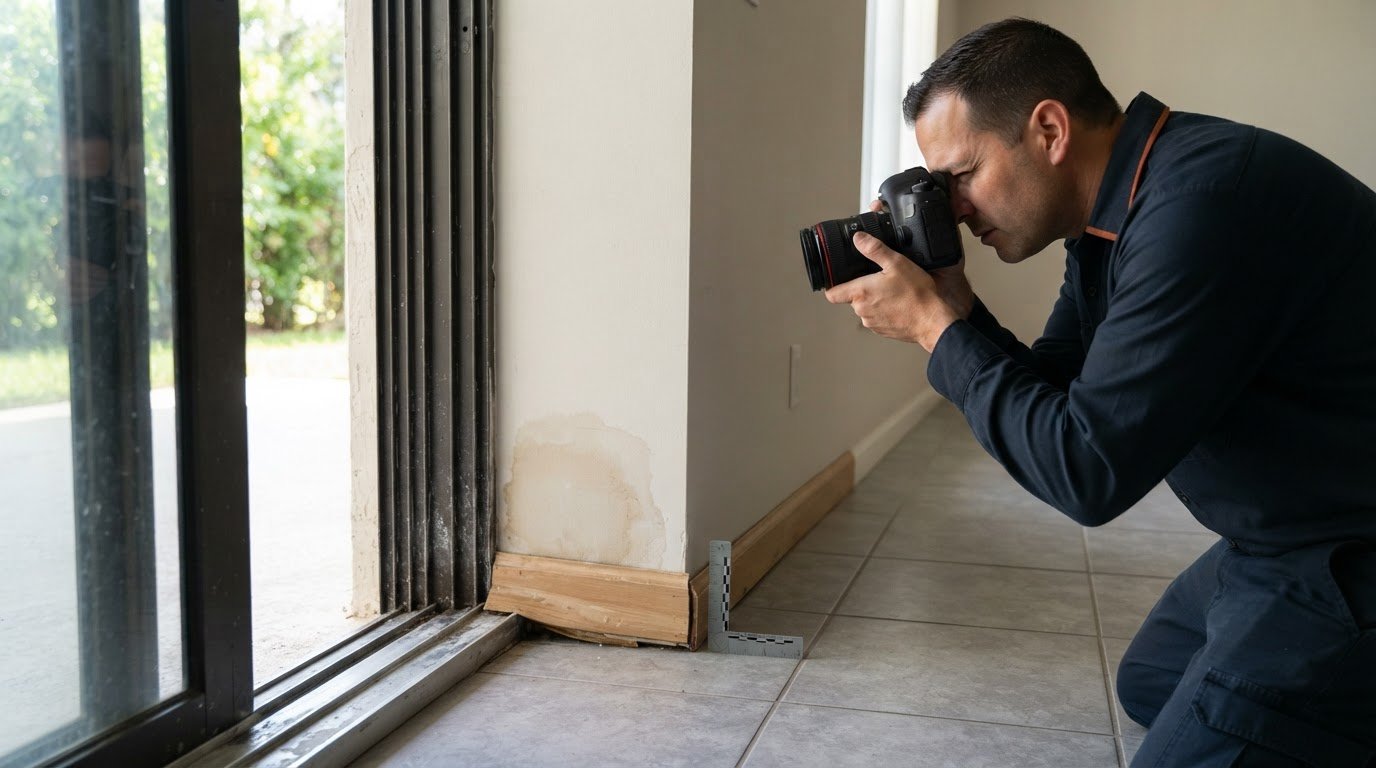
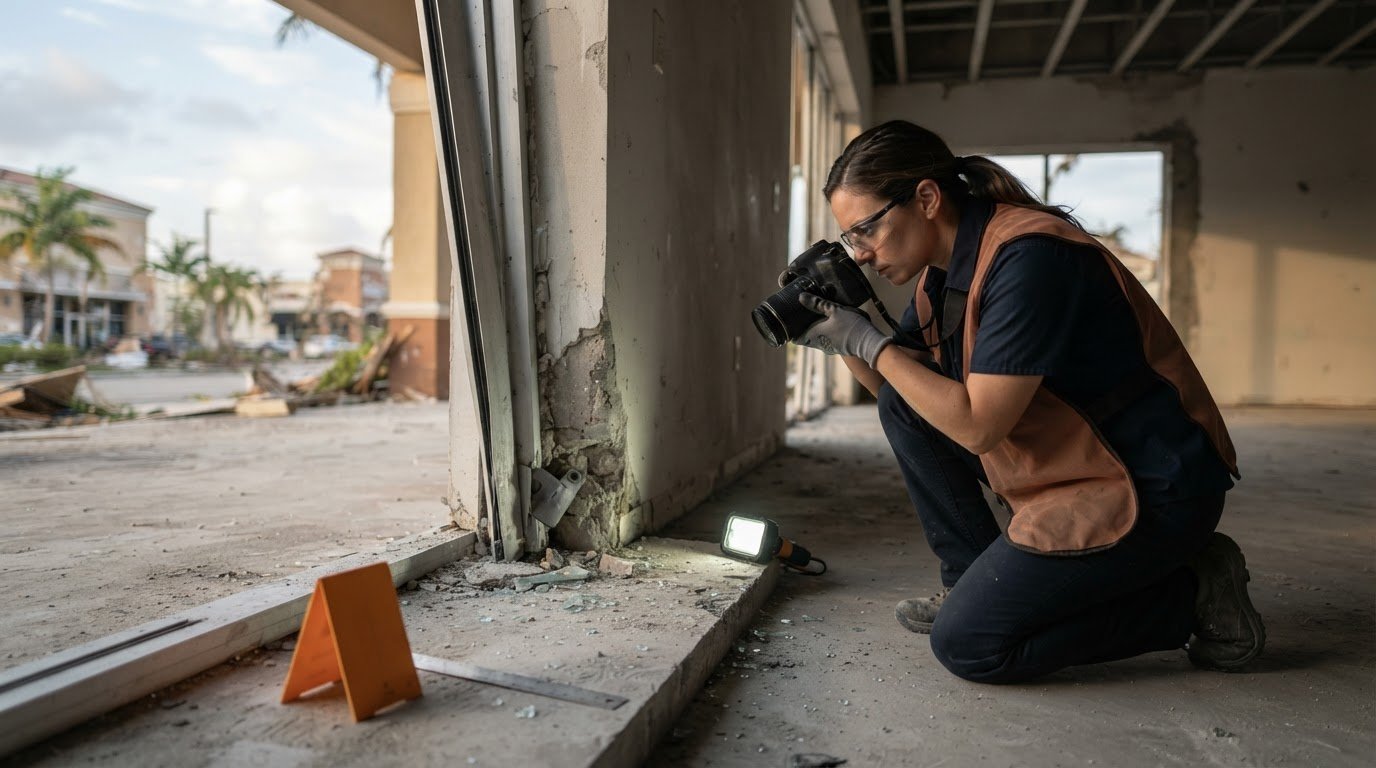
The inspection begins with a systematic examination of building components and electrical equipment. During a building recertification inspection in Miami, the structural review documents observed conditions, including deterioration or damage that could affect integrity. The engineer records where findings occur and what they involve, distinguishing observed conditions from items needing further evaluation. For a threshold building, the structural report must include a self-qualification letter from the structural engineer.
Electrical review has a defined technical component. Miami-Dade County requires infrared thermography inspections for electrical systems operating at 400 amperes or greater. Thermography can reveal temperature differences in energized equipment, directing attention to areas that warrant assessment. The electrical engineer records relevant findings in a separate report. This helps owners and condominium associations understand electrical conditions independently of structural observations.
Testing should be guided by conditions identified during the inspection. For example, visible cracking may prompt closer evaluation of affected concrete, while an abnormal thermal pattern may warrant investigation of an electrical component. The report should connect each observation to its location and supporting evidence. This gives the building official a basis for review and clarifies which findings need further analysis or corrective work.
For an impartial assessment of structural or electrical conditions, recertification and milestone inspections can establish documented findings for property owners and other stakeholders.
Reporting critical deficiencies to building officials
A building recertification inspection in Miami should be scheduled with the notice deadline in view. Miami-Dade County requires owners to submit recertification reports within 90 days of the notice of required recertification. Miami-Dade County charges a $465.31 late submission fee for reports submitted more than 90 days after the notice. Keeping the notice and submission date together helps owners track the filing period and late status.
The report should identify the building, inspected areas, observed conditions, and any required follow-up. For a building recertification inspection in Miami, clear classification of each finding helps the department distinguish a documented deficiency from a recommendation for further evaluation. Miami-Dade design professionals were required to use updated recertification forms starting in January 2024. A complete report connects each observation to its location and supporting documentation.
Critical findings should be clearly documented for the building official. For example, a report on a structural concern should identify the affected area and explain the observed condition, rather than relying on a general statement. Owners can then coordinate any required evaluation, permits, or construction and retain records that link repairs to the reported deficiency. If a property does not obtain recertification within the required timeframe, Miami-Dade County refers it to the Unsafe Structures Section, where an enforcement case is opened.
Missing the deadline can trigger both a late fee and enforcement consequences. The initial fine for failure to comply with Miami-Dade recertification requirements is $510, and a violation fine can reach $10,000 per violation. These fines are separate from the $465.31 late submission fee. Owners should retain the notice, submitted report, permit records, repair documentation, and filing confirmation. Together, these records clarify the report’s status and document the response to identified deficiencies.
Recertification versus milestone inspections and SIRS
Miami-Dade County’s general recertification process applies to properties at 30 years of age and at each 10-year interval afterward for the life of the structure. Miami-Dade County’s Code establishes an earlier threshold for coastal buildings: under Section 8-11(f), coastal buildings become subject to recertification at 25 years of age. These local recertification requirements involve building condition and applicable structural and electrical reviews. The governing schedule depends on the property’s location and classification.
Florida’s milestone inspection requirements are a separate process for condominium and cooperative association buildings at least three stories tall. The first milestone inspection generally applies at 25 or 30 years of age, depending on location and proximity to the coastline, with later inspections at 10-year intervals. A milestone inspection focuses on structural integrity. It does not replace a county recertification inspection or satisfy that separate schedule. A notice can therefore require action under one process even when another inspection has been completed.
A Structural Integrity Reserve Study, or SIRS, serves a different purpose again. Florida law generally requires residential condominium buildings with three or more habitable stories to complete a SIRS at least every 10 years. The study addresses reserves for structural integrity components, supporting financial planning for future work. It is not a physical recertification report, nor does it substitute for a milestone inspection. Owners and associations should distinguish the inspection findings from reserve-planning obligations.
For example, a coastal condominium may face a county recertification threshold at 25 years, a milestone inspection based on the applicable state schedule, and a separate SIRS requirement. These obligations may overlap in timing, but each has a distinct purpose, scope, and documentation. Permitting or completed construction under one process does not itself establish compliance with the others. A building’s occupancy, location, height, and notice determine which requirements apply. Small-building exclusions, including certain properties with 2,000 square feet or less, may also affect county recertification applicability.
Separate schedules and reports help owners identify the correct scope before planning an inspection. Schedule a recertification or milestone inspection to document building conditions relevant to the applicable assessment.
General Forensic Engineers: Recertification & Milestone Inspections
General Forensic Engineers conducts recertification and milestone inspections to document building conditions and support informed decisions by property owners, residential and commercial stakeholders, and attorneys. The assessment records observed conditions and relevant deficiencies without presuming what the findings will show.
Owners can use this service when a recertification or milestone inspection is due, when reported building conditions need objective evaluation, or when stakeholders need a clear technical record. For damage-related concerns, Expert Forensic Damage Assessment evaluates property damage and its causes; residential and commercial property inspections document broader property conditions.
These findings can help owners understand inspection results and attorneys assess property conditions in a dispute. Contact General Forensic Engineers to discuss a recertification or milestone inspection.
Use an Independent Assessment to Guide Your Next Step
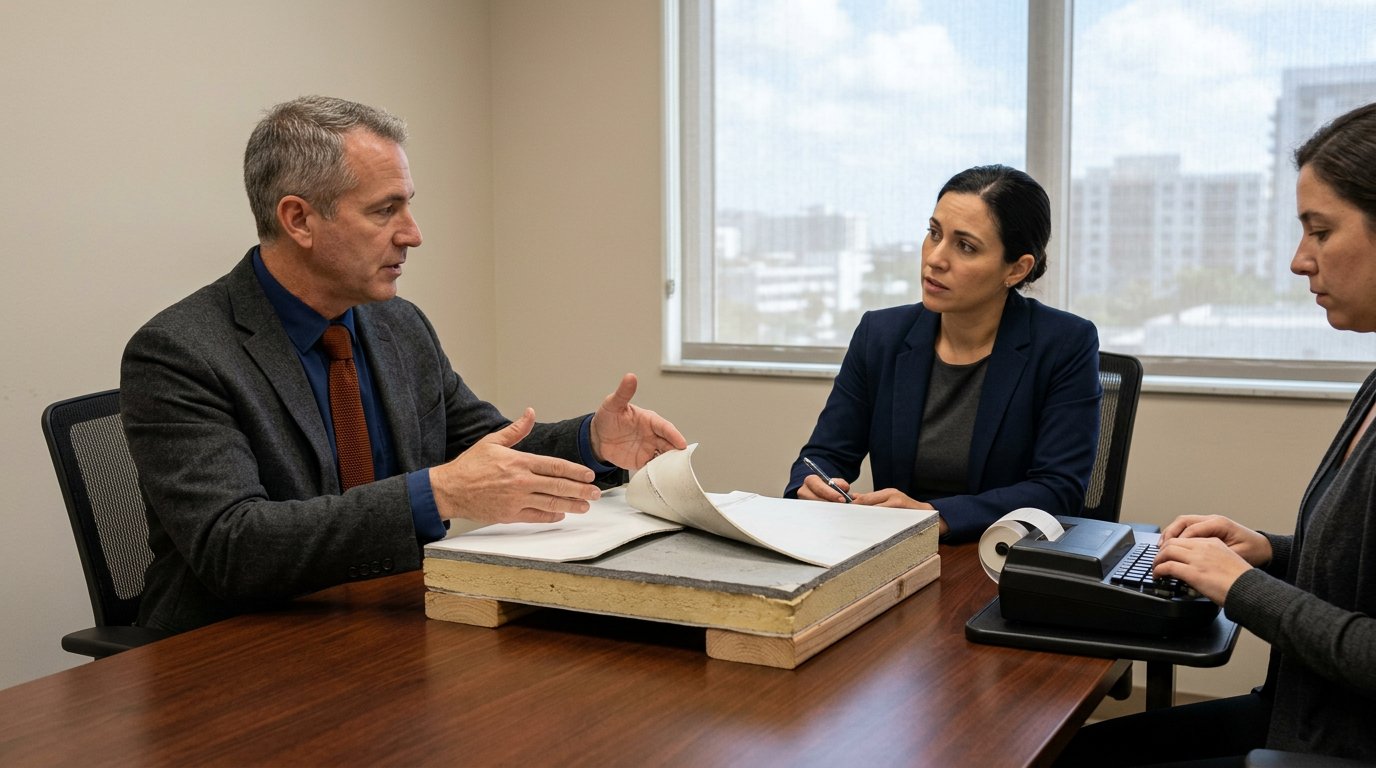
A building recertification inspection in Miami provides a documented basis for decisions about a property’s condition. For owners, residential or commercial stakeholders, and attorneys, an impartial assessment clearly records findings, including evidence that may support or challenge an initial understanding of the building.
General Forensic Engineers, LLC provides Expert Forensic Damage Assessment, Pre & Post-Commercial Property Hurricane Assessments, and Residential & Commercial Property Inspections. These services help stakeholders evaluate property conditions and damage through objective findings, without presuming what the evidence will show. For attorneys assessing a potential property dispute, an independent technical record can help clarify conditions and inform next steps.
When a property assessment would help establish the facts, contact General Forensic Engineers, LLC to discuss the situation. A clear assessment gives stakeholders a sounder basis for moving forward.
Frequently Asked Questions
Recertification, milestone inspection and SIRS: what’s the difference?
These are separate processes with different purposes. Miami-Dade County recertification evaluates building condition under the local program; Florida milestone inspections focus on structural integrity in qualifying condominium and cooperative buildings. A Structural Integrity Reserve Study (SIRS) supports planning reserves for future structural work rather than certifying a building’s condition. Associations should track each notice and report independently, even when inspections occur close together.
What can I do if I have concerns about my building?
Document the concern by location and type, such as recurring water intrusion near a window or visible cracking in a concrete member. Keep relevant photographs, maintenance records, repair documents, and inspection reports so the assessment can consider the condition’s history. An independent property inspection documents observed conditions; a forensic damage assessment evaluates damage and its cause. Findings may confirm, refine, or contradict initial assumptions.
What is Miami-Dade building recertification and which buildings must complete it?
It is the County’s process for evaluating covered buildings as they reach required inspection ages and subsequent cycles. Miami-Dade County’s program generally covers buildings at least three stories tall and more than 30 years old, subject to applicable criteria. It excludes single-family homes and duplexes, as well as buildings with an occupant load of 10 or less and an area of 2,000 square feet or less. Municipal jurisdiction also matters.
What are the current Miami-Dade 30-year and 40-year recertification requirements and deadlines?
Miami-Dade County’s general process applies at 30 years of age and at each 10-year interval afterward; coastal buildings become subject at 25 years under Section 8-11(f). The program was formerly called the 40-Year Recertification, but the name alone does not establish a building’s current schedule. Buildings that already completed initial recertification continue on their established schedule. The notice specifies the report deadline, which owners should use to plan submission.
What inspections and structural and electrical reports are required for building recertification in Miami?
Requirements depend on building classification and jurisdiction. Miami-Dade County requires separate inspections by qualified Florida-licensed structural and electrical engineers for buildings four stories or taller and other threshold buildings. Electrical systems operating at 400 amperes or greater require infrared thermography. The structural report documents observed structural conditions; the electrical report addresses the electrical system. A building’s height or threshold classification helps determine the required professional disciplines.
What is the step-by-step process to complete building recertification in Miami-Dade?
The process generally follows an ordered sequence, with the notice and building classification determining the required scope:
Review the County notice and identify the applicable deadline.
Arrange the required structural and electrical inspections for the building’s classification.
Have the qualified professionals document findings and prepare the reports.
Submit the reports, then address any identified deficiencies, permits, and follow-up requirements.
Keep submitted reports and repair records together for future review.
Comments