
Forensic Engineer Fees for Inspections, Depositions and Trials
A site inspection is only one part of a forensic engineer’s fees. Costs depend on the investigation’s scope, site conditions, analysis and reporting required, and whether deposition preparation or trial testimony is involved. General Forensic Engineers, LLC provides a fee proposal after receiving details about the case.
It is reasonable to want a clear picture of costs before starting an investigation, especially when property damage is disputed and technical findings may become evidence. The work can extend beyond a site visit: reviewing records, conducting testing, preparing a report, and preparing for or giving testimony may all affect the total.
This article explains the main factors that shape a forensic engineering engagement and its fees. You’ll learn how inspection scope, analysis and reporting, and deposition or courtroom work fit into the process. It also covers what to define when engaging an engineer to assess property damage and determine what the evidence supports.
Table of Contents
Is testimony billed separately?
Testimony is separate from inspecting a property and preparing findings. An engagement can assign separate fees to site work, analysis, report writing, deposition preparation, and testimony. The written scope should identify which tasks are included and which are billed separately. For example, after an inspection, an engineer may need time to review case documents and prepare for questioning. That work differs from appearing at a deposition or trial, so clarify how each task is handled in the agreement.
Travel can also affect an invoice. Ask whether travel time is billed as professional time and whether mileage or other travel expenses are itemized separately. A site visit outside the engineer’s usual travel area, for example, may involve both time on the road and mileage. The engagement terms should explain the billing structure, expense categories, and how travel relates to the inspection or testimony.
To request and compare proposals, give each firm the same concise case summary, property location, requested inspection scope, and anticipated litigation tasks. Compare the written proposals by deliverables and billing categories, including travel, report preparation, deposition, trial, and additional analysis. General Forensic Engineers, LLC provides a fee proposal after receiving details about the case.
When an investigation requires physical materials to cross borders, clarify what needs to be shipped, who will arrange shipment, and whether the cost is listed separately. For example, a proposal can distinguish professional time from shipment expenses for samples or records. Include any anticipated shipping costs in the written engagement terms before authorizing shipment.
Consultation, retainer, and minimum-hour terms depend on the engagement. The proposal should state whether an initial consultation is billable, whether an advance retainer is required, and whether minimum hours apply. Payment terms should identify the invoice schedule, due dates, and any late-charge provisions. Per diem and mileage charges should also be explained separately, with the basis for each stated in writing. Before signing, confirm that the agreement addresses testimony cancellation, rescheduling, and expenses already incurred. Clear terms help property owners and attorneys understand how inspection and testimony work are billed.
Deposition and trial preparation rates
Preparation involves more than rereading a report. Before a deposition, an engineer may review pleadings, project records, photographs, test results, and opposing opinions. This work connects conclusions to the evidence supporting them. For example, if a report attributes damage to water intrusion, the engineer may organize observations and records relevant to that conclusion. Preparation is distinct from answering questions during testimony, so the engagement should explain how each task is billed.
Trial preparation may involve different tasks. The engineer may review the final exhibit list, check calculations, and prepare to explain technical findings in plain language. An attorney may also schedule preparation meetings to identify disputed assumptions and clarify the scope of testimony. These activities take professional time, even outside the courtroom. A proposal should state whether preparation meetings, exhibit review, and testimony have separate billing terms.
To assess a proposed fee structure, ask for task-level detail rather than one combined figure. The estimate should distinguish record review, preparation meetings, deposition attendance, trial attendance, and travel expenses. It should also explain how additional preparation is authorized if new documents or opinions arrive. This makes it easier to understand how the work may change as the schedule or evidence changes. A written breakdown supports budgeting without suggesting every matter needs the same preparation.
Attorneys can make preparation more focused by sharing the relevant case materials in an organized set. Include the report, supporting records, key photographs, and the specific issues expected during questioning. The engineer can then connect answers to the documented evidence and explain technical limits accurately. Property owners can use the same process to understand how conclusions relate to observed damage. For an evidence-based review of property damage, consider a forensic property assessment as an early step in clarifying the technical issues.
Factors that determine inspection fees
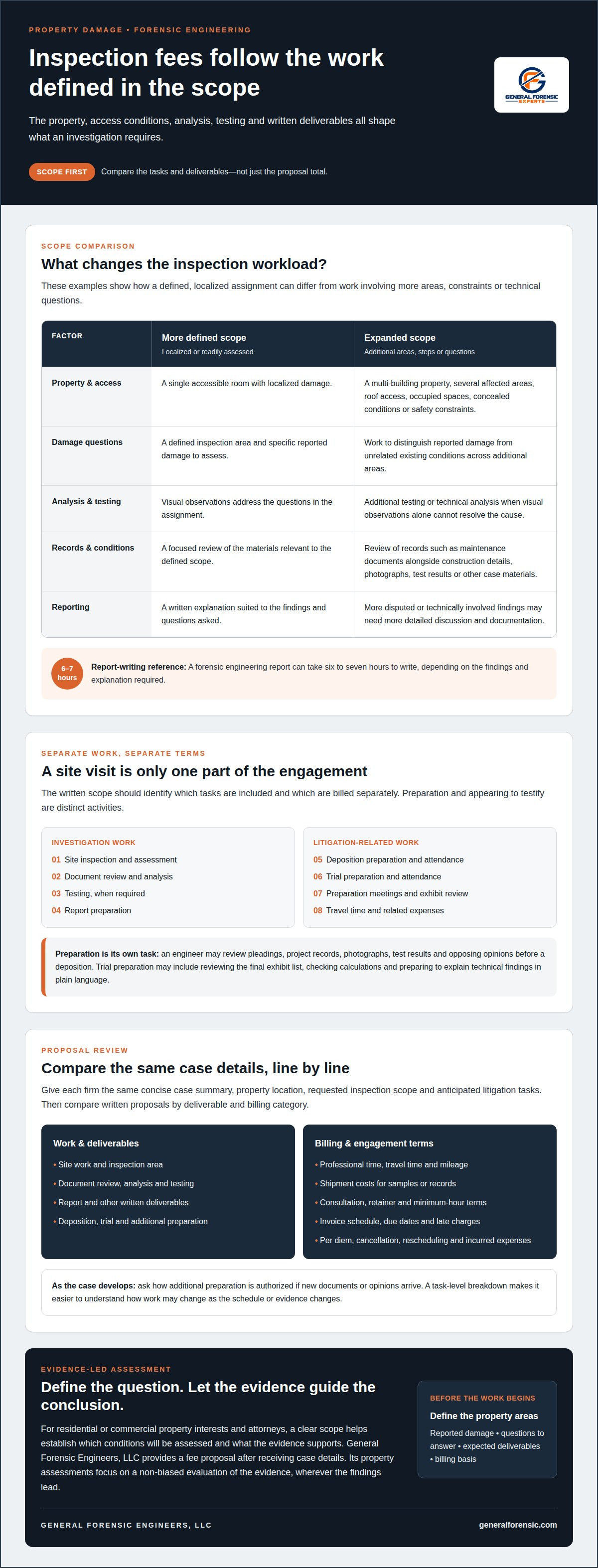
Forensic engineer fees reflect the assignment’s scope, so compare proposals by inspection tasks, analysis, testing, and written deliverables rather than across different expert professions. Fees may vary across states, but a difference between proposals alone does not show whether a fee is legally regulated. That depends on applicable state law. The engagement should state the work and billing basis.
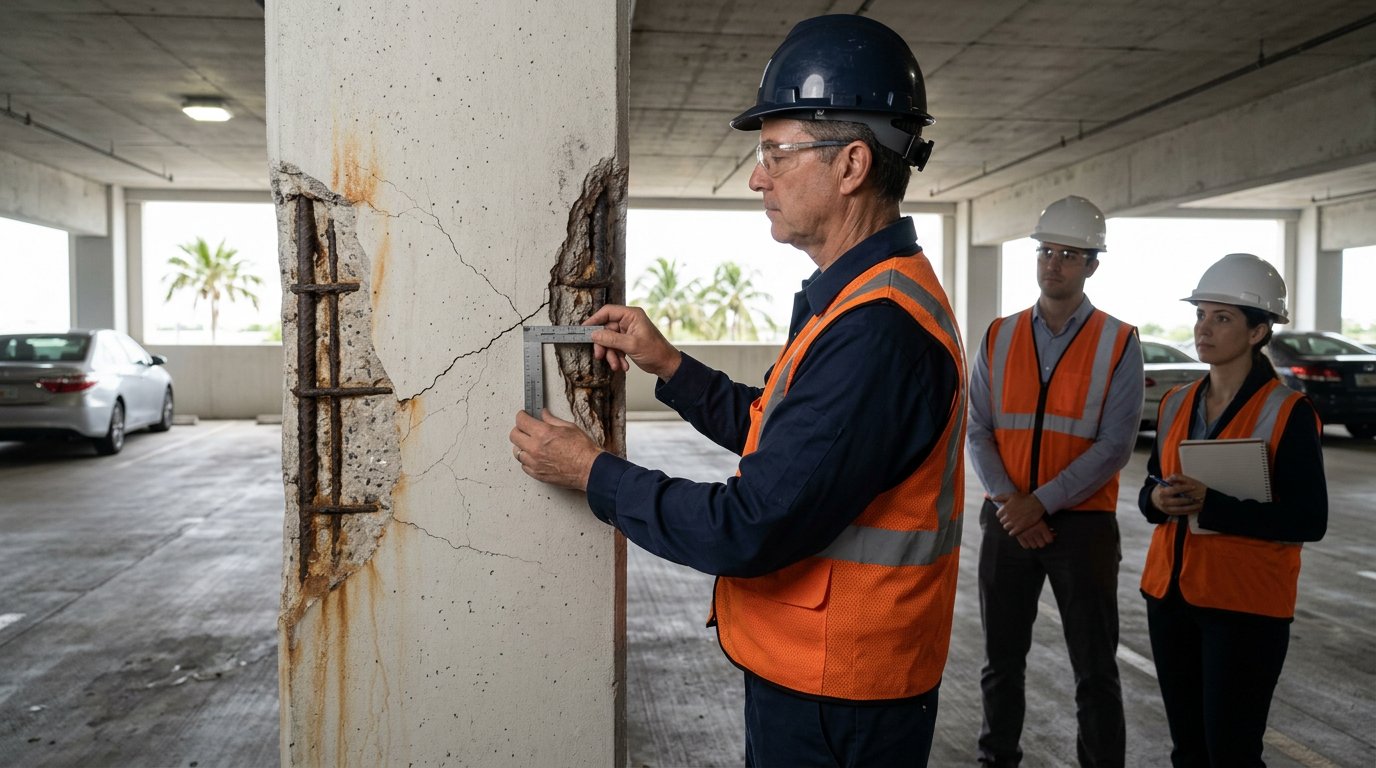
Property size and access affect the time needed for a site assessment. A single accessible room with localized damage presents a different scope from a multi-building property with several affected areas. Roof access, occupied spaces, concealed conditions, and safety constraints can add inspection steps. The engineer also needs to distinguish reported damage from unrelated existing conditions. Defining the inspection area helps make the proposed scope and fee clear.
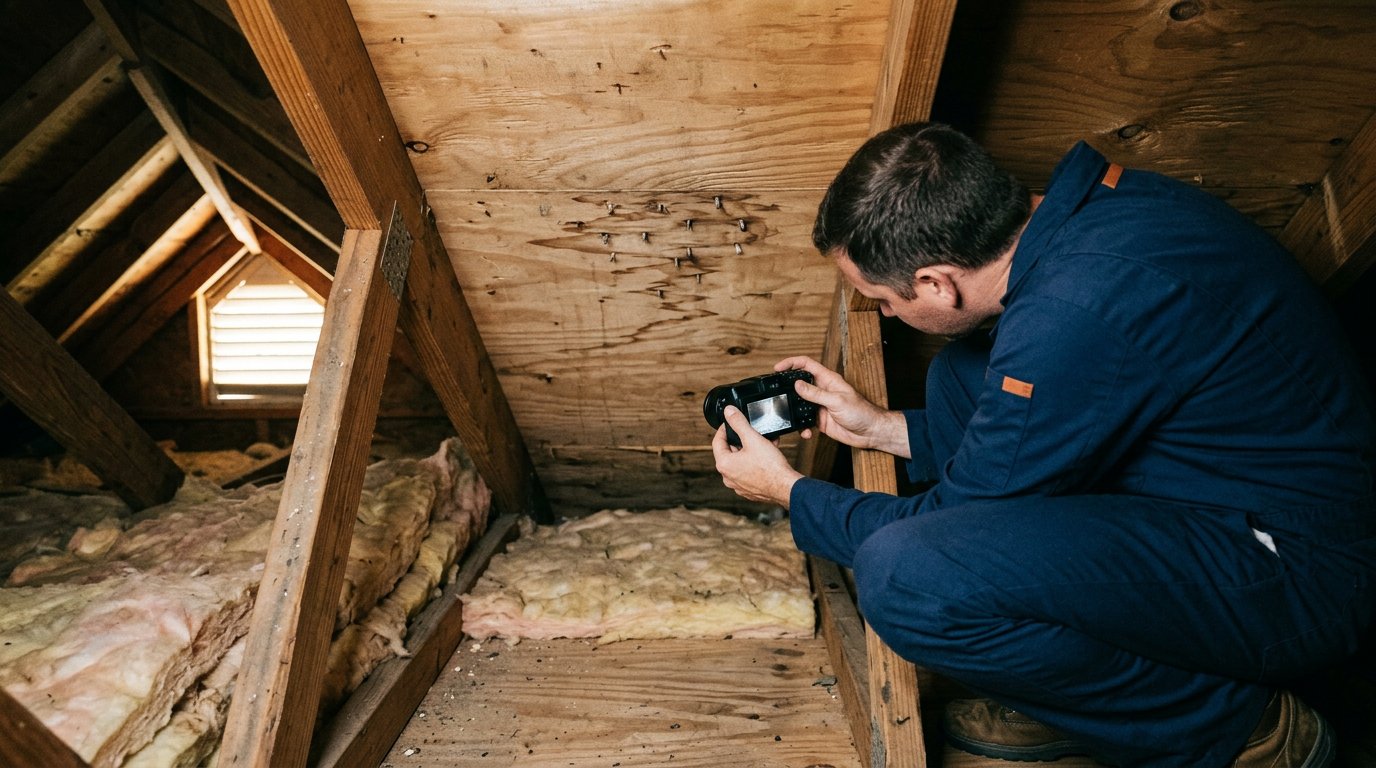
Complexity affects analysis and documentation. For example, an engineer assessing a roof leak may examine exterior conditions, interior staining, construction details, and available maintenance records. Additional testing or technical analysis may be needed when visual observations alone cannot resolve the cause. Report preparation also takes time: writing a forensic engineering report can take six to seven hours, depending on the findings and the explanation required. More disputed or technically involved findings may require more detailed discussion.
Before accepting a proposal, identify the property areas, reported damage, questions to be answered, and expected deliverables. Then compare each written scope for site work, testing, document review, analysis, and report preparation. Ask how added work is authorized if the inspection reveals another affected area. For a useful comparison, provide the same property information and requested tasks for every proposal rather than comparing hourly rates alone. This shows which proposed work addresses the dispute and which tasks could change the final bill.
There is no general basis for saying forensic engineer fees are higher or lower than other expert witness fees. Compare proposals for equivalent work and deliverables.
Deposition and courtroom testimony rates
Deposition and courtroom billing covers the engineer’s attendance and testimony. An engagement may bill these separately from inspection and report work. The written terms should explain whether testimony is charged hourly, by a defined time block, or under another stated arrangement. For example, a deposition that runs longer than scheduled may affect total billable time. Confirm how waiting time, breaks, and extensions are treated before testimony begins.
Court appearances involve scheduling beyond the time spent answering questions. A trial date may shift, or testimony may be delayed while the court hears other matters. The agreement should state how reserved time is billed and how postponements or cancellations affect charges. It should also clarify whether travel, mileage, or per diem expenses are separate. These details help attorneys and property owners understand the financial effect of a changed schedule.
The engineer’s role remains technical and impartial during testimony. Counsel may ask the expert to explain observed damage, methods, assumptions, and the basis for conclusions. For example, testimony about a roof failure may require a clear explanation of site observations and the evidence supporting a causation opinion. The engineer’s work is tied to the assignment and testimony demands, not to which party benefits from the findings.
Before retaining an expert, provide the expected hearing format, location, schedule, and relevant case materials. Request written terms that distinguish testimony attendance from preparation, travel, and other expenses. The total depends on case demands and is provided after a quote request. Clear billing terms help prevent uncertainty if a deposition extends or a trial date changes. Attorneys handling property disputes can discuss expert witness needs in relation to the technical issues requiring testimony.
General Forensic Engineers
General Forensic Engineers, LLC helps property owners, commercial interests, and attorneys assess damage through independent, evidence-based property evaluations. When a dispute depends on the cause or extent of building damage, an Expert Forensic Damage Assessment examines available evidence and reports what it supports, without favoring either side.
Residential and commercial property inspections, including pre- and post-commercial hurricane assessments, can clarify conditions before or after a damaging event. Recertification and milestone inspections address distinct property assessment needs. The appropriate scope depends on the property, its observed conditions, and the questions the investigation must answer. General Forensic Engineers, LLC provides a fee proposal after receiving details about the case.
For an impartial property assessment, contact General Forensic Engineers, LLC to discuss the property and the questions the investigation needs to address.
Set the next step around the evidence
A useful next step is to define the technical decision the assessment must support. A property owner may need clarity about the extent of damage, while an attorney may need an independent evaluation of its cause. Identifying the property, reported conditions, and question to be analyzed helps establish a focused engagement. It also gives the discussion about forensic engineer fees a practical basis: the work should match the evidence and the decision at hand.
General Forensic Engineers can help property owners, commercial stakeholders, and attorneys frame that assessment objectively. Findings should follow the evidence, even when they challenge an initial account of the damage. A clear conversation about the property and its assessment needs is a constructive starting point for determining the appropriate next step. Contact General Forensic Engineers to discuss a property assessment and move forward with a defined technical question and an impartial evaluation.
Frequently Asked Questions
How much does an engineering inspection cost?
The cost of an engineering inspection depends on the property and agreed scope. Assessing a localized concern in one area differs from evaluating multiple structures or investigating several reported conditions. The written proposal should identify the property areas, questions to address, and expected deliverables. General Forensic Engineers, LLC provides a fee proposal after receiving details about the case.
What affects the cost the most?
The investigation’s scope is a central cost factor. A property with one clearly defined concern may require a different level of work than a building with several damage locations and conflicting records. Access conditions, available plans and photographs, required testing, and the analysis needed to answer the technical question also shape the work. Clearly identifying the concern helps define an appropriate scope.
What determines the fee?
Fees are based on the tasks required to answer the assignment’s technical question. Clarify whether the assessment must address the cause of damage, its extent, or both, and whether the deliverable is a site evaluation, written report, or litigation support. For example, a report addressing a disputed cause may require analysis beyond documenting visible conditions. The written agreement should reflect the requested work.
What is the typical hourly rate for a forensic engineer in the United States?
No single hourly figure describes every forensic engineering engagement in the United States. Billing depends on the assigned work, which may include inspection, technical analysis, report preparation, or testimony. Compare proposals using the same task list and billing basis. A rate alone does not show how much work or which deliverables the engagement includes.
How much does a forensic engineering inspection or site visit cost?
The cost of a site visit depends on the property, access, and inspection purpose. A visit to document visible damage differs from one requiring examination of multiple building areas or additional technical investigation. The proposal should define the locations to inspect and whether analysis or a written report is included. Treat the site visit and follow-on work as distinct scope items when reviewing an estimate.
What is the average total cost of a forensic engineering report?
An average total cost cannot represent every forensic engineering report because scopes vary. A report based on defined observations differs from one requiring extensive record review, technical analysis, or discussion of disputed findings. Ask what evidence the report will address and what conclusions it is expected to evaluate. Those details help define the appropriate scope for the written work.

Comments