
Commercial Hurricane Damage Assessment for Delayed and Hidden Losses
Hurricane damage is not always visible when the storm passes. A commercial hurricane damage assessment should document observable conditions with photographs and video before cleanup begins. If additional damage appears later, record the images and discovery date, then notify the insurer in writing as soon as you find it.
An initial visual check can miss roof damage and water intrusion concealed within walls or other building components. This article explains how to document delayed losses, inspect roofs and moisture conditions, identify signs of hidden water entry, and use imagery to support a clear assessment. The focus is on methodical observations that help property owners, commercial stakeholders, and attorneys understand what changed, where damage is present, and how to record findings for further review.
Table of Contents
1. Delayed hurricane damage and claim documentation
Hurricane damage may emerge after the first walkthrough, as moisture spreads or concealed materials begin to show changes. Before cleanup or repairs alter the evidence, photograph and video each affected area, including ceilings, walls, floors, equipment, and visible roof conditions. Take wide views to show location and close-ups to capture details. Record the building area, date, and observed condition alongside each file. This documentation helps distinguish what was visible immediately after the storm from damage discovered later.
When new damage appears, record the discovery date and photograph the condition before disturbing it. Notify the insurer in writing as soon as you find the damage, and retain a copy of the notice. If you have already reported the hurricane loss, newly identified storm damage is usually submitted as additional scope on the same claim, often called a supplement. Keep later observations separate from the initial inventory, but link both records to the same affected location. Some states have a one-year statute of limitations for filing hurricane insurance claims, so identify the applicable state deadline promptly.
When choosing an assessor or engineering firm, examine whether its stated scope addresses the building’s actual concerns, such as roof conditions, water entry, or structural damage. Request a written assessment identifying observed conditions, supporting photographs, and the basis for its conclusions. A qualified assessor should explain the inspection method, distinguish observations from interpretations, and document limitations. These criteria help property owners and attorneys evaluate whether findings are clear and independently supportable.
Local building codes and inspection requirements depend on the jurisdiction and the repair work involved. Before reconstruction, identify applicable requirements with the local building department, and keep permits, inspection records, and repair documents with the damage file. For an emergency assessment, wait until the property can be approached safely. Then document visible conditions, notify the insurer in writing, and arrange an inspection focused on immediate damage and signs of concealed loss. Clear dates and records support decisions as the damage picture develops.
2. Early roof inspections and moisture readings
Arrange a roof inspection as soon as it is safe after a hurricane. A ground-level visual check alone can miss lifted edges, punctures, displaced flashing, or water collecting beneath roofing materials. Have the roof documented with photographs and moisture readings, noting each tested area and visible defect. This creates a more useful record than general images that do not identify where a condition was observed.
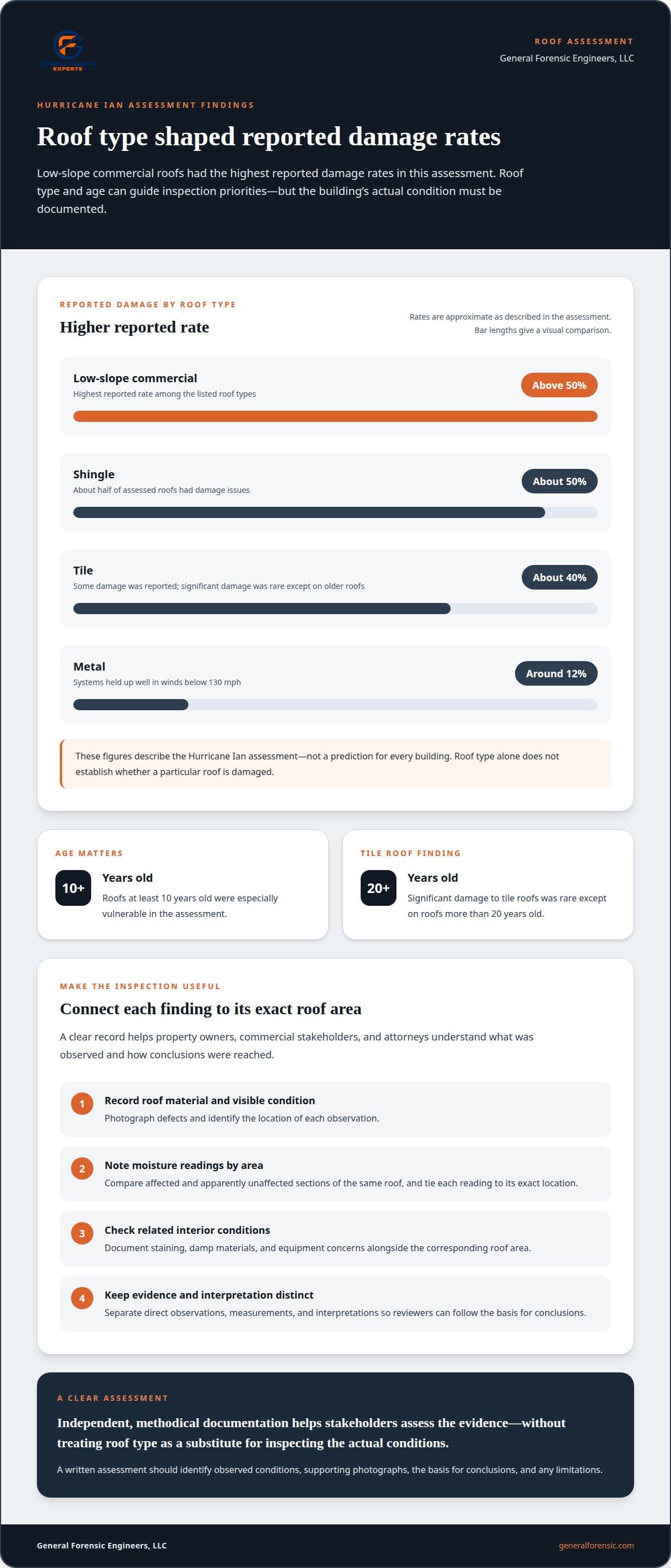
Roof type and age can help direct the inspection. In the Hurricane Ian assessment, low-slope commercial roofs had damage rates above 50%. Roofs 10 or more years old were especially vulnerable. About half of assessed shingle roofs had damage issues, while metal roofs had damage rates around 12%. The metal systems held up well in winds below 130 mph. These findings describe that assessment, not a prediction for every building.
For each roof area, record the material, visible condition, moisture readings, and photograph location. Compare readings across affected and apparently unaffected areas of the same roof, then note patterns for closer evaluation. Tie each reading to its exact location rather than presenting it alone. In the report, separate direct observations, measurements, and interpretations so later reviewers can follow how conclusions were reached.
Water entering through a roof can affect insulation, ceilings, electrical systems, or HVAC equipment. Record interior staining, damp materials, and equipment concerns alongside the corresponding roof area. Have service vendors check elevator, electrical, and HVAC equipment, and obtain their findings in writing. This documentation can connect a roof observation to an interior condition without assuming the cause before examining the evidence.
Hurricane Ian’s tile assessment found that about 40% of tile roofs experienced some damage; significant damage was rare except on roofs more than 20 years old. Those results reinforce the need to document actual condition, not infer it from roof type alone. An early inspection can identify areas needing further examination and provide a clearer basis for repair planning and the overall damage report.
3. Hidden water intrusion in walls and building envelopes
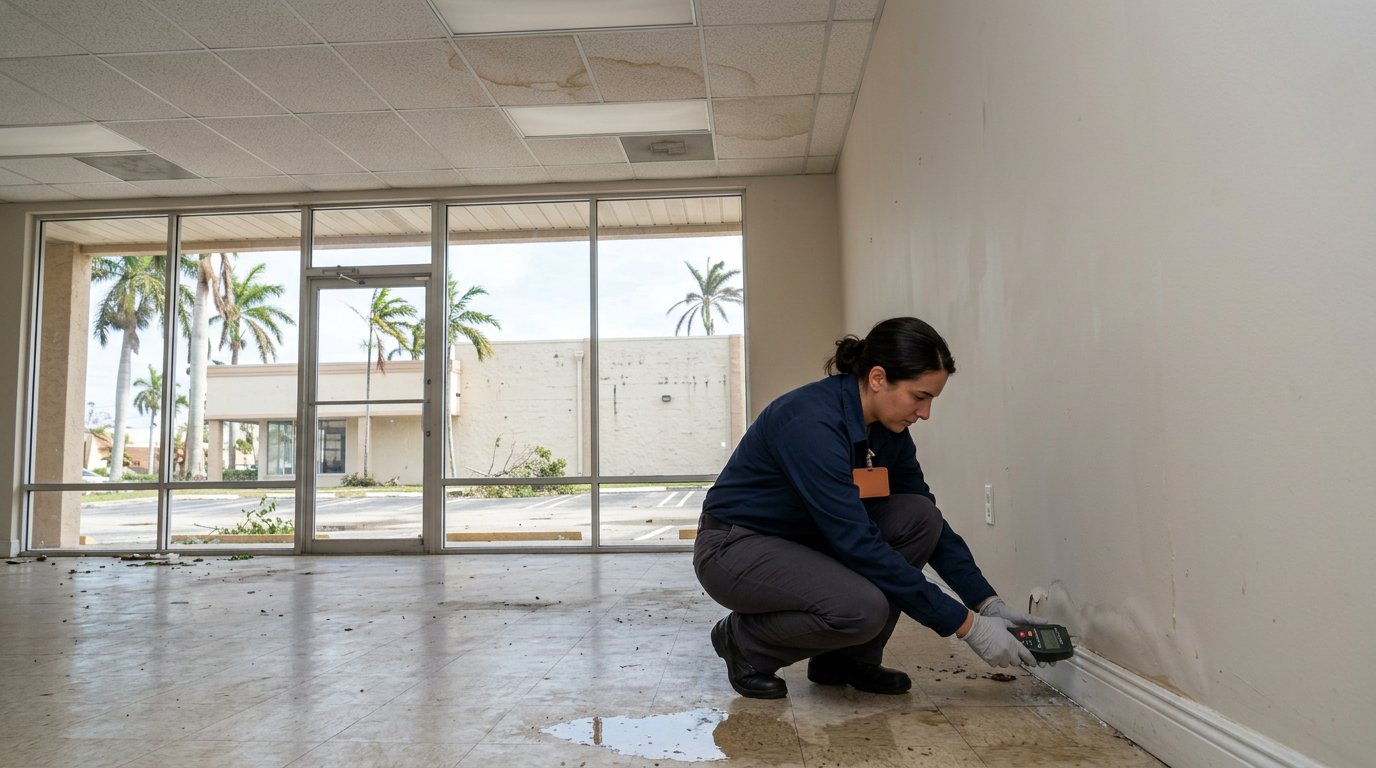
Wind-driven rain can enter around windows, sliding doors, roof-wall junctions, and exterior penetrations. A wall may look intact even while water travels behind cladding or interior finishes. Begin on the storm-facing side, then inspect the corresponding rooms inside. Record staining, bubbling paint, softened trim, damp flooring, and musty odors as observations, not conclusions about cause.
Use a moisture meter to compare readings at suspect locations with nearby areas made of similar materials. Check window corners, door thresholds, exterior wall bases, and ceiling-wall intersections. Record the instrument reading, surface material, exact location, and inspection date. Comparisons provide context because readings can vary across materials and conditions. Revisit marked locations if fresh staining or dampness develops.
Thermal imaging can help identify temperature patterns that warrant closer examination around windows, sliding doors, and exterior walls. Scan the storm-facing elevation and matching interior surfaces, then compare patterns with adjacent areas. A thermal image shows temperature variation, not water itself. Pair the image with moisture-meter readings and direct observations before interpreting a suspected intrusion pathway.
Trace findings across the building envelope. For example, document a ceiling stain beneath an exterior wall, inspect nearby window framing, and compare interior moisture readings with those from other sections of the wall. Include overview photographs and close-ups, using consistent location labels. This lets a reviewer relate a reading or image to the building element rather than treating an isolated mark as proof.
In a commercial property hurricane damage assessment, record negative findings too, such as a checked wall with no visible staining or elevated readings. This establishes the inspection’s boundaries and helps distinguish tested areas from unexamined ones. For multi-unit properties, map findings by building, floor, unit, and elevation. This structured record helps owners, associations, and attorneys evaluate whether observed conditions form a pattern or remain localized.
4. Aerial and street-level imagery used for assessment
Aerial and street-level photographs show different parts of a commercial property. An aerial view can document roof sections, drainage paths, rooftop equipment, and surrounding conditions. Street-level images show elevations, windows, doors, loading areas, and visible debris. Together, these perspectives place a damaged feature in the wider building context. Capture each elevation and roof area from identifiable positions, then note the location and date for every image.
Use consistent viewpoints when documenting multiple buildings or comparing conditions over time. For example, photograph the same warehouse corner from the same ground position, then take a wider view showing its relation to adjacent structures. A close-up can reveal displaced flashing or damaged cladding, while a wider frame identifies the affected elevation. Keep original files and avoid edits that could obscure details. Use copies for annotations and labels.
Organize imagery by building, elevation, roof area, and date. Pair each close-up with a context image, and describe what the frame shows without stating an unverified cause. An image log can identify the file name, photographer, location, capture date, and relevant observation. If a photograph shows water staining below a roof edge, link it to the inspection record for that interior area. This makes later review more traceable.
Images document visible conditions, but they cannot establish concealed damage on their own. A roof image may show displaced material without revealing the condition beneath it; an exterior photograph may not show water inside a wall assembly. Combine imagery with direct inspection findings and moisture readings where appropriate. Preserve views that show undamaged areas as well as suspected damage, so the record reflects the inspected scope. For a documented property review, request a forensic damage assessment that considers the imagery alongside observed conditions.
Have a roofer inspect commercial roofs using photographs and moisture readings, not ground-level checks alone. Moisture meters or thermal imaging can help examine storm-facing windows, sliding doors, and exterior walls.
General Forensic Engineers: Expert Forensic Damage Assessment
General Forensic Engineers provides Expert Forensic Damage Assessment for property owners, commercial stakeholders, and attorneys seeking a documented evaluation of storm-related conditions. Its Pre & Post-Commercial Property Hurricane Assessments can examine a building before or after a storm, while Residential & Commercial Property Inspections address observed property conditions.
Consider a forensic assessment when delayed water intrusion, roof observations, or conflicting damage accounts require methodical evaluation. Findings should connect observed conditions with supporting evidence and distinguish documented facts from interpretation. The assessment is impartial: its purpose is to examine the evidence and determine what it supports, regardless of the outcome.
Attorneys representing property owners can use a clear, evidence-based assessment to better understand the physical conditions involved. Contact General Forensic Engineers to discuss a property assessment or visit generalforensic.com.
Move from observations to an independent evaluation
The next step is to preserve a coherent record of the property’s condition as decisions about repairs, operations, or dispute resolution proceed. A commercial hurricane damage assessment can clarify which conditions are observable, how findings relate to the building, and what further investigation may be relevant. For property owners and attorneys, an impartial evaluation provides a factual basis for considering the evidence without presuming where it will lead.
General Forensic Engineers supports stakeholders with property damage assessments grounded in methodical examination. An independent perspective can help attorneys assess the physical issues involved and determine how they relate to a property owner’s concerns. The assessment does not replace legal advice or insurance decisions; it focuses on documenting and evaluating property conditions.
When a property’s storm-related condition needs further examination, contact General Forensic Engineers to discuss an assessment. A clear next step can help bring structure to a complex property issue.
Frequently Asked Questions
What does a commercial hurricane damage assessment include?
A commercial hurricane damage assessment can investigate building conditions and evaluate potential causes of property damage. Depending on the property and inspection scope, this may include roof and envelope conditions, interior impacts, and related building systems. General Forensic Engineers, LLC conducts forensic engineering investigations and uses diagnostic tools such as FLIR thermal cameras, GE Protimeter and Tramex scanners, and on-site testing to support its findings. An assessment distinguishes observed conditions from analysis.
What steps should businesses take to document hurricane damage for insurance claims?
Build a claim file that connects storm-related conditions with relevant property records. Include maintenance logs, prior inspection records, repair invoices, equipment service reports, and insurer correspondence. For damaged equipment or business assets, record identifying details such as location and model information when available. Keep original documents together and preserve separate copies. Maintain a dated index so owners, insurers, and attorneys can trace the basis for each item.
What local building codes and inspection requirements apply after hurricane damage?
Requirements depend on the jurisdiction and the repair work involved. Check with the local building department before reconstruction, and keep permits, inspection records, and repair documents with the damage file.
Comments