
St Petersburg Seawall Failure Forensic Assessment Services
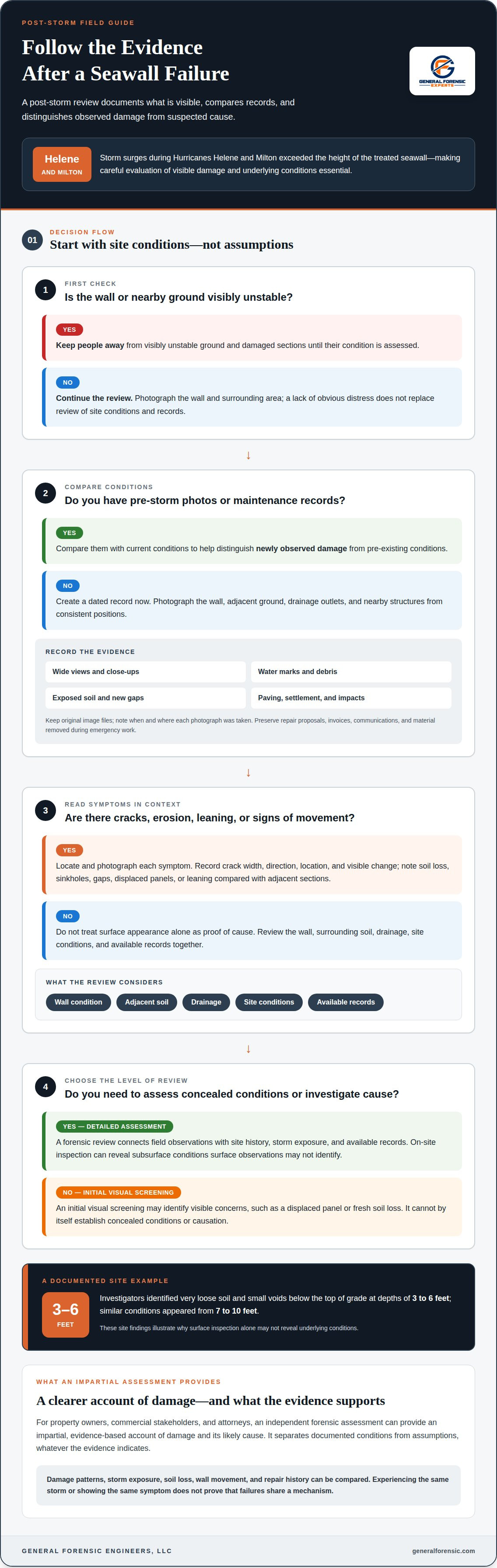
A St. Petersburg seawall failure forensic engineering assessment examines cracking, erosion, leaning, and storm damage through an on-site inspection and post-storm review. Storm surges during Hurricanes Helene and Milton exceeded the height of the treated seawall, making careful evaluation of visible damage and underlying conditions essential. The assessment helps establish what failed, how the damage developed, and what evidence supports those conclusions.
Cracks or a leaning wall can signal more than a localized defect. A forensic review considers the seawall, adjacent soil, drainage, site conditions, and available records together to distinguish visible symptoms from likely causes. This article explains what inspectors examine on site, how they investigate possible erosion and voids, and how their findings can clarify the extent and cause of hurricane-related damage. The aim is a documented, impartial assessment that gives property owners, commercial stakeholders, and attorneys a clearer basis for decisions.
Table of Contents
Common seawall damage, including cracks, erosion, leaning, and hurricane damage
Seawall distress can affect the concrete, soil, or nearby ground. In St. Petersburg, tidal movement and storm surges can contribute to different failure mechanisms.
Cracks, Erosion, and Leaning
Record cracks by their width, direction, location, and any visible change over time. Horizontal cracking, separated joints, or displaced panels may indicate pressure or movement behind the wall. Look for soil loss, sinkholes, and gaps near the top edge, which can point to erosion or voids rather than surface wear alone. Compare a leaning section with adjacent panels and nearby paving. Tampa Bay’s twice-daily tidal action repeatedly loads seawalls and surrounding soil. Photograph each symptom, mark its location, and note changes in the nearby ground.
Hurricane Damage and Failure Causes
Storm surge, wave action, drainage, and soil conditions can all contribute to seawall distress in St. Petersburg. Surges during Hurricanes Helene and Milton exceeded the height of the treated seawall. This makes post-storm observations important, but visible damage alone does not establish its cause. A forensic review compares damage patterns with site conditions and available records.
When comparing a seawall with other Tampa Bay failures, focus on evidence rather than presumed similarities. Inspectors can compare cracking, soil loss, wall movement, water exposure, and documented repair history. Experiencing the same storm or showing the same symptom does not prove the failures share a mechanism.
Pinellas County seawall repair projects often require permits, and approval often takes 2 to 6 weeks, depending on the project. Florida and St. Petersburg code requirements depend on the proposed repair or replacement scope; permit review identifies applicable provisions.
Resulting Damage and Safety Risks
A seawall failure can let soil escape from behind the wall, leaving ground near yards, walkways, or structures unsupported. Settlement, open voids, and uneven surfaces may create trip hazards or threaten nearby improvements. These are possible consequences to inspect, not automatic findings at every site.
Document displaced sections, exposed soil, damaged paving, and changes near structures. Keep people away from visibly unstable areas until their condition is assessed. A forensic evaluation connects observed damage to site evidence and separates confirmed effects from suspected risks. This record helps property owners and attorneys understand the practical consequences of the failure.
Post-storm seawall evaluations
Start a post-storm review by creating a dated record of conditions. Photograph the wall, adjacent ground, drainage outlets, and nearby structures from consistent positions. Take both wide views and close-ups, then note visible changes such as shifted panels, displaced soil, or new gaps. Preserve earlier photographs, repair records, and storm-related correspondence. Comparing these records can help distinguish newly observed damage from pre-existing conditions.
Record site evidence before cleanup or repairs change it. Note water marks, deposited debris, exposed soil, damaged paving, and places where the ground has settled. A simple site sketch can link each observation to a seawall section or nearby improvement. Keep the original image files and note when and where each photograph was taken. An organized record supports later technical review.
Limit exposure. Keep people away from visibly unstable ground and damaged sections until their condition is assessed.
Document change. Photograph each affected area and compare it with pre-storm images or maintenance records.
Record impacts. List damage to walkways, landscaping, storage areas, and structures beside the wall.
Preserve evidence. Save repair proposals, invoices, communications, and any material removed during emergency work.
After a seawall failure, document the site, keep people away from unsafe areas, and arrange an appropriate inspection. Repair responsibility depends on ownership, the wall’s position relative to property boundaries, and recorded agreements. Surveys, property records, and shared-maintenance documents can help clarify the relevant interests. Damage alone does not determine responsibility.
A free seawall evaluation generally means an initial visual screening, not a full forensic analysis. It may identify visible concerns, such as a displaced panel or fresh soil loss, but cannot by itself establish concealed conditions or causation. A more detailed assessment connects field observations with site history, storm exposure, and available records. Understanding this distinction helps owners see what an initial visit can establish and what requires further investigation.
For residential and commercial properties, a post-storm inspection should clearly describe observed damage and its location. Keep the record factual: separate visible conditions from suspected causes, and preserve evidence before repairs alter the site.
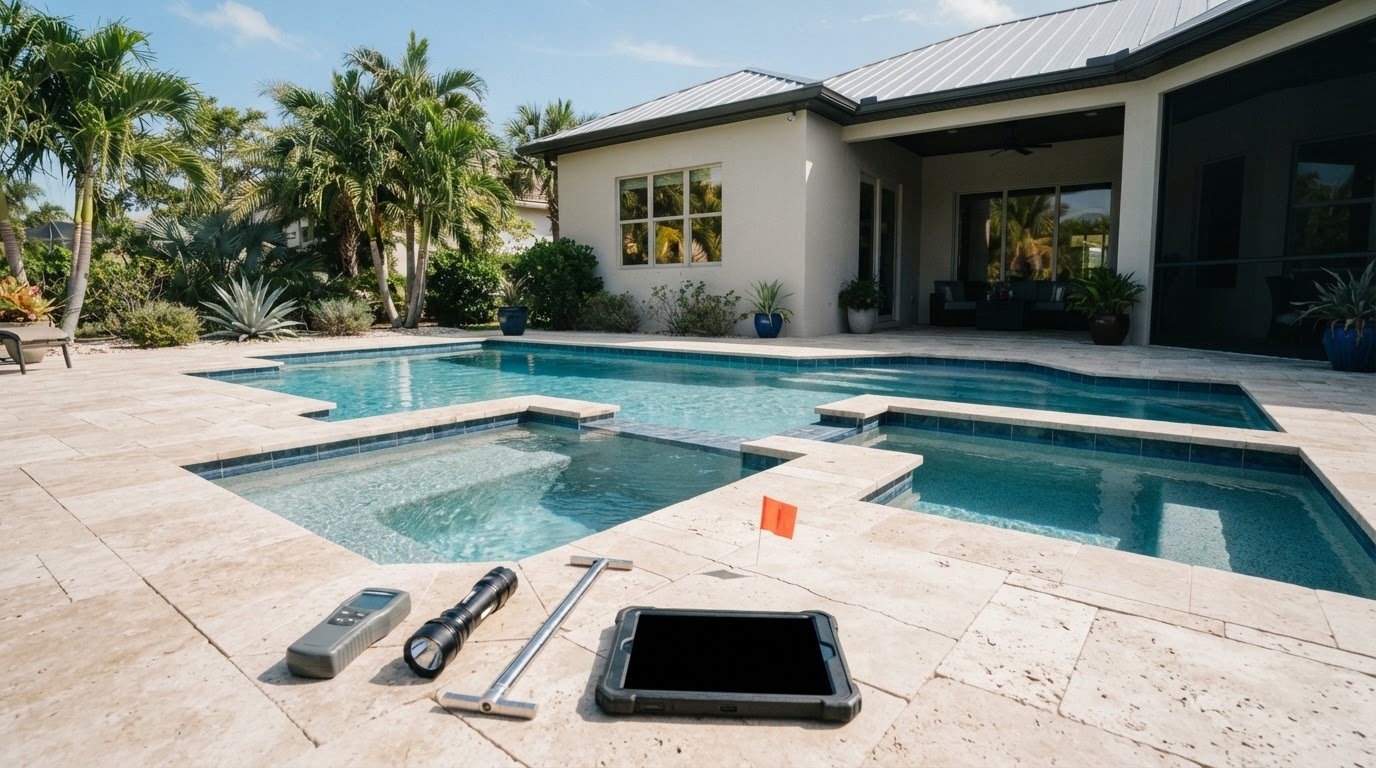
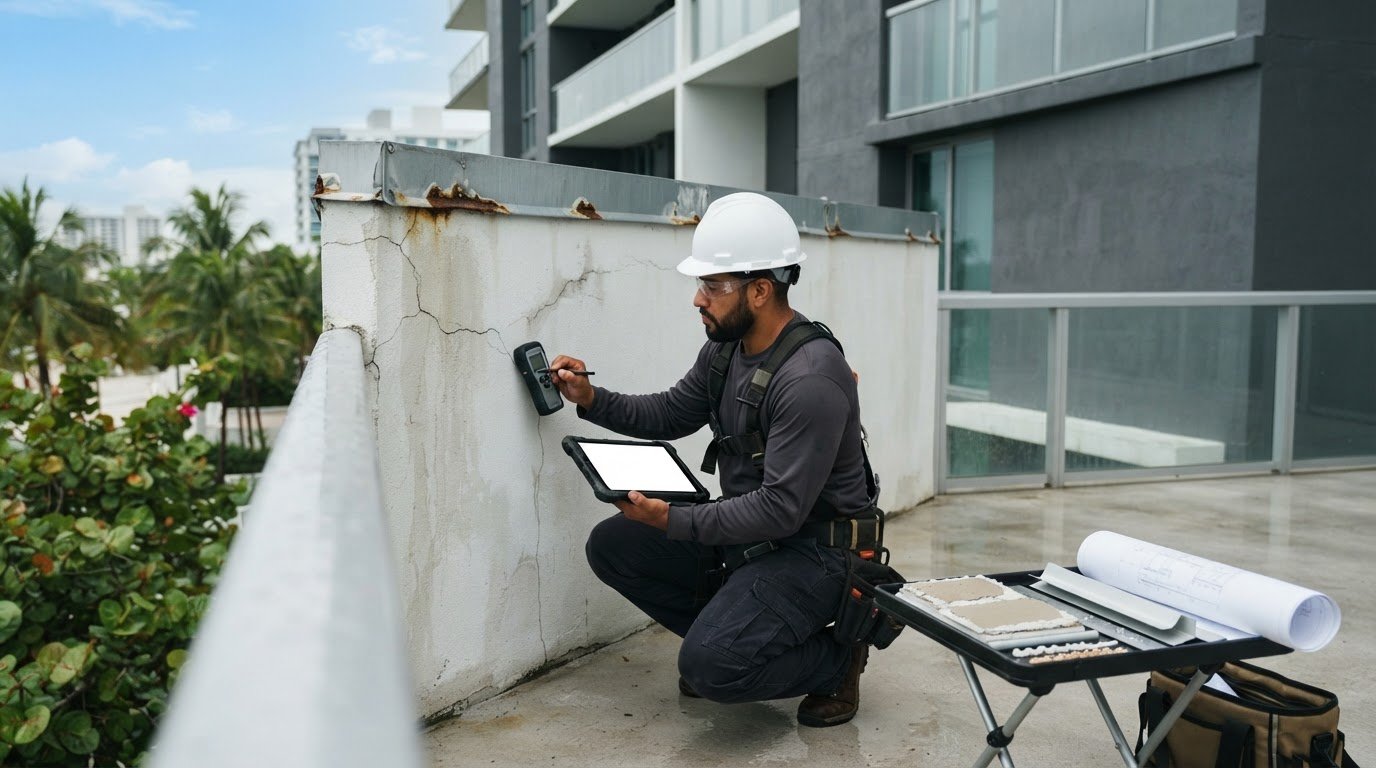
On-site seawall inspection and diagnosis
A St. Petersburg seawall failure forensic engineering assessment connects visible distress with conditions behind the wall. In St. Petersburg, inspectors document the wall face, ground surface, drainage paths, and adjacent improvements. Each observation is located, described, and photographed, creating a record that separates measured conditions from assumptions about the cause.
At the documented site, investigators identified very loose soil and small voids at depths of 3 to 6 feet below the top of grade. Similar conditions appeared from 7 to 10 feet. These findings show why surface inspection alone may not characterize supporting soil. The depth and distribution of weak zones help define the investigation.
Investigators drove injection probes 10 feet below grade, spacing them approximately 1.5 feet on center. This layout relates subsurface findings to specific wall sections. Field notes should identify probe positions and depths, then record encountered conditions. Reviewers can compare those observations with mapped surface changes.
Map the wall. Identify each panel, joint, crack, and displaced section.
Record the ground. Note depressions, open voids, and changes beside the wall.
Document access. Record shoreline, vegetation, and features affecting inspection.
Connect evidence. Compare probe findings with mapped conditions and photographs.
Diagnosis considers whether the findings are consistent across the site. A localized void may relate to one section, while repeated observations of loose soil may point to broader subsurface conditions. Investigators distinguish direct observations from interpretations so property owners, attorneys, and other reviewers can assess how conclusions were reached.
For a St. Petersburg seawall failure forensic engineering assessment, the field record should explain what was inspected, where evidence was found, and how it informs the analysis. Clear records of probe locations, depths, and soil conditions help relate the wall’s physical state to the surrounding ground.
Which seawall in St. Petersburg, Florida failed, and when did the failure occur?
The documented case concerns a treated seawall in St. Petersburg, but no street address or named property is identified. The available chronology places the stabilization work before June 2024, when permeation grouting was completed. It does not establish a precise date when the seawall first failed.
The repair addressed approximately 155 linear feet of seawall. An earlier stabilization attempt had installed 3 piers against its face. Subsequent work used permeation grouting, with polyurethane foam injected from 10 feet to 3 feet below the top of grade. These details describe the documented project, rather than a universal repair method for every failed seawall.
Testing recorded changes at two locations. At the first, pre- and post-injection testing showed a 699% improvement in California Bearing Ratio between treated depths of 3 to 10 feet. At the second, testing showed a 277% improvement. These measurements describe soil-support results, not a date of structural failure or proof that every part of the wall performed identically.
The sequence also matters. Grouting was completed in June 2024, and Hurricanes Helene and Milton struck within a two-week period afterward. Storm surges exceeded the height of the treated seawall. This timing makes post-storm observations relevant to evaluating performance, but the chronology alone cannot establish whether storm exposure caused new damage.
For a property owner or attorney examining a similar event, organize the timeline into documented stages: observed distress, prior stabilization, completed repairs, and later storm exposure. Match each stage to photographs, inspection records, and test results. This chronology can help distinguish conditions before treatment from those observed afterward.
For an evidence-based review of seawall damage and its sequence, request a forensic damage assessment.
General Forensic Engineers: Expert Forensic Damage Assessment
General Forensic Engineers provides Expert Forensic Damage Assessment for property owners, commercial stakeholders, and attorneys evaluating seawall damage. The assessment examines physical conditions and available evidence to determine the cause and extent of property damage, without presuming what the findings will show.
An independent assessment is useful when cracks, soil loss, leaning, or storm impacts call for technical investigation, or when conflicting accounts make causation difficult to establish. Pre & Post-Commercial Property Hurricane Assessments and Residential & Commercial Property Inspections can also document property conditions after a storm. Findings can give attorneys and property stakeholders a factual basis for evaluating next steps, while keeping engineering analysis separate from legal representation or insurance claim adjusting.
Move from uncertainty to an evidence-based next step
A St. Petersburg seawall failure forensic engineering assessment can provide a sound basis for decisions about property condition, repair planning, and responsibility. Its value lies in impartial analysis: conclusions should follow the physical evidence, even when it challenges an initial assumption. Property owners, commercial stakeholders, and attorneys can use a clearly reasoned assessment to focus discussions on documented conditions rather than competing accounts.
General Forensic Engineers offers Expert Forensic Damage Assessment, Pre & Post-Commercial Property Hurricane Assessments, and Residential & Commercial Property Inspections. These services address different needs, from investigating damage to documenting property conditions after a storm. For plaintiff’s attorneys, an independent engineering review can clarify technical questions for property owners without replacing legal counsel or claim handling.
To discuss an assessment for a seawall or related property damage, contact General Forensic Engineers. A clear, evidence-led next step can help stakeholders move forward with greater confidence.
Frequently Asked Questions
What caused the St. Petersburg seawall failure according to forensic engineering assessments?
The documented findings identify weak soil support and small subsurface voids as relevant conditions, alongside repeated tidal forces and hurricane surge exposure. They do not establish a single cause or prove that one factor alone produced the failure. A defensible causation analysis distinguishes observations from interpretation, then compares site evidence with the wall’s history and the timing of storm impacts.
What site conditions, soil characteristics, and water levels contributed to the seawall failure?
Investigators found very loose soil and small voids behind the wall, while Tampa Bay’s tidal action repeatedly loads the seawall. The available case details describe storm surges exceeding the wall’s height but do not provide measured water-level elevations at the site. Forensic interpretation therefore relates documented water exposure to soil support and wall condition without assigning an unsupported water level.
What inspection methods and testing are used to assess a failed seawall?
An assessment can combine mapped visual observations with targeted subsurface investigation and comparative soil testing. The documented case used probes and California Bearing Ratio testing to evaluate treated soil conditions. Investigators can also consider site photographs, repair records, and storm documentation for context. The method selected should address the specific engineering question; not every diagnostic tool is used at every site.
What repairs or replacement design were recommended for the St. Petersburg seawall?
The case documents completed permeation grouting, including polyurethane foam injection, rather than a separate formal recommendation for replacement. It also records an earlier stabilization attempt using piers. These describe work performed, not a universal design prescription. Any repair or replacement decision requires matching the proposed scope to the wall’s condition, soil support, site constraints, and documented performance evidence.
How does the failed seawall compare with other seawall failures in the Tampa Bay area?
Compare evidence such as cracking, soil loss, wall movement, water exposure, and documented repair history. A shared storm or symptom alone does not establish that failures had the same cause.
Which forensic engineering firms or experts assessed the failed seawall in St. Petersburg?
The article identifies General Forensic Engineers as providing expert forensic damage assessment.
Comments