
Commercial Property Inspection in Miami Before You Lease
A lease can commit your business to a space with costly defects. A commercial property inspection before signing documents the building’s observable condition, including its structure, roof, exterior, interior, and major systems. The review may also consider maintenance records and documents about repairs or upgrades. Hazards such as mold, asbestos, radon, or lead may require separate testing or assessment.
That review matters because a property’s condition can affect repair planning, operating decisions, and discussions about lease responsibilities before you take occupancy. A clear record of observed deficiencies gives you a stronger factual basis for evaluating the space.
This article explains what a commercial property inspection in Miami can examine, why timing it before signing a lease matters, and how a property’s size and complexity shape the assessment. It also outlines the limits of a visual inspection when environmental hazards are a concern, so you can distinguish what the assessment can establish from what requires targeted testing.
Table of Contents
What does a commercial property assessment include?
A commercial property inspection documents observable conditions across a building and its major components. Written findings can clarify defects, repair priorities, and unresolved questions before you decide on a lease.
Written Inspection Reports
A useful report connects each observation to a specific building area or component. It may include photographs, descriptions of visible damage, and notes about maintenance records, recent repairs, or upgrades. Check whether it distinguishes observed conditions from recommendations and identifies areas that could not be assessed. Those details help you understand the scope and limits of the findings.
Findings and Repair Recommendations
Findings describe observed deficiencies; recommendations suggest possible next steps. Examples include moisture intrusion, roof deterioration, or concerns about wind resilience. The report should explain each item’s location and apparent condition instead of treating every observation as equally serious. Repair estimates are separate from inspection findings, so clarify whether the scope includes estimated repair costs.
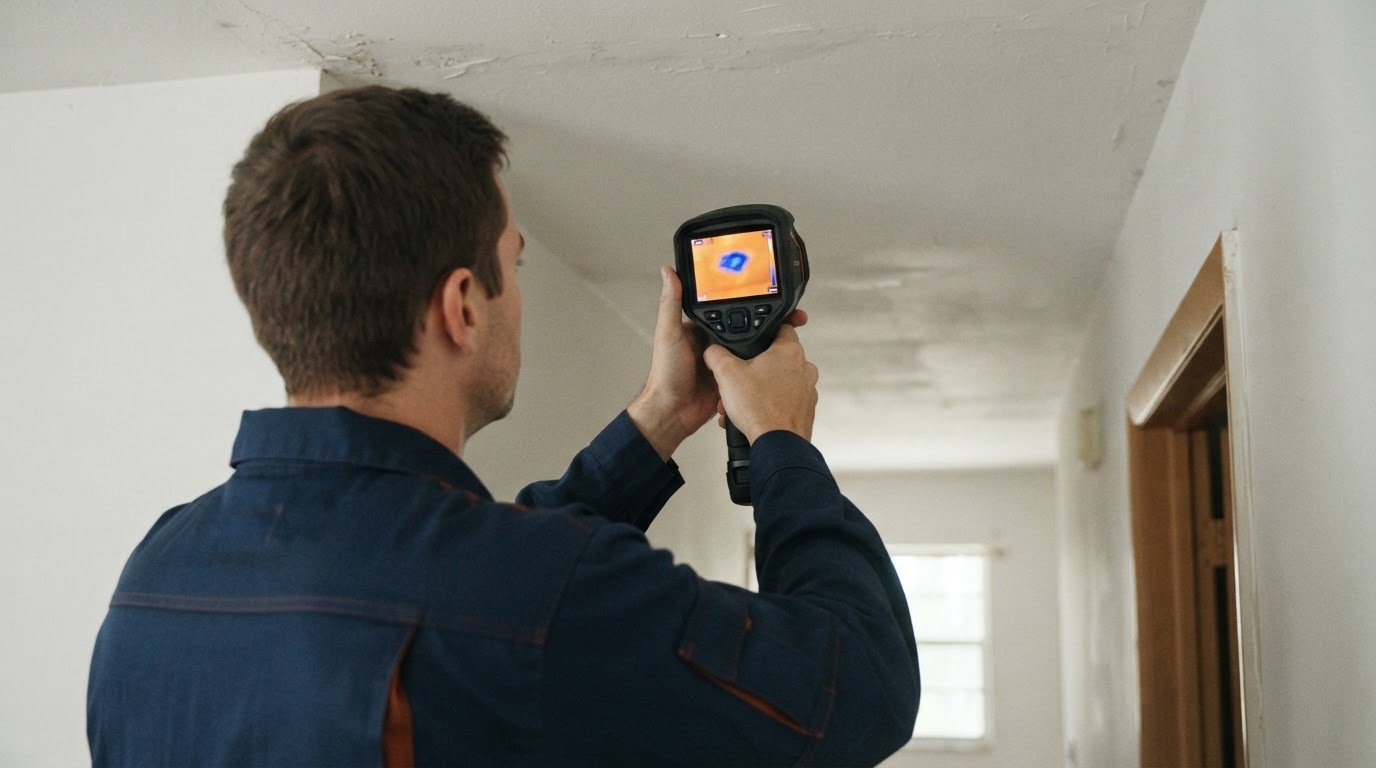
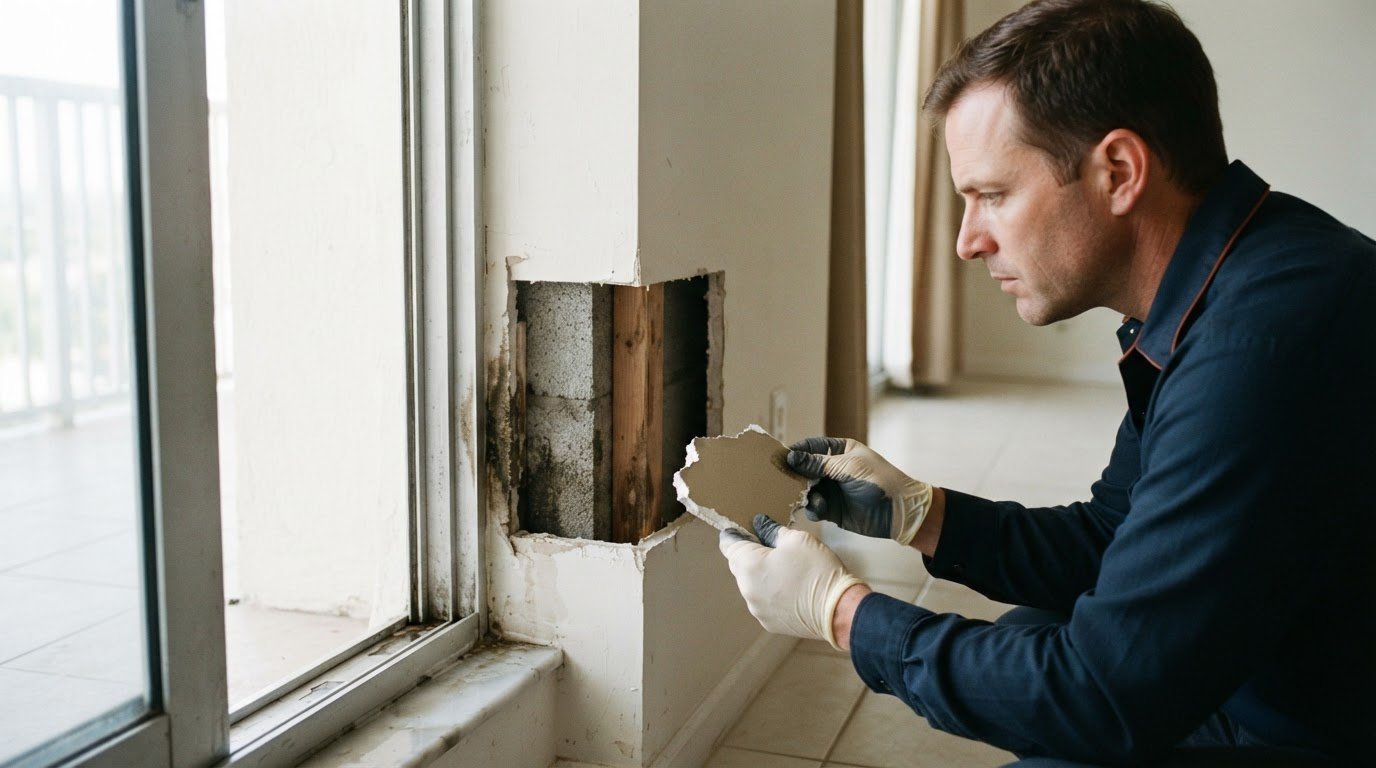
Water entry and moisture retention are common concerns, particularly where building components show damage. The inspector documents evidence and recommends further evaluation when the observations warrant it.
Property Condition Assessments
A Property Condition Assessment (PCA) organizes building-condition observations into a formal report. A PCA may follow ASTM E2018-08, an identifier associated with a property-condition assessment standard. The report can also consider Certificates of Occupancy, maintenance records, and documents about repairs or upgrades. Compare the reported deficiencies with the assessment scope and note any excluded components before relying on its conclusions.
When selecting an inspector, confirm Florida licensing requirements and whether the proposed scope fits the property and your decision. Florida commercial inspectors must be licensed by the Florida Department of Business and Professional Regulation.
Inspection Process and Timing
The process typically begins with a review of available property records, followed by an examination of accessible areas and documentation of observed conditions. The report organizes observations into findings and recommendations. The time needed to complete the work depends on the property’s size, complexity, and the analysis required.
A larger building, for example, may need a more extensive review than a smaller property. The report should make clear which areas were assessed, what was observed, and which recommendations address documented deficiencies.
Why Commercial Building Inspections Are Key Before Committing To A Lease?
A documented assessment can reveal building conditions relevant to occupancy, maintenance, and lease decisions. Its usefulness depends on whether the inspection scope addresses the commercial building’s components and intended use.
Inspection Scope and Building Components
Inspectors assess accessible areas and systems within the agreed scope. The review may cover the site, exterior, interior, roof, structural components, and mechanical, electrical, and plumbing systems. It may also include fire alarms, sprinklers, emergency exits, and accessibility features. Match the scope to the intended use: a restaurant and an office, for example, have different operational demands.
Structural Systems and Building Envelope
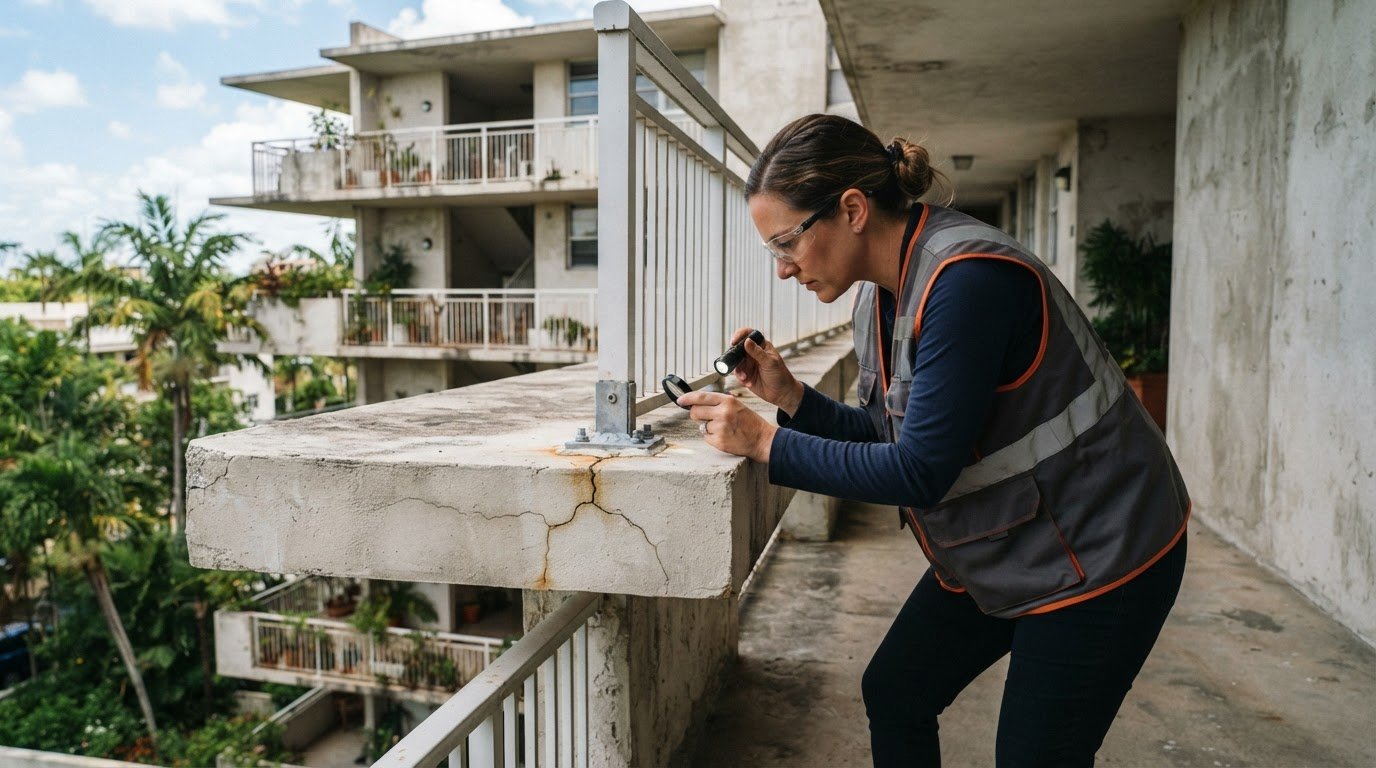
Inspectors examine visible structural elements, including foundations, framing, floors, and roof-supporting components. They also assess the building envelope, such as roofing, exterior walls, windows, doors, and drainage details. In Miami, observations about wind resilience and moisture retention can identify areas needing closer attention. The findings document visible conditions; they do not establish that concealed components are defect-free.
Building Systems and Safety Features
Heating, ventilation, air conditioning, plumbing, and electrical components all affect how a space functions after occupancy. Inspectors observe accessible equipment and document apparent deficiencies. The scope may also include fire alarms, sprinkler systems, emergency exits, and layout features related to accessibility. Complex roofing or HVAC systems may need specialist review to clarify conditions beyond a general visual assessment.
Commercial Building Inspection Costs
Pricing depends on the property’s size, location, and inspection scope, and is provided after a quote request. A larger or more complex building can require broader assessment, additional time, or specialist input. The inspection may take a few hours to several days, depending on size and complexity. Clarify which systems, areas, and specialist reviews the scope includes before comparing proposals. For a property-focused assessment, commercial property inspections can help document observed conditions before lease commitments.
Are environmental hazards checked during the inspection?
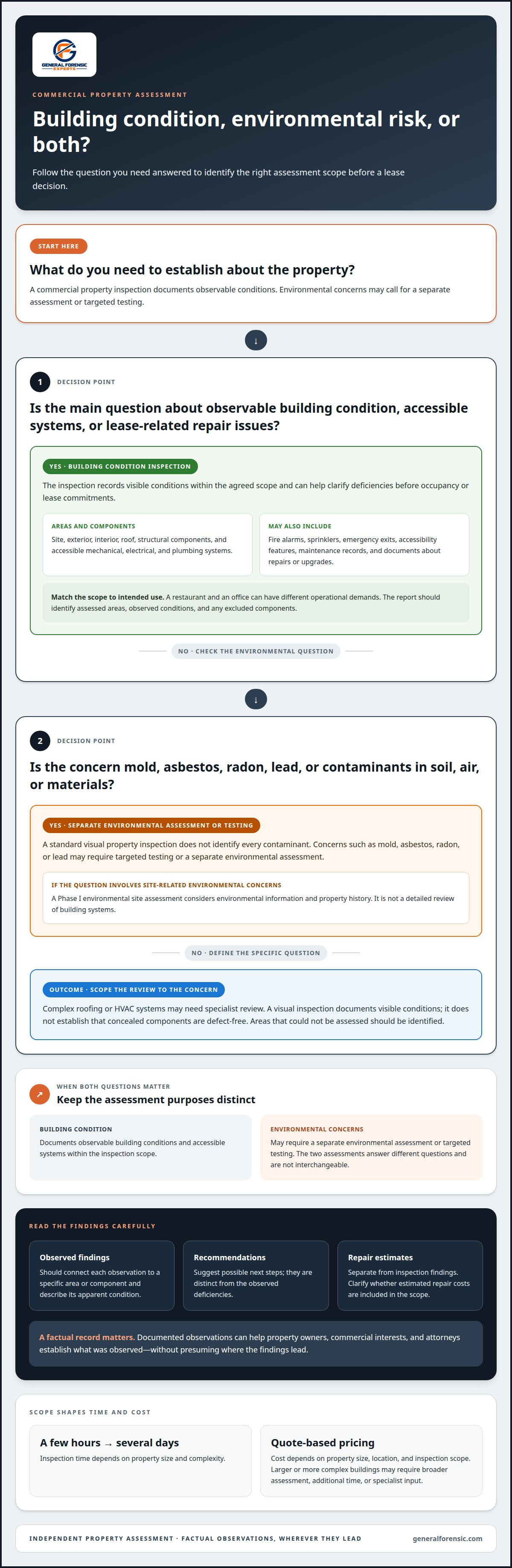
A standard commercial property inspection primarily documents visible building conditions. On its own, it does not identify every contaminant in soil, air, or materials. Asbestos, mold, radon, and lead paint may require separate environmental assessment or targeted testing.
A commercial property inspection evaluates a building’s physical condition, while a Phase I environmental site assessment addresses potential environmental concerns associated with the property. It considers environmental information and property history rather than providing a detailed review of building systems. These assessments answer different questions and are not interchangeable.
Property history can help frame environmental concerns. Previous uses, documented repairs, and records of earlier environmental work may inform whether additional investigation is appropriate. For example, a report of past water intrusion can guide mold follow-up, while records about a building’s age or materials may inform evaluation for asbestos or lead paint.
Before a purchase or lease, organize available Certificates of Occupancy, maintenance records, and documents about recent repairs or upgrades. Include prior environmental assessments or test results if available. These records help the inspector understand known conditions and distinguish documented history from observations made during the site visit.
Separate testing addresses specific hazards that a visual review cannot confirm. Mold testing and analysis, indoor air quality testing, and lead testing each investigate distinct concerns. The appropriate test depends on the suspected material or condition, the area involved, and the question to be answered. Interpret results in the context of the locations and methods tested.
For a residential or commercial property, define the concern and assessment scope before testing begins. A written report can connect findings to the tested area and note whether further evaluation is recommended. This distinction gives owners, prospective tenants, and attorneys a clearer factual basis for purchase, lease, or property-condition decisions.
Commercial inspection service area
Miami is the location focus for this assessment. A property’s address helps define site access and the building areas included in fieldwork. The scope also depends on the property type, occupancy, available records, and lease timing. A storefront, office, and warehouse present different access and operational conditions for an inspection.
Before a site visit, provide the street address, property type, and relevant lease deadline. Note access limits, such as restricted roof entry or tenant-only areas. These details help define what the inspection can examine. For example, occupied suites may require coordinated access before their interiors can be assessed.
Local conditions are relevant to a Miami assessment. A commercial inspection in Florida may consider hurricane-related wind resilience and moisture-retention risks. The property’s exterior condition, visible water entry, and roof access can help shape the scope. Findings should distinguish observed conditions from areas that could not be accessed.
Confirm that the scope covers the specific premises under lease, not just the building’s common areas. In a multi-tenant property, the leased suite, shared corridors, service areas, and building systems may have different access arrangements. A useful inspection record identifies the areas observed and clearly notes access limitations.
For Miami owners, tenants, and attorneys, an address-specific assessment can establish a documented view of property condition before a lease decision. This is especially relevant when visible moisture, storm-related damage, or electrical concerns require careful documentation. Share the location and assessment purpose through request a Miami property inspection to start a site-specific review.
General Forensic Engineers
General Forensic Engineers, LLC helps property owners, commercial stakeholders, and attorneys document building conditions. Its assessments examine observable evidence and report findings without presuming responsibility, helping stakeholders find the truth wherever the evidence leads. This record can clarify concerns before a lease, after hurricane damage, or when a building needs recertification or a milestone inspection. Every assessment includes recommendations appropriate to the observations and inspection scope.
For Miami properties, Residential & Commercial Property Inspections address building-condition questions, while Expert Forensic Damage Assessment investigates damage and its potential causes. Pre- and post-commercial property hurricane assessments document property conditions around a storm. The appropriate scope depends on the question and the available evidence.
When inspection findings raise questions about damage, repairs, or lease decisions, a documented assessment can help owners and attorneys evaluate the facts. Plaintiff’s attorneys are invited to contact General Forensic Engineers, LLC or the relevant property owners to discuss a property assessment. Contact General Forensic Engineers, LLC to discuss an assessment.
Define the Next Step Before Signing
Before signing a lease, define the property question that needs an independent assessment. It may concern the building’s current condition, damage requiring further investigation, or storm-related impacts. A focused scope aligns the evaluation with your decision. A commercial property inspection can provide technical findings, while suspected environmental hazards may require separate testing.
General Forensic Engineers, LLC provides Residential & Commercial Property Inspections, Expert Forensic Damage Assessment, and Pre & Post-Commercial Property Hurricane Assessments. These services help property owners, commercial stakeholders, and attorneys document conditions and evaluate evidence objectively. Findings should reflect observed facts, even when they do not support an expected position.
Use the assessment to establish a factual basis for your next property decision. Plaintiff’s attorneys can contact General Forensic Engineers, LLC or the relevant property owners to discuss an evaluation.
Frequently Asked Questions
What types of commercial properties can be inspected?
Commercial inspections can cover offices, retail spaces, warehouses, and multi-tenant buildings. The scope should reflect the property’s use and the areas under consideration. For a leased suite in a larger complex, clarify whether the assessment covers only the tenant space or also accessible shared areas. This distinction helps everyone understand what the findings cover.
Are commercial inspectors licensed in Florida?
Yes. Commercial inspectors in Florida must be licensed by the Florida Department of Business and Professional Regulation. Licensing is one selection criterion; the inspector’s experience with the building type and requested scope also matters. For example, an assessment involving a large commercial roof or complex building systems may require expertise suited to those components.
Can a commercial inspection help with insurance or financing?
An inspection can provide property-condition information that insurers or lenders may use when assessing risk, but it does not determine their decisions. Inspection documentation may assist claim evaluation, but does not establish coverage or guarantee claim approval or payment. Coverage decisions depend on policy terms and applicable facts. For financing, the lender determines its documentation requirements and underwriting outcome.
Do I need to be present during the inspection?
No, you do not have to attend. Being present can help you understand observations as they arise and clarify which areas matter to your planned use. If you cannot attend, arrange access to the relevant spaces and share the inspection purpose in advance. For example, a tenant considering an office suite can identify operational concerns for the inspector to consider within scope.
What does a typical inspection report include?
A report should connect its observations to specific areas or components. Look for clear descriptions, supporting photographs where used, and a distinction between observed conditions and suggested follow-up. It should also identify scope limitations, such as inaccessible spaces. This helps owners, prospective tenants, and attorneys understand how each finding relates to the areas reviewed.
What if the inspection report reveals significant issues?
Use documented findings to identify concerns that need further evaluation and those requiring repair planning. Before signing a lease, the parties can discuss repair responsibilities or relevant lease terms using the report as a factual reference. For a purchase, documented deficiencies may inform discussions about repairs or price. The report records conditions; it does not decide the parties’ agreement.
Comments