
Milestone Inspection Engineer: What Florida HOAs Should Know
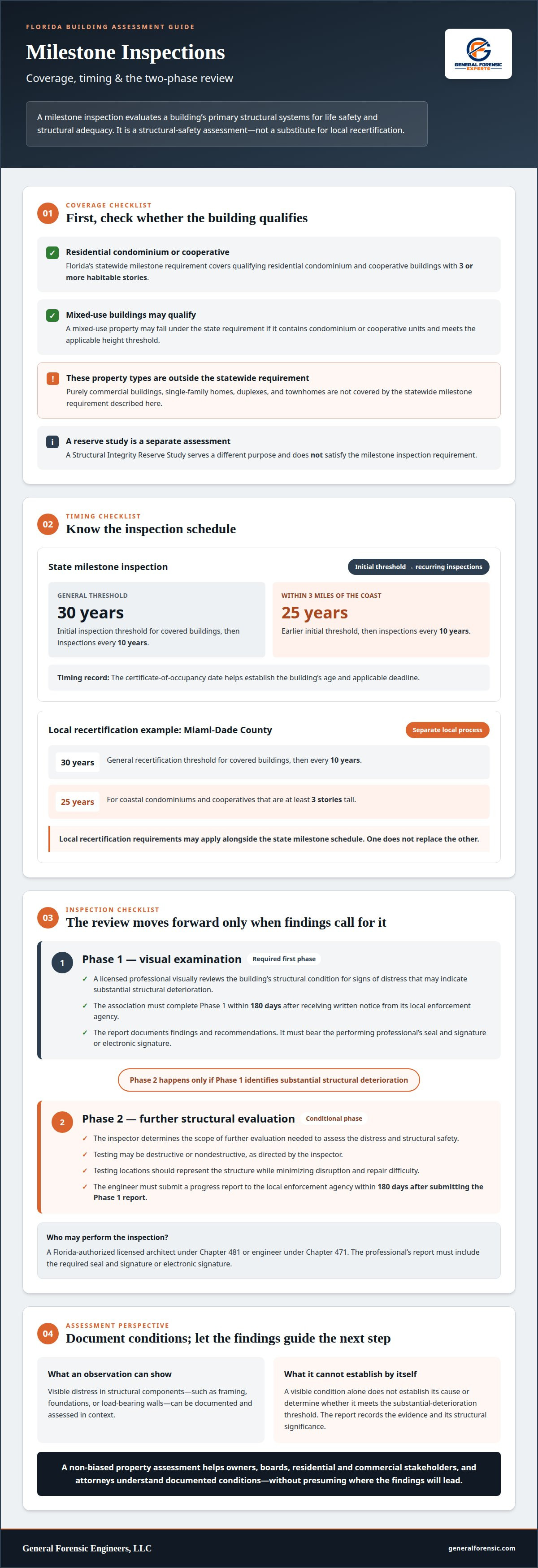
A milestone inspection is a structural safety assessment, not a substitute for local recertification. According to the Florida Legislature, the statewide requirement covers residential condominium and cooperative buildings with three or more habitable stories. A milestone inspection engineer evaluates the building’s primary structural systems; a Phase 2 inspection is required only when the Phase 1 review identifies substantial structural deterioration.
For Florida HOAs, the distinction matters because milestone inspections and recertification serve different purposes and follow different requirements. A milestone inspection evaluates structural condition and safety, while recertification addresses local building safety requirements. Confusing the two can leave an association uncertain about which assessment applies and what findings need follow-up.
This article explains what a milestone inspection covers, which buildings fall under Florida’s requirements, and how substantial structural deterioration affects the process. It also compares milestone inspections with recertification so property owners, board members, and attorneys can better understand the assessment and its implications.
Table of Contents
What is a Milestone Inspection?
A Florida milestone inspection evaluates a building’s primary structural systems for life safety and structural adequacy. Florida Statute 553.899, according to the Florida Legislature, establishes the statewide requirement. The process has two phases, with the first phase beginning as a visual examination rather than invasive testing.
During Phase 1, a licensed professional visually reviews the building’s structural condition and prepares a report. The examination focuses on identifying signs of distress that may indicate substantial structural deterioration. A condominium or cooperative association must complete Phase 1 within 180 days after receiving written notice from its local enforcement agency. That deadline makes prompt coordination important for owners and association boards.
Phase 2 follows only when Phase 1 identifies substantial structural deterioration. The inspector then determines the scope of further evaluation needed to assess the distress and structural safety. Under Section 1804.1.2 of the 2023 Florida Building Code, Existing Building, testing may be destructive or nondestructive, as the inspector directs. Testing locations should represent the structure while minimizing disruption and repair difficulty.
Reports document the inspection findings and recommendations. Under Section 1806.1 of the 2023 Florida Building Code, Existing Building, Phase 1 and Phase 2 reports must be prepared and submitted pursuant to that subsection. For a Phase 2 inspection, the engineer must submit a progress report to the local enforcement agency within 180 days after submitting the Phase 1 report. That progress report is a separate reporting milestone, not a substitute for the inspection report.
Florida requires the inspection to be performed by a licensed architect authorized under Chapter 481 or an engineer authorized under Chapter 471. A milestone inspection engineer must meet the applicable Florida authorization requirements, and the report must bear the performing professional’s seal and signature or electronic signature.
For an HOA, hiring means selecting an authorized professional and defining the inspection scope, reporting responsibilities, and coordination with the local enforcement agency. The association can establish these deliverables before work begins, including the Phase 1 visual review and the process for advancing to Phase 2 if deterioration is identified.
Buildings subject to Florida milestone inspections
Florida’s statewide requirement covers qualifying residential condominium and cooperative buildings; local rules can add separate recertification requirements. Inspection duration depends on the building’s condition and whether the review advances beyond Phase 1, while the certificate-of-occupancy date and agency notice help establish timing.
Building Age Thresholds and Deadlines
Age thresholds determine when a covered building’s initial inspection is due and when inspections recur. Florida residential condominium and cooperative buildings with three or more habitable stories fall under the requirement, according to the Florida Legislature. The general threshold is 30 years, followed by inspections every 10 years. Buildings within three miles of the coast reach the initial threshold at 25 years, then repeat every 10 years. The certificate-of-occupancy date helps establish the building’s age and applicable deadline.
Local Recertification Requirements
Local recertification is a separate building-safety process that may apply alongside the statewide milestone requirement. In Miami-Dade County, covered buildings generally undergo recertification at 30 years and every 10 years thereafter; coastal condominiums and cooperatives at least three stories tall reach recertification at 25 years. These local intervals do not replace the state milestone schedule. An association should account for both processes when planning assessments and compliance.
Mixed-use properties may fall under the state requirement if they contain condominium or cooperative units and meet the applicable height threshold. The statewide requirement does not cover purely commercial buildings, single-family homes, duplexes, or townhomes. A Structural Integrity Reserve Study serves a separate purpose, and completing one does not satisfy the milestone inspection requirement.
Local enforcement agencies notify covered buildings by certified mail. The association’s notice and certificate-of-occupancy record are central documents for identifying the applicable timeline. Phase 1 must be completed within 180 days after written notice arrives. The inspection produces a report for submission to the local enforcement agency, with the performing licensed professional’s seal and signature or electronic signature. For a property assessment that addresses building condition, residential and commercial property inspections can provide relevant context.
Substantial structural deterioration
Substantial structural deterioration is a finding that may require a more detailed assessment of a building’s structural condition. The report must describe the extent of the deterioration and recommend repairs within the inspection’s scope.
Warning Signs of Structural Degradation
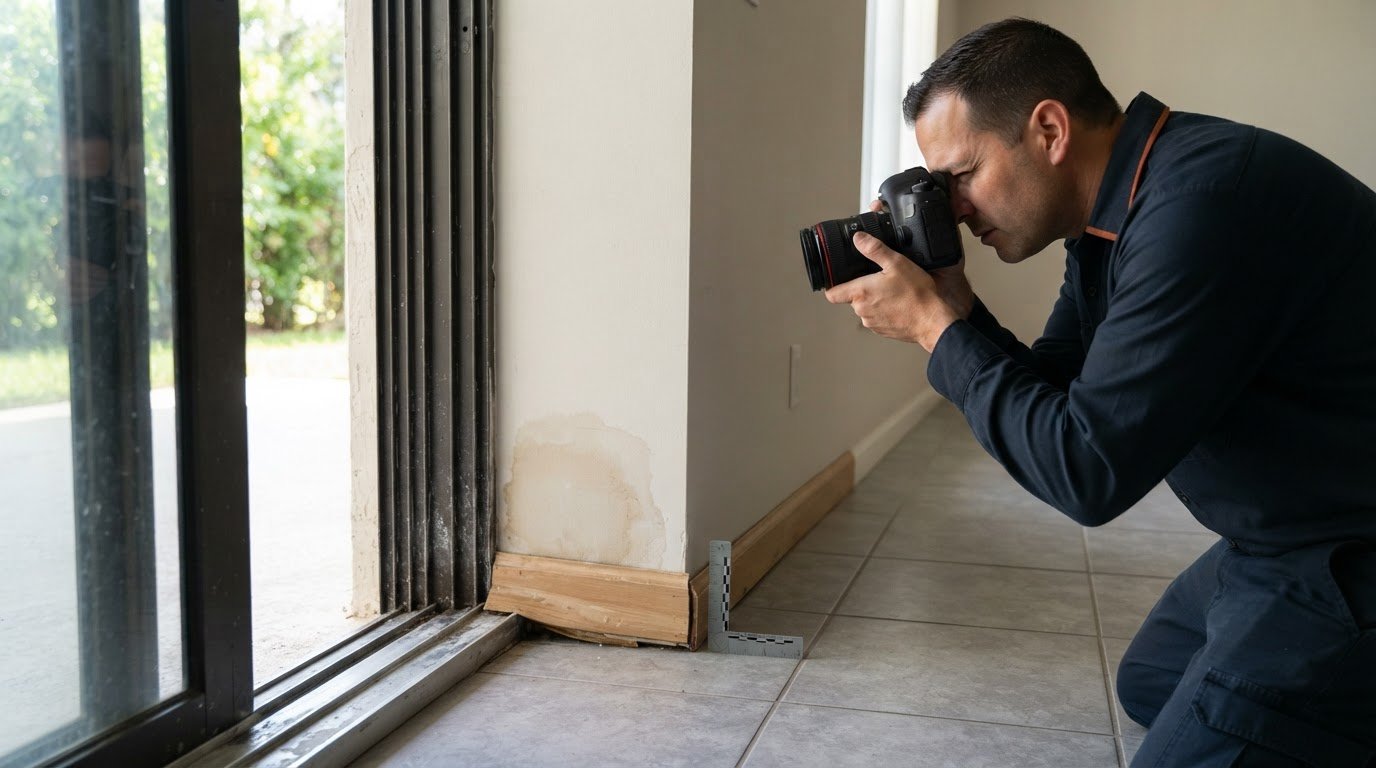
Warning signs are observable evidence of distress in structural components, such as damage to framing, foundations, or load-bearing walls. Their location, extent, and relationship to other components inform the engineer’s assessment. A visible condition alone does not establish its cause or determine whether it meets the substantial-deterioration threshold. The inspection report documents the observed evidence and its structural significance.
Assessing Foundations and Load-Bearing Elements
A structural assessment examines primary components, which may include foundations, load-bearing walls, roof systems, and structural framing. The engineer considers how observed distress affects structural integrity, rather than treating each visible condition as an isolated defect. In Phase 2, testing may be destructive or nondestructive, as directed by the inspector. Testing locations should represent the structure while remaining minimally disruptive and easier to repair.
Structural Deterioration Assessment
The deterioration assessment identifies the affected areas, describes their extent, and recommends repairs based on a reasonable professional probability and inspection scope. Phase 2 may be limited or extensive, depending on the evidence needed to evaluate distress and confirm safety for intended use. The resulting report gives owners a documented basis for understanding the engineer’s findings and recommended repair program.
If substantial structural deterioration is identified in Phase 1, the inspection proceeds to Phase 2. Florida local ordinances must require repairs to commence within 365 days after the Phase 2 report is received.
A Structural Integrity Reserve Study addresses reserve funding, not the building’s structural condition during an inspection. Both requirements may apply, and completing one does not satisfy the other. For condominium and cooperative buildings, keeping inspection findings separate from reserve planning helps boards track structural repairs and funding obligations distinctly.
Differences between milestone inspections and recertification
Florida milestone inspections and local recertification programs address different questions. A milestone inspection evaluates primary structural systems for life safety, adequacy, and general structural condition. It is not intended to determine whether an existing building complies with the Florida Building Code or fire safety code. Recertification follows local requirements and procedures, which vary by jurisdiction.
The distinction affects what each assessment can establish. A milestone inspection report documents structural findings and, if substantial structural deterioration is identified, recommended repairs. A local recertification examination addresses the safety items required by that jurisdiction. For example, Broward County’s follow-up building safety inspections include structural and electrical safety. An association should not treat a structural milestone report as proof that it has met every local recertification requirement.
The processes can also differ in scope and methods. A milestone inspection begins with a visual examination; a Phase 2 inspection may include destructive or nondestructive testing as directed by the inspector. The licensed architect or engineer performing the milestone inspection evaluates structural evidence within that scope. Local recertification follows the applicable county or municipal program, so its examination and deliverables may address other safety criteria.
For HOA boards, the practical approach is to track each process separately: identify the applicable requirement, record its notice and deadline, and retain the corresponding report. If a building is subject to both, completing one does not satisfy the other. The distinction also matters in property disputes. A milestone report can document structural conditions, but it does not resolve every question about code compliance, repair responsibility, or causation. Attorneys evaluating a claim can use the report as technical evidence within its stated scope.
For an impartial review of a building assessment, discuss your property’s inspection needs.
General Forensic Engineers: Recertification & Milestone Inspections
General Forensic Engineers provides recertification and milestone inspections for associations addressing building assessment requirements. Its evidence-driven property assessments document observed conditions for owners and residential or commercial stakeholders. An HOA can turn to the company for a milestone inspection or an independent assessment of structural concerns. Every assessment includes recommendations appropriate to the observations and inspection scope.
For attorneys evaluating a property matter, a documented engineering assessment can help clarify observed damage and its scope. Findings remain grounded in the evidence, regardless of where that evidence leads. The assessment helps explain property conditions; it is not legal representation or insurance claim adjusting.
Contact General Forensic Engineers to discuss an inspection or property assessment.
Make the Assessment Useful for Your Next Decision
Selecting a milestone inspection engineer is an opportunity to establish a clear, evidence-based record for future decisions. Property owners can use an independent assessment to understand documented conditions, while attorneys can consider how those findings relate to a disputed property matter. Conclusions should follow the evidence, even when they do not support an expected position.
General Forensic Engineers provides Expert Forensic Damage Assessment, Pre & Post-Commercial Property Hurricane Assessments, and Residential & Commercial Property Inspections. For plaintiff’s attorneys evaluating a property claim, an independent assessment can help clarify the physical conditions at issue. Attorneys may encourage property owners to seek an assessment or contact General Forensic Engineers to discuss the inspection need. The company’s role is property assessment, not legal representation.
Contact General Forensic Engineers to discuss an inspection or property assessment. A careful evaluation can help stakeholders determine their next step from a clearer factual record.
Frequently Asked Questions
What Is 40-Year Building Recertification?
A 40-year building recertification is a local safety inspection milestone, separate from Florida’s statewide milestone inspection. Broward County requires buildings larger than 3,500 square feet to undergo structural and electrical safety inspections 40 years from the certificate-of-occupancy date. The applicable local program governs its required reports and follow-up. Associations should track this county review separately when organizing building compliance records.
Who Needs to Comply?
Florida’s statewide milestone requirement applies to qualifying residential condominium and cooperative buildings with three or more habitable stories, according to the Florida Legislature. Mixed-use buildings containing condominium or cooperative units may also be covered if they meet the height threshold. Purely commercial buildings, single-family homes, duplexes, and townhomes are exempt from this statewide requirement. Separate local inspection requirements may have different coverage criteria.
Who determines the timing and sequence of inspections, and which elements are inspected?
Florida law and applicable local requirements establish inspection timing, while the local enforcement agency issues notices to buildings subject to the statewide requirement. The inspection sequence depends on the findings: a Phase 1 visual review comes first, and identified substantial deterioration triggers Phase 2. The assessment focuses on primary structural systems, potentially including foundations, load-bearing walls, roof systems, and structural framing.
What does a milestone inspection engineer do?
A milestone inspection engineer evaluates a building’s primary structural systems, documents observations, and prepares the required report. Florida’s process may be performed by an engineer authorized under Chapter 471 or an architect authorized under Chapter 481. The professional’s report must bear the inspector’s seal and signature, including an electronic signature. For an HOA, the findings provide a technical record for board decisions and owner communications.
When are milestone inspections required for condominium and cooperative buildings?
Florida’s statewide requirement generally applies when a covered condominium or cooperative building reaches 30 years, then every 10 years. A covered building within three miles of the coast reaches its initial inspection threshold at 25 years, followed by inspections every 10 years. The Florida Legislature identifies three or more habitable stories as the height threshold. The building’s certificate-of-occupancy date helps establish its age.
What does a milestone inspection include, and what are its phases?
Phase 1 is a visual examination of the building’s structural condition. If it identifies substantial structural deterioration, Phase 2 evaluates the distress in greater detail and may use destructive or nondestructive testing, as directed by the inspector. The Phase 2 engineer must submit a progress report to the local enforcement agency within 180 days after the Phase 1 report. Testing scope and locations reflect the structural evidence.


Comments