
Forensic Building Inspection Methods and How They Find Damage
Visible damage alone does not establish its cause. Forensic building inspection methods help determine how a building failed, which areas and materials are affected, and what conditions may have contributed. Investigators document observations, take measurements, conduct testing, and analyze the evidence to distinguish findings from assumptions and develop an impartial assessment.
Cracks, water intrusion, and structural movement can have several underlying causes, so an investigation considers how building components and conditions interact. This article explains what a forensic inspection involves, how experts assess damage and trace its cause, and when tools such as thermal imaging, moisture mapping, and drone photography can help document conditions. It also covers how findings can inform repair planning, claim evaluation, and legal disputes.
Table of Contents
What Is a Forensic Building Inspection?
A forensic building inspection applies engineering analysis to a specific failure, defect, or disputed damage. It evaluates evidence to identify root causes and contributing conditions, then supports decisions about repairs. Inspection costs depend on property size, issue complexity, and testing requirements; the price is provided after a quote request.
Forensic Engineering and Failure Analysis
Forensic engineering examines building failures and construction defects by connecting observed damage with design, materials, and construction conditions. Investigators assess whether a structural deficiency, installation problem, or material failure contributed to the outcome. This analysis is useful when visible damage alone cannot explain the extent of a loss or establish its cause. Findings help property owners and attorneys distinguish documented evidence from competing assumptions.
Root Causes and Contributing Factors
Root-cause analysis considers how multiple conditions may have interacted, rather than treating one visible symptom as the whole explanation. Investigators review design, construction, maintenance, environmental exposure, previous repairs, and material condition. For example, water intrusion may involve both an exterior-envelope defect and a failed repair. Separating the initiating condition from contributing factors helps clarify which components need attention and what the evidence supports.
Material Testing and Evidence Collection
Inspectors document conditions, collect relevant material samples, and use testing to assess whether materials or components contributed to failure. Chemical analysis by forensic laboratory consultants can compare sampled materials with specified materials and help investigate product failures or contamination concerns. ASTM E1188-11(2017) provides guidance on evidence collection and preservation protocols, according to ASTM International. Clear records connect each sample and test result to the location and condition examined.
Repair Recommendations and Replacement Analysis
Repair recommendations connect documented damage with the work needed to address its cause and affected components. A repair-versus-replacement assessment considers the extent of deterioration, the condition of adjoining materials, and whether a proposed repair can address the identified defect. Localized damage may call for targeted repairs, while more extensive material failure may warrant evaluating replacement. The report explains the evidence and reasoning behind its recommendations.
Structural, foundation, geotechnical, and building-envelope failure investigations
Engineering investigations assess failures as connected conditions, from soil and foundations to framing and exterior assemblies. The scope depends on the observed damage and the evidence needed to evaluate its causes.
Investigating Structural and Foundation Failures
Structural and geotechnical investigations evaluate foundations, framing, load-bearing components, and overall building stability. Engineers examine settlement, cracking, displacement, and soil conditions to determine whether structural deficiencies, design errors, or construction defects contributed to a failure. Similar cracks can arise from different mechanisms, so identifying the cause matters. Findings help owners and attorneys understand the damage and the technical basis for recommendations.
Building Envelope and Indoor Air Quality
Envelope investigations trace how exterior walls, roofs, openings, and drainage details manage water and air movement. Investigators may use water leakage testing under AAMA 501 or combined air and water testing under AAMA 503.3 to assess suspected pathways. For indoor air quality concerns, analysis may examine interactions among the structure, exterior envelope, and HVAC system. This broader scope helps distinguish a localized leak from conditions affecting indoor environments.
Forensic and Standard Inspection Practices
A standard home inspection generally reviews visible conditions, while forensic engineering focuses on a specific failure and its causes. Investigators compare observed construction with applicable construction methods and examine design, installation, maintenance, and use. Destructive testing may reveal concealed conditions, but an investigation can also draw on document review, site observations, and non-destructive evaluation. The method should fit the question, so recommendations rest on evidence rather than checklist assumptions.
Applicable Codes, Standards, and Rules
Applicable references depend on the building, location, construction details, and failure mechanism. For relevant structural inquiries, AISC 360 Chapter J addresses bolted and welded steel connections; ACI 318 Chapter 17 addresses post-installed and cast-in anchors in concrete. IBC Chapter 17 special inspection records may be relevant when connection adequacy is disputed. Forensic structural engineers conducting structural engineering work should have the qualifications appropriate to that work; a forensic structural engineer is a licensed Professional Engineer.
When structural distress or envelope damage requires a focused assessment, expert forensic damage assessment can help establish the conditions and evidence relevant to the investigation.
Thermal imaging, ground-penetrating radar, and drone inspections
Visual inspection combines direct observation, photographs, thermal imaging, and electronic measurements. Forensic building inspection methods are selected based on the suspected condition, access constraints, and evidence needed to assess it.
Thermography and Electronic Measurements
Infrared cameras record surface temperature patterns that may point to concealed differences. Moisture readings and other electronic measurements provide additional data for evaluating those patterns. Together, these observations can identify areas for further investigation, but an image alone does not prove a specific defect. For example, an unusual wall pattern may warrant targeted moisture measurements before repair decisions are made.
Ground-Penetrating Radar and Infrared Methods
Ground-penetrating radar sends electromagnetic signals into materials and records reflections that may help locate concealed features or anomalies. Infrared thermography records surface temperature variations. These forensic building inspection methods provide different kinds of evidence: radar can help assess subsurface conditions, while infrared imaging documents surface patterns. Investigators interpret each result in context, because neither method alone establishes the cause or full extent of building damage.
Detecting Hidden Moisture
Infrared imaging can reveal temperature patterns consistent with possible moisture-related conditions behind a wall or ceiling. Investigators can use those patterns to focus closer inspection and moisture-meter readings on particular locations. A cooler area near a window, for example, may guide testing around the opening and adjacent wall. This process helps distinguish a suspected condition from verified moisture and supports a more precise assessment of damage and possible repair needs.
Thermal Imaging and Photography
Thermal images paired with conventional photographs preserve both temperature patterns and visible context. A photograph can show a roof opening or stained ceiling, while the corresponding thermal image records surface variation nearby. Drone imagery can document roofs and other difficult-to-access areas, providing property owners and professionals with a visual record for review. Organized images connect observations to locations, preserve evidence, and support assessment of potential liability without relying on memory alone.
Property damage and root-cause assessment
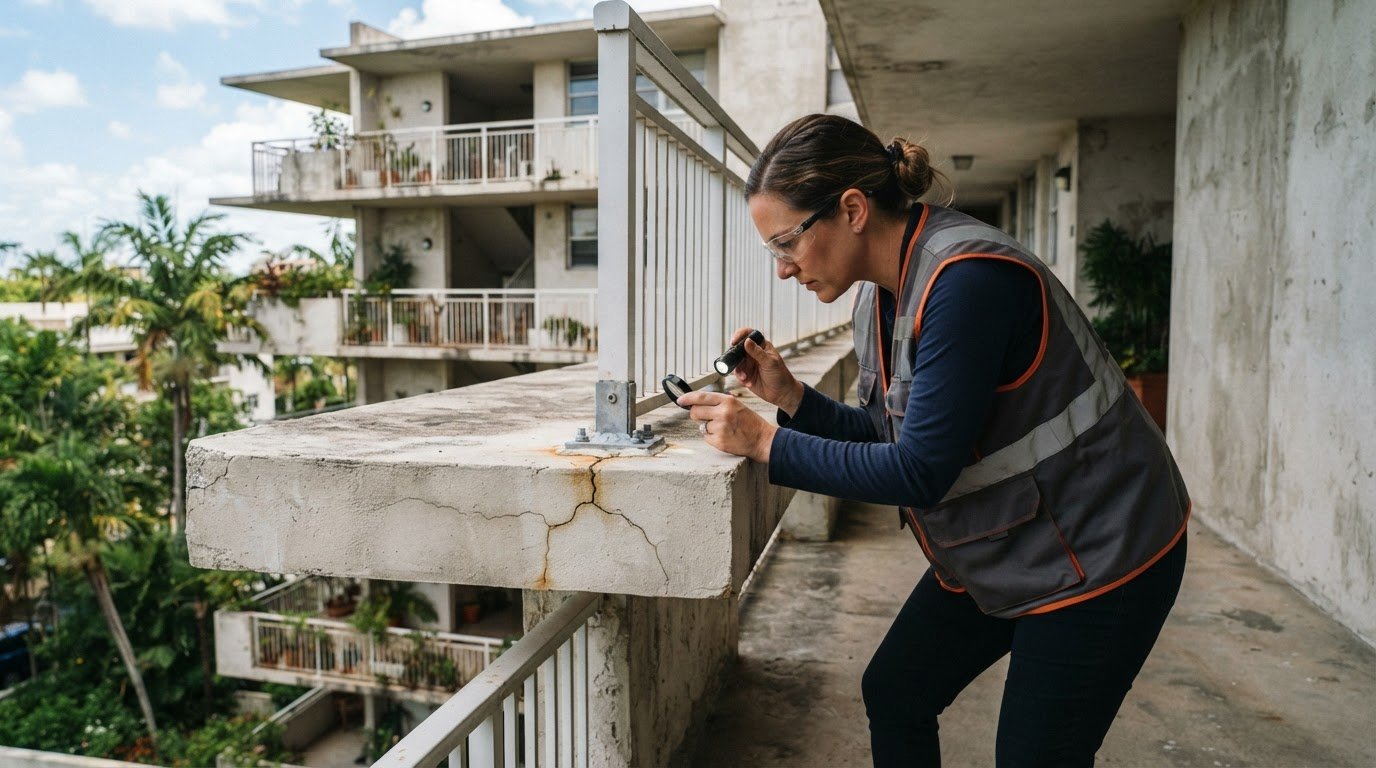
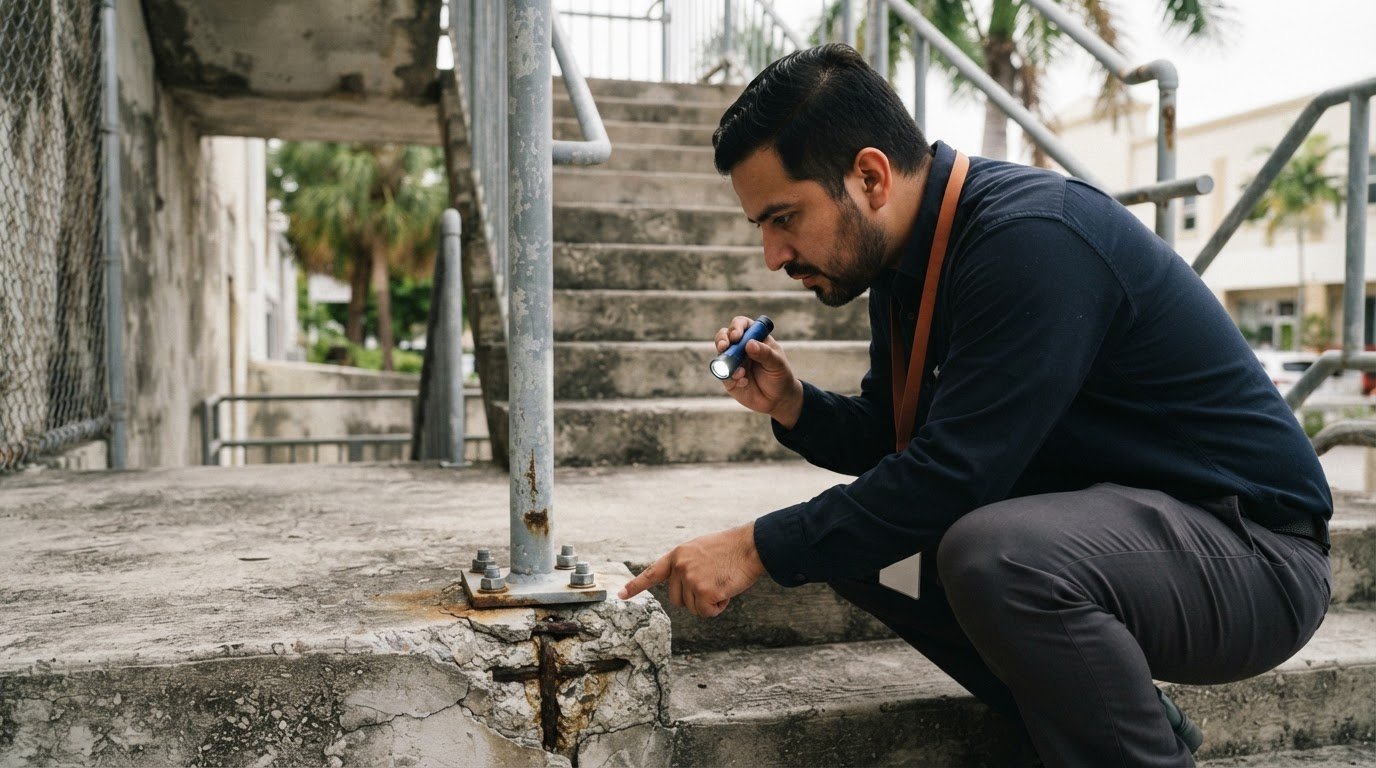
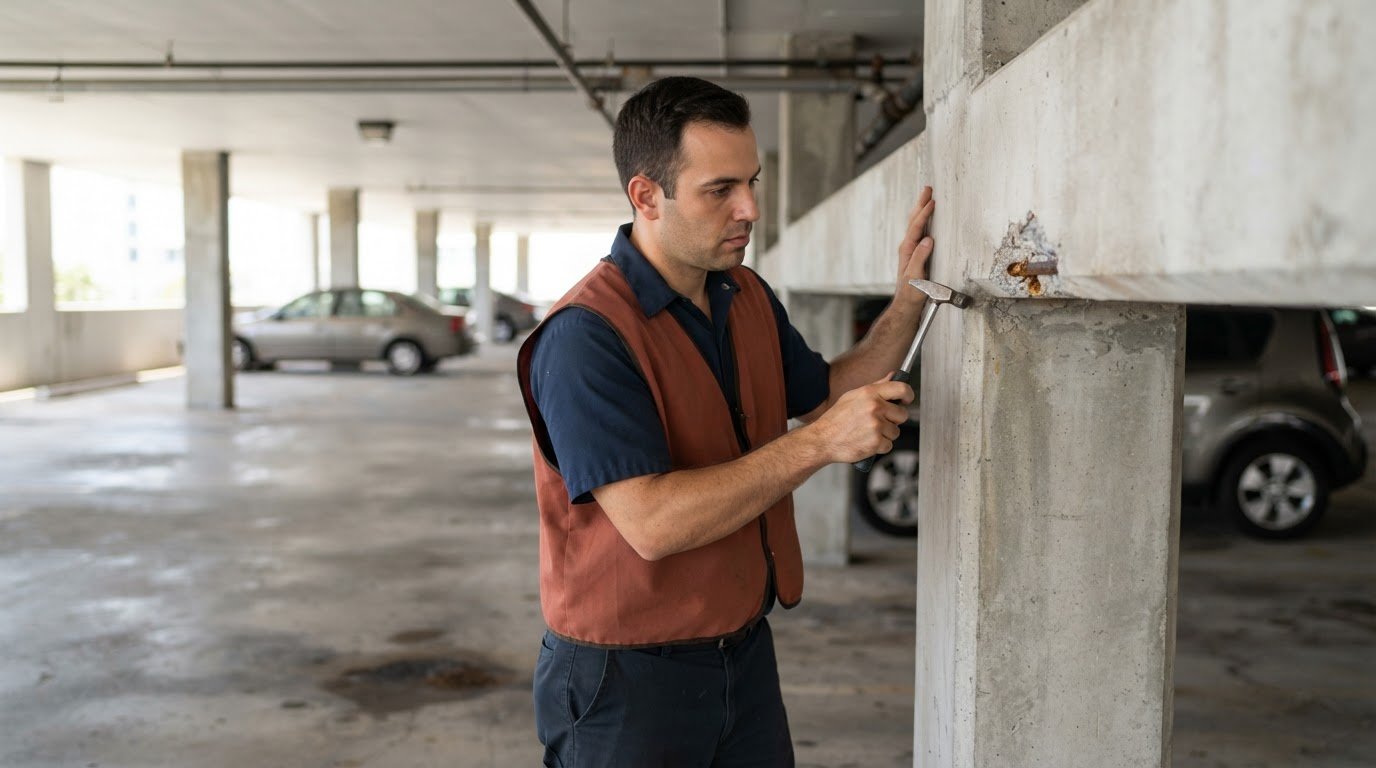
Forensic engineering connects observed damage with its cause, extent, and significance. The assessment considers how conditions developed, identifies affected components, and distinguishes direct damage from contributing factors. This is important when repair decisions, claim evaluation, or legal disputes hinge on whether a specific event caused the observed condition.
Investigators document the locations and patterns of damage, then compare them with available project records, prior repairs, and site conditions. A roof leak, for example, may affect ceiling finishes and framing, while earlier deterioration may complicate the timeline. Evidence may support or challenge a proposed cause; an impartial assessment does not assume either party is right.
Timing matters because repairs can remove or alter evidence of an original failure. When possible, document urgent conditions and collect relevant samples before repairs begin. Investigators then evaluate the damage alongside maintenance history, environmental exposure, construction details, and previous repairs. The aim is to determine which factors explain the findings and how strongly the technical evidence supports that conclusion.
Assessing the extent of damage means more than listing visible defects. An investigation considers which components are affected, whether concealed areas may also be involved, and how the identified cause relates to each condition. Material testing may help establish repair specifications, particularly for structural or architectural systems. This helps owners understand whether a proposed repair addresses the cause or only restores a damaged surface.
Root-cause findings can inform repair-versus-replacement decisions, loss estimates, and litigation analysis. A well-supported assessment explains its reasoning, evidence, and limitations, helping attorneys and property owners evaluate competing accounts on a factual basis. The evidence may support a targeted repair, a broader scope of work, or a finding that the proposed cause does not fit the observed damage.
For an impartial, evidence-based review of property damage, discuss a forensic damage assessment.
General Forensic Engineers
General Forensic Engineers, LLC provides evidence-based assessments for residential and commercial property owners and attorneys. When the cause, extent, or repair implications of damage are disputed, an Expert Forensic Damage Assessment examines the property and documents relevant findings without presuming what the evidence will show. Residential and Commercial Property Inspections address broader property concerns, while Pre & Post-Commercial Property Hurricane Assessments document conditions associated with a storm. Recertification & Milestone Inspections address their respective assessment needs.
These services can clarify technical issues and provide a factual basis for decisions. Plaintiff’s attorneys handling property or construction disputes are invited to contact General Forensic Engineers, LLC about an independent property assessment to better understand the physical evidence. Every assessment includes recommendations appropriate to the observations and inspection scope. Contact General Forensic Engineers, LLC to discuss the property conditions and the assessment that fits your needs.
Move from Uncertainty to an Evidence-Based Assessment
When property damage is disputed, start by defining the decision that needs technical support. Owners may need a clearer basis for planning repairs, while attorneys may need an independent assessment of physical evidence. Choosing forensic building inspection methods suited to the property conditions keeps the investigation focused on that decision, rather than assumptions about cause or responsibility.
General Forensic Engineers, LLC provides Expert Forensic Damage Assessment, Pre & Post-Commercial Property Hurricane Assessments, and Residential & Commercial Property Inspections. These assessment services help property owners and legal professionals establish an impartial understanding of building conditions, with findings guided by the evidence even when it challenges an initial account.
Plaintiff’s attorneys: share the property concern and the questions that need to be resolved. Contact General Forensic Engineers, LLC to discuss an impartial assessment and determine a practical next step. A clear, evidence-based evaluation can help you move forward with greater clarity.
Frequently Asked Questions
Can multiple factors contribute to the same building issue?
Yes. A building problem can develop through interacting conditions rather than one isolated defect. For example, a poorly detailed window opening may admit water, while deferred maintenance allows moisture damage to progress. Previous repairs can also affect how the condition develops. Investigators distinguish the initiating event from factors that worsened the damage, helping explain why a single symptom can have several possible technical causes.
Does every investigation require destructive testing?
No. Many investigations begin with records, visual observations, and non-destructive measurements. Destructive testing may be useful when concealed construction details or material conditions cannot otherwise be evaluated. A limited opening, for example, may expose a wall connection or water-damaged layer for direct examination. The decision depends on the unresolved question, the available evidence, and whether opening the assembly is likely to provide useful information.
What is Forensic Engineering?
Forensic engineering applies engineering principles and scientific analysis to determine how a failure or damage event occurred. It examines physical conditions and relevant records to develop conclusions that can inform property decisions or disputed matters. For example, an engineer may assess whether a damaged connection is consistent with a reported event or a construction condition. The analysis is evidence-focused, not advocacy for a party.
What is building failure analysis?
Building failure analysis is the technical evaluation of a component or system that no longer performs as intended. It identifies the failure mechanism and considers how the condition developed. For example, an investigation of a separated wall connection may compare the observed condition with construction details and available records. This can help distinguish a problem with one component from a broader building-system concern.
What root causes do forensic investigations typically uncover?
An investigation may consider design or construction deficiencies, improper installation, material failure, inadequate maintenance, environmental exposure, or deterioration. These are possible causes, not automatic conclusions; the evidence determines which explanation fits the property. Recurring water damage, for instance, may relate to an exterior opening, drainage condition, or previous repair. Separating a primary cause from contributing conditions clarifies the technical basis for next steps.
What is a forensic building inspection and when is it needed?
A forensic building inspection is a focused evaluation of a specific property problem, intended to clarify its cause and extent. It can be useful after storm damage, when cracks appear or leaks recur, or when parties disagree about a defect’s source. It is also relevant before repairs alter important physical evidence, particularly when the property condition may affect a claim or dispute.
Comments