
Documenting Miami Hurricane Property Damage: Owner Guide
A defensible record of property damage after a hurricane connects visible conditions, damaged belongings, and emergency work to when and where the damage occurred. Owners should preserve photographs and videos before cleanup or repairs when it is safe, record temporary repairs and their supporting receipts, and prepare an inventory of damaged property. The first 48 hours after a hurricane are especially important when responding to damage.
Photographs alone may not explain how damage developed or what changed during mitigation. A professional assessment examines observed conditions and relevant records, while the owner’s information can help establish the property’s pre-storm condition, when damage was discovered, and what work followed.
This guide explains how a professional assessment documents hurricane damage, emergency repairs, and damaged property, and what information owners can provide. It also shows how clear records can help residential and commercial property owners and attorneys evaluating a loss understand the evidence without assuming what the findings will show.
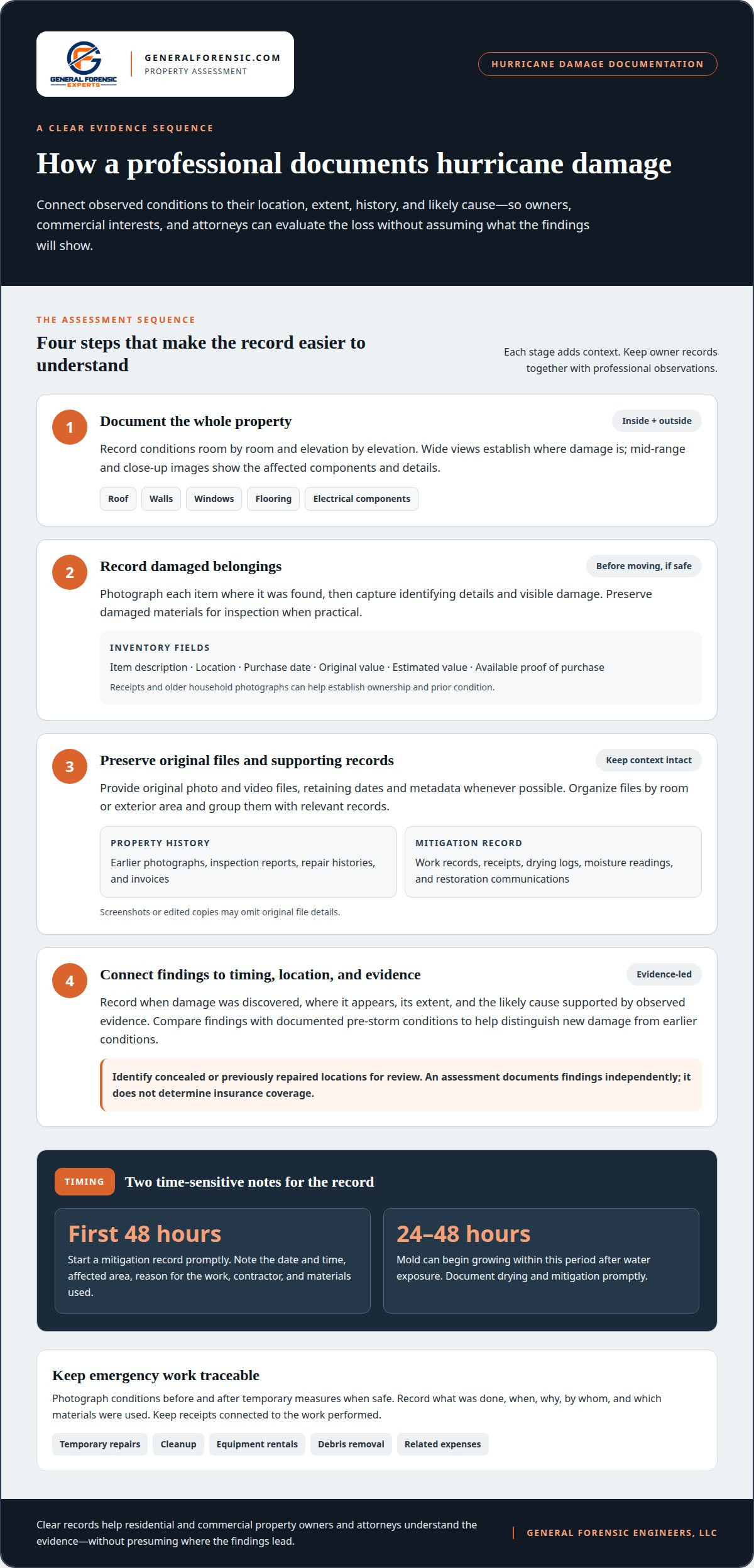
Table of Contents
Documenting emergency mitigation and repairs
Document temporary repairs and related expenses by recording what was done, when, why, by whom, and which materials were used. Keep photographs, work records, and receipts together so an adjuster can connect each expense to the property’s condition.
Start a mitigation record during the first 48 hours after a hurricane, when response to damage is especially important. Note the date and time of each action, the affected area, the reason for the work, the contractor’s name, and materials used. Preserve agreements, invoices, moisture readings, drying logs, photographs, and restoration-company communications.
Make Temporary RepairsTake temporary steps to prevent further damage, and document conditions before and after each measure when it is safe. Record actions such as covering an opening or removing standing water, including dates, materials, and who completed the work. Avoid concealing damaged components before they are documented. For extensive repairs, give the insurance adjuster a reasonable opportunity to inspect first, unless waiting could cause further damage or create unsafe conditions.
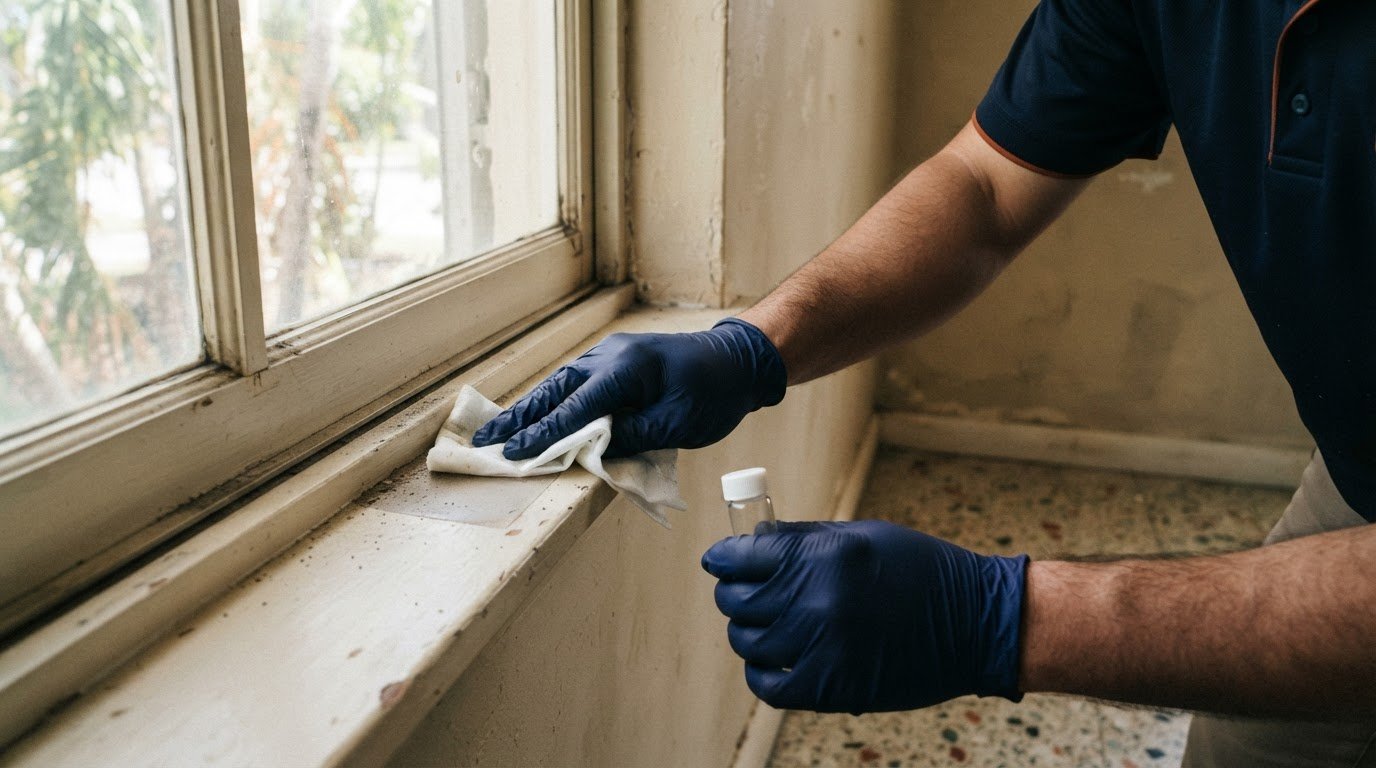
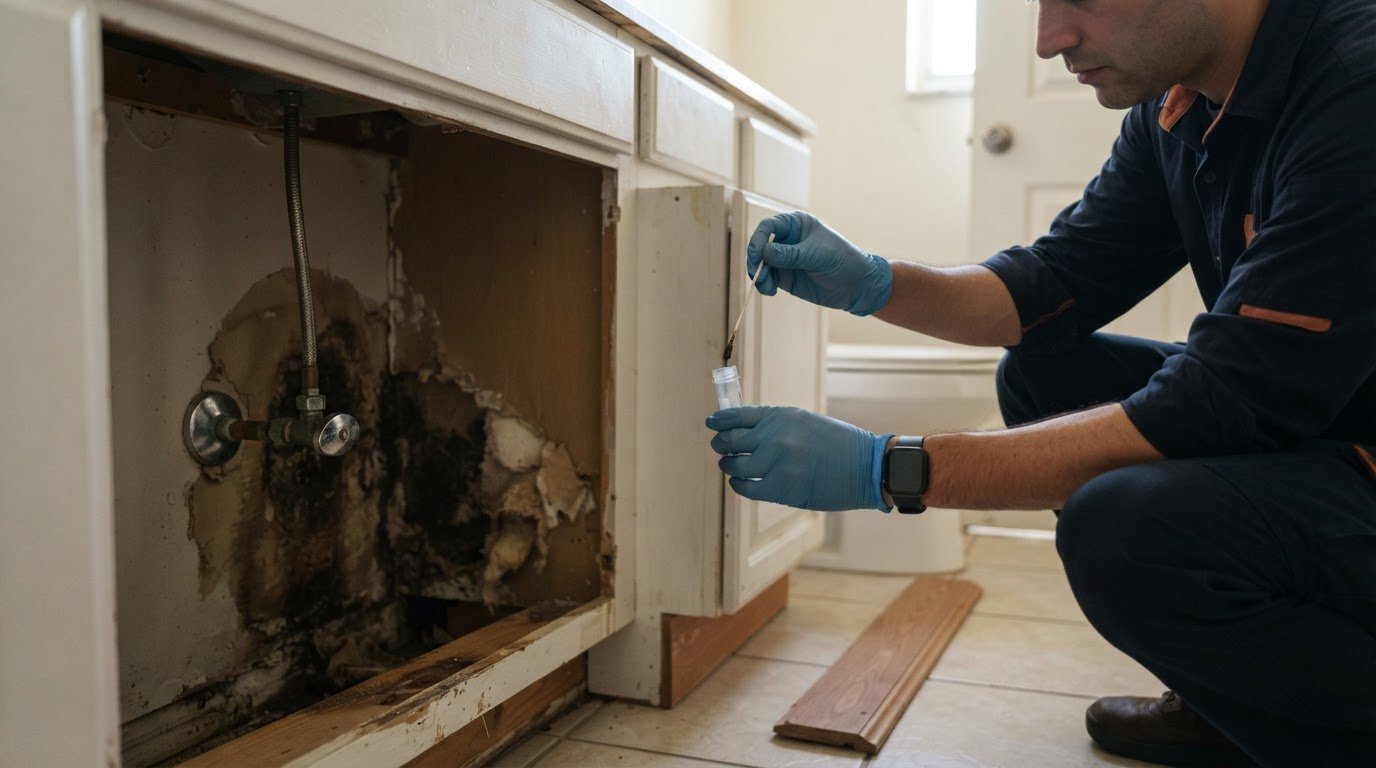
Save Receipts for Repair SuppliesKeep receipts for supplies purchased for temporary storm-damage repairs, and connect each receipt to the work performed. Add receipts for cleanup, equipment rentals, debris removal, temporary housing, food, essential supplies, and transportation. Store these records with contractor invoices and insurance policy correspondence. Mold can begin growing within 24 to 48 hours of water exposure, so document drying and mitigation promptly.
For storm repairs, record the contractor’s name, license details, written agreement, scope of work, and invoices. Selecting a licensed storm-repair contractor helps document who did the work and what was authorized. Keep communications with the insurance company, and note adjuster requests and inspection dates.
For Florida property associations, update property-condition records annually and after major repairs, renovations, or equipment replacements. Keep dated documentation of the property’s condition and completed work. Comparing these records can help distinguish hurricane-related damage from earlier conditions during a later assessment.
How a Professional Documents Hurricane Damage for an Insurance Claim
Report damage promptly under the notice terms in the applicable insurance policy. Deadlines vary by state: Florida law generally requires notice of a supplemental property insurance claim within 18 months after the date of loss; insurers must acknowledge claims within 7 days and accept or deny them within 60 days when all necessary documentation is submitted.
Document Interior and Exterior Damage Through a Professional AssessmentHave the assessment document damage inside and outside the property, room by room and elevation by elevation. Wide views establish location, while mid-range and close-up images show affected components and details. The professional records observed conditions, including impacts to the roof, walls, windows, flooring, and electrical components. Compare findings with repair histories, inspection reports, invoices, and earlier photographs to distinguish new conditions from documented pre-storm conditions.
Photograph Damaged Contents and InventoryIf it is safe, document damaged belongings before moving or discarding them. Photograph each item where it was found, then capture identifying details and visible damage. An inventory can record the item’s description, location, purchase date, original value, estimated value, and available proof of purchase. Receipts and older household photographs can help establish ownership and prior condition. Preserve damaged materials for inspection when practical.
Preserve Original Photos and Videos for a Professional AssessmentProvide original image and video files, retaining dates and metadata whenever possible. This information can help establish the sequence of observations and when damage was discovered. Avoid relying only on screenshots or edited copies, which may omit original file details. Organize files by room or exterior area, and group them with relevant inspection reports, invoices, or earlier photographs.
Document Damage Details for an Adjuster Through a Professional AssessmentAsk the professional to record when damage was discovered, where it appears, its extent, and the likely cause supported by observed evidence. During an insurance adjuster inspection, present relevant records and identify areas requiring review, including concealed or previously repaired locations. The assessment documents findings independently; it does not determine coverage under the insurance policy. An expert forensic damage assessment can organize evidence for claims review.
Safety checks before entering a storm-damaged home
Follow local officials’ re-entry instructions before approaching the property. An emergency perimeter or restricted access can make an inspection unsafe.
Pause outside to assess visible conditions before entering. Look for shifted walls, sagging rooflines, broken windows, debris, and standing water near electrical equipment. Do not cross areas that appear unstable or enter water where electrical hazards may be present. Photograph visible conditions from a safe location for the recovery record.
Wait for official re-entry clearance if local authorities have restricted access. Clearance permits access, but does not establish the condition of every building component. Once entry is permitted, stop if floors feel unstable, ceilings sag, or storm damage blocks a safe route. Keep the insurance claim record separate from assumptions about whether the property is safe.
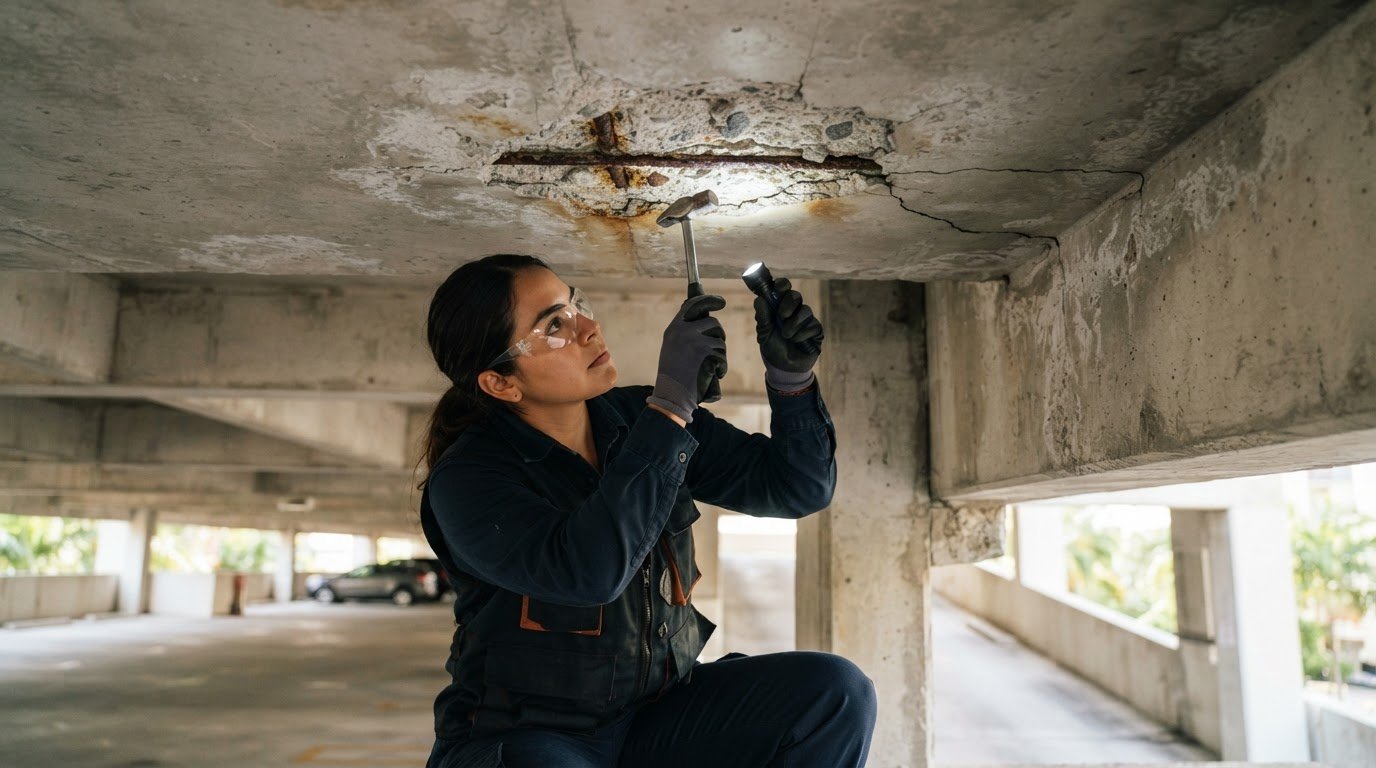
Once access is safe, have a qualified professional document wind and storm-surge effects. The assessment can map visible waterlines, debris patterns, openings, roof damage, and affected building materials. Recording each condition by location helps separate observed damage from assumed causes. Include exterior elevations and interior rooms in the property record.
Ask the assessment to note possible saltwater exposure on metal components, including fasteners, electrical equipment, and mechanical systems. Saltwater contact can be relevant to corrosion review even when surface damage appears limited. Record where exposure is observed, and distinguish visible conditions from components that could not be evaluated during the inspection.
Review applicable insurance policy provisions on access and inspection before arranging entry with an adjuster or contractor. Record the date of official clearance and any access restrictions. If emergency conditions prevent a complete inspection, document which areas were inaccessible and why. This creates a clear record of the inspection’s limits for later recovery reviews.
Creating a written inventory of damaged property
A written inventory links each damaged belonging to its location, condition, and supporting evidence. Organize entries by room so an adjuster can review them clearly. Documenting property damage after a hurricane also means distinguishing observed damage from assumptions about cause or coverage.
Start with one room and list each affected item separately. Record its description, identifying details, location, purchase date, original value, and estimated value. For example, list a damaged living-room television separately from other electronics rather than grouping everything as “contents.” Use available records or photographs to note the item’s pre-storm condition.
Assign each entry a reference label, such as “Kitchen 01,” and use that label in related photographs and receipts. This connects the written record to the item shown. Include windows, flooring, furniture, and appliances when damage affects them, but distinguish building components from personal belongings.
Record the available evidence for each item. Attach purchase receipts, invoices, warranties, or older photographs when they help establish ownership, age, or condition. Include available proof of purchase and both original and estimated values. If a receipt is unavailable, describe other supporting records rather than making up a purchase date.
Separate observed damage from assumptions about coverage. Describe conditions precisely, such as “water staining on lower cabinet doors,” rather than declaring an item covered. The insurance policy determines applicable coverage; the inventory records the property and its condition. For property damage after a hurricane, clear descriptions can prevent confusion caused by vague or duplicate entries.
Keep a dated copy of the inventory and update it when an inspection identifies additional damaged contents. Preserve original records alongside revisions, so changes remain traceable. If an item must be removed for safety or recovery work, document its condition and location first when safe. Request a forensic damage assessment to help document property conditions for review.
General Forensic Engineers: Pre & Post-Commercial Property Hurricane Assessments
General Forensic Engineers, LLC provides Pre & Post-Commercial Property Hurricane Assessments to document building conditions before and after a storm. Comparing these records can help commercial property owners identify changed conditions and clarify the observed damage. Its Expert Forensic Damage Assessment and Residential & Commercial Property Inspections also support owners, stakeholders, and attorneys evaluating damage or disputed findings.
Consider an assessment when the cause, extent, or timing of damage calls for an independent technical evaluation. Findings document observed conditions and may support a clearer discussion of the property, without presuming what an insurance policy covers or who is responsible. The assessment follows the evidence, including when findings do not support an expected conclusion.
Plaintiff’s attorneys: contact General Forensic Engineers, LLC or the property owners you represent to discuss an assessment.
Use the Record to Guide Your Next Decision
Once recovery work begins, a documented property record can help address unresolved questions about cause, scope, and building condition. This distinction matters when owners, commercial stakeholders, or attorneys need an independent technical perspective rather than an assumed outcome.
Documenting property damage after a hurricane is not just about preserving evidence. It also helps define the questions an assessment should address. A professional can examine available records and observed conditions, then report findings impartially, including findings that may not support an anticipated position.
General Forensic Engineers provides Expert Forensic Damage Assessment, Pre & Post-Commercial Property Hurricane Assessments, and Residential & Commercial Property Inspections. These services help owners and attorneys understand which technical issues warrant attention.
Plaintiff’s attorneys: To discuss an assessment for a property you represent, contact General Forensic Engineers or contact the property owner. An independent evaluation can give your next decisions a clearer factual foundation.
Frequently Asked Questions
What types of hurricane damage can a professional assessment document for an insurance claim?
A professional assessment can document wind damage, water intrusion, structural concerns, and damage to building components or contents. It can also describe how conditions vary across the property, such as damage limited to one elevation or impacts in multiple rooms. For a Miami property, the report should distinguish observed conditions from conclusions about their cause, giving reviewers a clear technical basis for evaluating the claim.
How can a professional document hurricane damage safely in photographs and video?
A professional can document storm damage from safe vantage points without entering restricted or visibly unstable areas. Include a location in each file description, such as “north elevation” or “second-floor hallway,” and capture a sequence that shows how affected components relate to surrounding areas. Preserve original files and organize copies by location so reviewers can place each image within the property.
What information should be included in a hurricane damage inventory?
Along with each damaged item’s identifying details, include its pre-storm condition when that information is available. Separate visibly damaged items from nearby items that appear unaffected, and do not combine distinct belongings in one broad entry. For example, list a damaged dining table separately from its chairs. This structure helps reviewers trace individual items and connect reported losses with specific evidence.
What steps should property owners take to prevent further damage after a hurricane?
Prioritize life safety and follow local re-entry instructions before authorizing access or recovery work. Once access is permitted, arrange appropriate emergency mitigation to limit ongoing exposure, while recording stabilization separately from permanent repairs. For example, note whether work addresses an immediate opening or restores a building component. This distinction helps later reviewers understand the work’s sequence and purpose.
What can a professional assessment provide if an insurer disputes the cause or value of hurricane damage?
A professional assessment can provide a technical report documenting observed conditions, a supported cause analysis, and an itemized loss estimate for comparison with disputed items. Inspection documentation may assist claim evaluation, but does not establish coverage or guarantee claim approval or payment. Coverage decisions depend on policy terms and applicable facts. The assessment gives owners, attorneys, and other stakeholders an independent technical record to consider.
Comments