
Mold Testing and Analysis: When to Hire a Professional
A home test can detect mold without establishing whether a property has an indoor mold problem. Professional mold testing and analysis may be useful when growth is hidden or recurring, or when musty odors persist. Testing can also document property conditions or help assess cleanup. Results are most informative when considered alongside visible conditions and the property’s moisture history, rather than treated as a stand-alone verdict.
It’s reasonable to expect a test result to give a clear answer, but a sample reflects only the location and conditions at the time it was collected. This article explains when a professional assessment can add useful evidence, what air and surface samples can and cannot show, and how to interpret findings without relying on a single number or mold name. It also covers how moisture sources shape remediation planning, why home test kits have limitations, and how an assessment can help establish property conditions objectively.
Table of Contents
Need to Schedule Professional Mold Testing in Miami?
Professional sampling can investigate musty odors, visible growth, recurring concerns, or indoor air quality questions. In Miami, a useful assessment relates sample results to observed property conditions and moisture evidence, rather than treating one result as a complete diagnosis.
Professional Sampling and Laboratory Analysis
Professional mold testing and analysis uses selected sampling methods, laboratory analysis, and interpretation to evaluate property conditions. This matters because each sample represents a particular location and collection time, not every room or a person’s total exposure.
Laboratory findings can identify mold types and quantify spores in air or material samples. A useful report identifies each sample’s location and method, then relates the findings to inspection observations. For example, an air sample from a living area cannot establish conditions inside a separate, unsampled wall cavity.
Sampling Methods and Locations
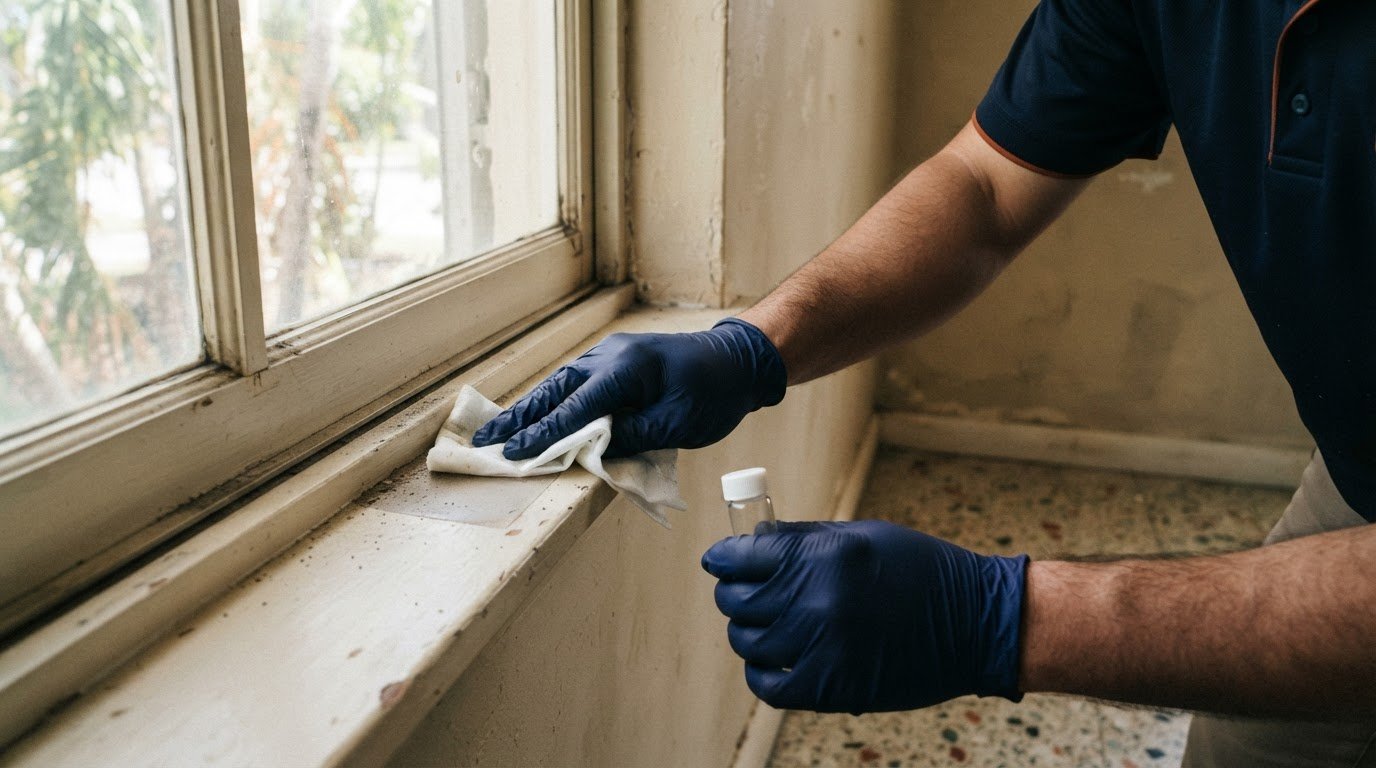
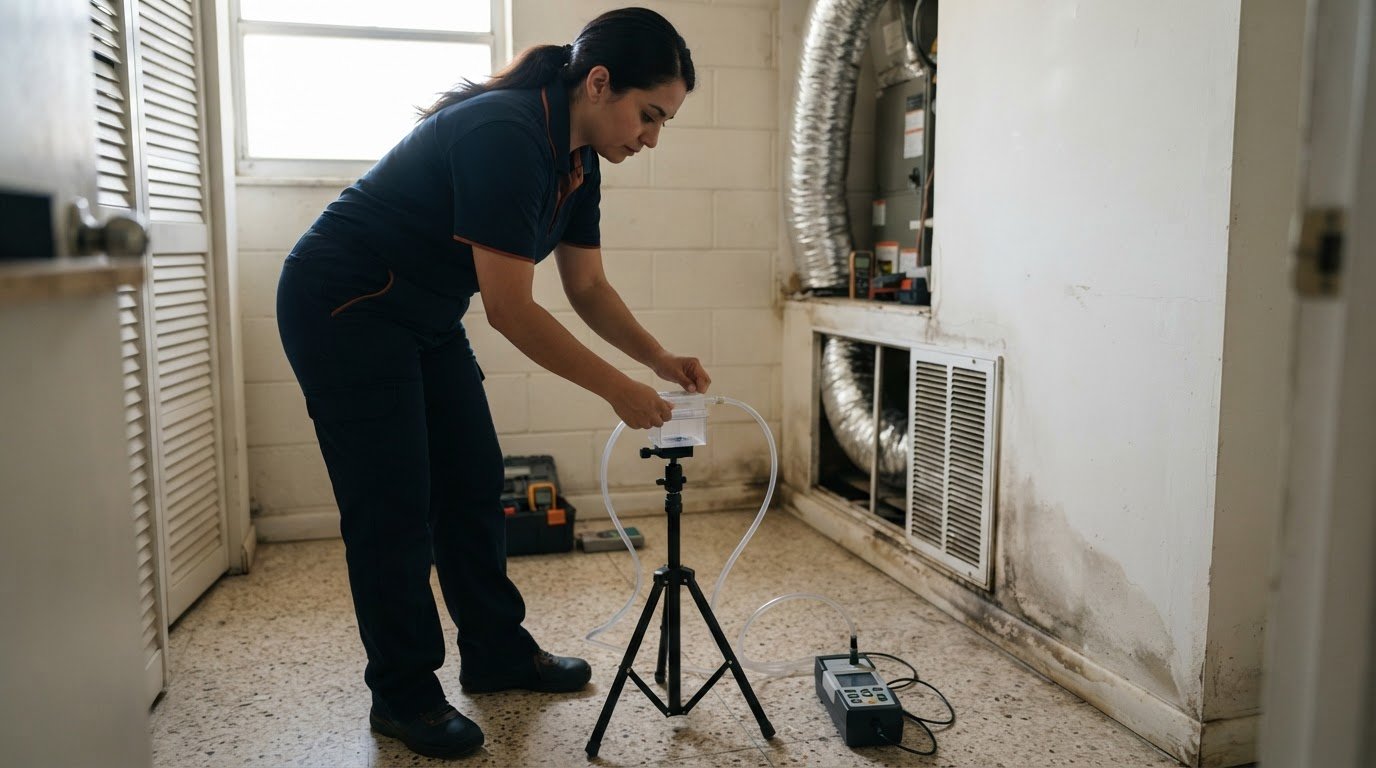
Air sampling measures airborne spore concentration; surface sampling collects material from a particular surface. Bulk sampling collects a piece of suspected material for analysis, while cavity sampling targets less accessible spaces, such as wall interiors or ductwork.
Sample locations help assess whether findings correspond to suspected sources. A sample near water-damaged material, considered alongside one from an unaffected area, can help evaluate whether results are localized. A surface sample may identify mold on that material, but it cannot establish the extent of airborne contamination elsewhere in the property.
Airborne Sampling and Indoor-Outdoor Comparisons
Spore-trap air collection typically runs for 5-15 minutes, so each sample represents a limited place and moment. Air movement, open windows, recent cleaning, and room activity can influence the spores captured.
Indoor samples are interpreted against outdoor samples, which provide a reference for surrounding conditions. When there is no indoor mold growth, indoor spore concentrations are expected to be lower than, but similar in distribution to, outdoor concentrations. One reading cannot describe every room or establish exposure over time; sample locations and inspection observations put results in context.
Testing Needs, Costs, and Health Risks
Testing may help investigate hidden, significant, or recurring concerns, document property conditions, or evaluate cleanup. An independent inspector is appropriate when odors persist without visible growth, water damage may extend into concealed areas, or findings may inform a property dispute. Relevant qualifications include documented training in inspection, sampling, and interpretation; no specific certification should be assumed without evidence.
Professional testing costs depend on the property conditions, sampling methods, and assessment scope; the price is provided after a quote request. Mold can produce allergens and mycotoxins that may pose health risks, particularly for people with allergies, respiratory issues, or compromised immune systems. Test results alone cannot determine whether mold caused an individual’s symptoms.
Interpreting test reports and remediation recommendations
Read a report as a set of findings, not a stand-alone verdict. The sample method and location, together with visual evidence, determine what the results can support.
Reading Laboratory Results
Laboratory results describe the mold spores or material collected from specific samples. They can help assess indoor conditions when the report clearly identifies sample locations, methods, and findings. Air-sample concentrations are usually reported as spores per cubic meter, while surface results may identify types of mold without measuring airborne concentration.
Indoor findings should be considered alongside outdoor samples and visual inspection. Indoor concentrations below 500 spores per cubic meter are described as generally normal, while readings above 500 are described as high. These figures are not universal safety thresholds: there are no federal or state standards for acceptable mold levels in homes.
Species identification also has limits. Culturing may identify a genus or species, but some fungal colonies cannot be identified to species level, even by experienced analysts.
Understanding Test Limitations
A mold test captures only the sampled material and conditions at collection. Direct microscopy results alone should not be used to assess an indoor environment, and a low air reading cannot rule out concealed growth in an unsampled wall cavity. Visible mold may not require testing unless species identification or airborne spread needs assessment.
Recommendations should connect laboratory findings with visual observations and moisture conditions. For example, visible growth on damp material may support removal and moisture correction even if the test does not identify a toxigenic species. Visible indoor growth should be removed regardless of species identification.
Testing can help confirm growth or document whether cleanup met expectations, according to the Minnesota Department of Health. Post-remediation verification may therefore help assess completed work. A professional mold assessment can relate reported results to property conditions and the scope of remediation.
Moisture sources and remediation planning
After testing identifies mold or elevated moisture, a professional should investigate the water source, assess affected materials, and define remediation needs. Removing visible growth without correcting the source can allow the problem to recur.
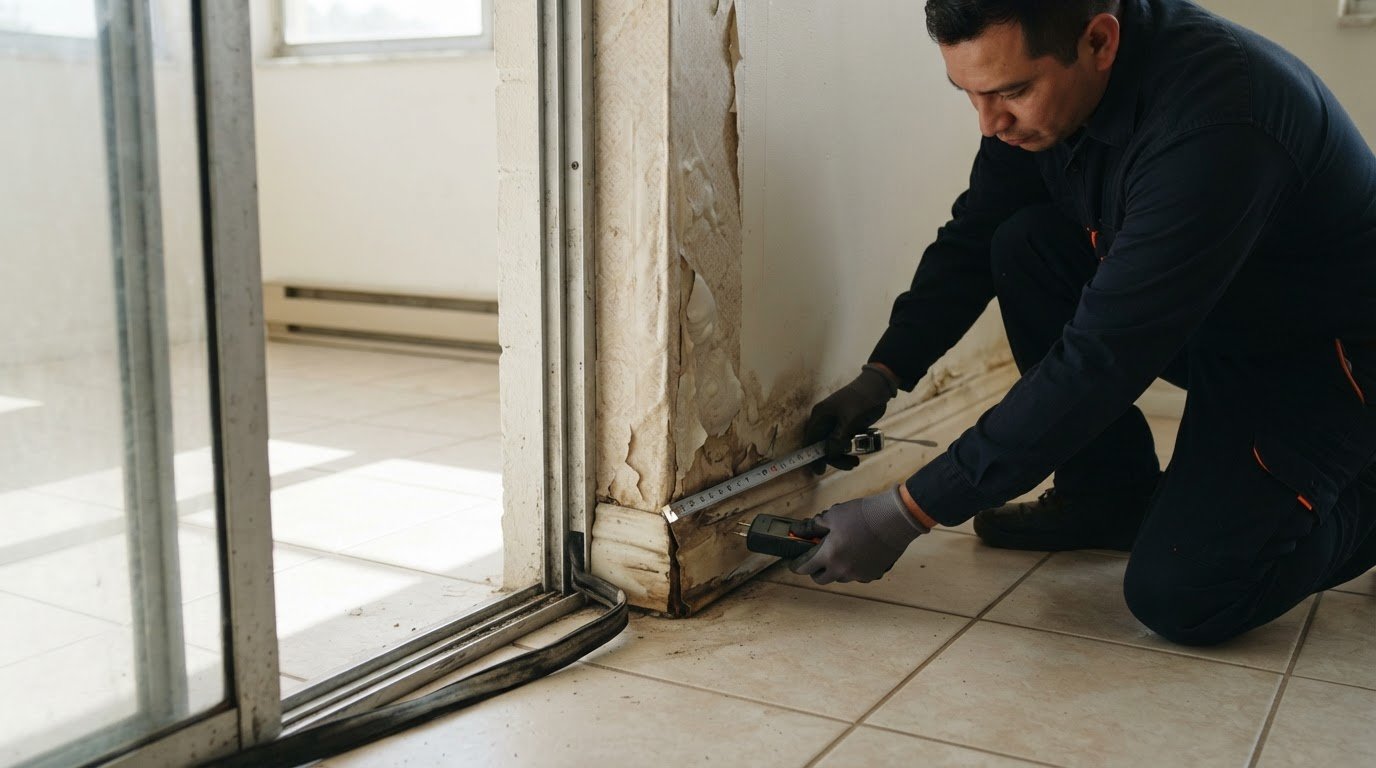
A moisture investigation combines visual observations, moisture measurements, and the location of suspected growth. A ceiling stain below plumbing, for example, may point to a leak that needs correction before damaged materials are addressed. An investigation targets both mold growth and its moisture source, so a sample result alone cannot complete the assessment.
Water intrusion can dampen drywall, flooring, insulation, or other materials. Wet materials should be dried completely within 24 to 48 hours after water intrusion. If they remain damp, the conditions can support further growth. Moisture may also come from ongoing leaks, condensation, or poor ventilation, so remediation planning must consider how water reached the affected area and whether the condition continues.
Indoor humidity above 60% is identified as a common potential cause of mold. This reading is a clue, not proof of a specific source; localized wet materials can remain a concern even when room humidity differs. A professional assessment should relate moisture readings to visible damage, odors, and building conditions before defining the work.
Remediation addresses affected materials and the conditions sustaining growth. A plan may include correcting leaks, removing mold-affected materials, and improving ventilation. Physical removal and thorough cleaning address existing contamination, while moisture correction helps reduce recurrence. If indoor air concerns remain, the assessment can determine whether further evaluation is appropriate.
For property owners, commercial interests, and attorneys, a documented sequence connects observed damage with the moisture condition and proposed remediation. This record clarifies what was found, what source was identified, and whether cleanup results meet stated expectations. Testing informs that process, but it does not repair water damage or control moisture.
Professional assessment of the accuracy and limitations of home mold tests
Home mold kits can detect spores without establishing whether a property has a mold problem. Mold spores are naturally present in nearly every indoor and outdoor environment, so a positive result alone does not show whether growth is extensive, hidden, or linked to a moisture source. A petri dish or surface swab provides limited evidence from its collection location.
Interpretation depends on what the kit collected and how its result was evaluated. A surface sample may identify mold on that surface, but it cannot establish the extent of airborne contamination elsewhere. Testing also cannot replace a visual inspection. A kit may not reveal damp material behind a wall or explain a musty odor in another room.
Some home tests analyze settled dust rather than air collected at one moment. ERMI testing examines selected 36 mold species, and dust can provide a historical snapshot of mold in a home. That history does not, by itself, identify an active moisture source or show current conditions in every room. The method and sampling locations shape what the laboratory result can support.
A professional assessment connects laboratory findings with inspection observations and environmental conditions. This distinction matters when visible growth, water damage, or recurring odors require a clear account of the property. The assessment can identify where results apply, what they cannot establish, and whether further investigation is warranted. A mold test alone cannot determine whether a specific condition caused a person’s health complaints.
The Minnesota Department of Health cautions that testing may be expensive and waste money when unnecessary or poorly performed. Start by defining the question the test must answer, such as documenting cleanup or investigating suspected hidden growth. Interpret results within that scope, rather than treating them as a complete diagnosis.
For property-specific findings beyond a home kit’s limits, request an objective property assessment to connect test evidence with observed conditions.
General Forensic Engineers: Mold Testing & Analysis
General Forensic Engineers provides Mold Testing & Analysis for property owners, residential and commercial interests, and attorneys assessing suspected mold after water intrusion. Findings can help distinguish observed conditions from assumptions and clarify what the evidence supports.
When mold concerns coincide with building damage, an Expert Forensic Damage Assessment or Residential & Commercial Property Inspection can add property context to the evaluation. This is especially relevant when moisture patterns, visible growth, and laboratory findings need to be considered together. The assessment remains impartial, whether its conclusions support a suspected cause or point elsewhere.
For commercial properties affected by a hurricane, Pre & Post-Commercial Property Hurricane Assessments can help document conditions around the event. Contact General Forensic Engineers to discuss an assessment of your property.
Establish a Clear Path for the Property
After water intrusion, the next step is to move from observations to an evidence-based property assessment. Professional mold testing and analysis can contribute to that record, but its value depends on the question being examined and how the findings relate to the property. An impartial evaluation follows the evidence, whether it supports an initial explanation or points to another cause. This gives property owners, commercial interests, and attorneys a sounder basis for deciding what to do next.
General Forensic Engineers, LLC offers Expert Forensic Damage Assessment, Residential & Commercial Property Inspections, and Pre & Post-Commercial Property Hurricane Assessments. These services can address mold concerns within a broader assessment of property damage or event-related conditions, without assuming in advance what the evidence will show.
When an independent property assessment would help clarify the next step, start a conversation with General Forensic Engineers, LLC. A focused evaluation can help bring the relevant property conditions into clearer view.
Frequently Asked Questions
When Should You Test Your House for Mold?
Consider testing when a water event is followed by persistent odors, recurring dampness, or concerns about growth that cannot be readily located. In a Miami home, a concealed plumbing leak behind a cabinet may warrant investigation even without visible staining. Testing can also help document conditions before repairs or evaluate completed remediation. Define the purpose first: identify suspected growth, assess airborne conditions, or record property findings.
What is Mold Inspection?
A mold inspection assesses signs of mold and conditions that may support it. The professional evaluates accessible surfaces, odors, water damage, and moisture patterns, then determines whether sampling would answer a defined question. For example, a bathroom inspection may examine staining around a ceiling vent and nearby materials. Inspection findings provide building context that laboratory data alone cannot supply.
How does a professional choose the best sampling method to detect mold?
A professional selects a method based on the suspected location and the evidence needed. If airborne conditions are the concern, air samples may be appropriate; suspected growth on a specific material may call for surface or bulk sampling. For a concealed source, cavity sampling may be considered. The professional also weighs access, visible conditions, moisture evidence, and whether results need to document remediation or property condition.
What types of mold tests are used for homes, such as air, surface, and bulk sampling?
Home assessments may use air, surface, bulk, or cavity sampling. Air sampling collects airborne spores; surface sampling gathers material from a particular surface; bulk sampling submits a piece of suspected material for laboratory analysis. Cavity sampling targets enclosed areas, such as wall spaces. These methods answer different questions, so a surface result does not substitute for an air sample when airborne conditions are being assessed.
How is mold testing performed, and what are the steps before and after sampling?
A professional first reviews the reported concern and examines relevant property conditions, then selects sample locations and methods. Useful context before sampling includes the history of water intrusion, repairs, and rooms with persistent odors. After collection, samples are analyzed and results interpreted alongside inspection observations. Findings can inform further investigation or remediation planning; they do not remove growth or correct a leak.
How do home mold test kits compare with professional mold inspections in accuracy and reliability?
Home kits can collect material from a surface or indoor air, but a result may show only that spores were present in that sample. It does not establish the source, extent, or significance of growth across a home. A professional inspection connects selected samples with building conditions and the question under review. For a property dispute, that documented context is more useful than an isolated kit result.
Comments