
How to Meet New Rules for Commercial Building Recertification
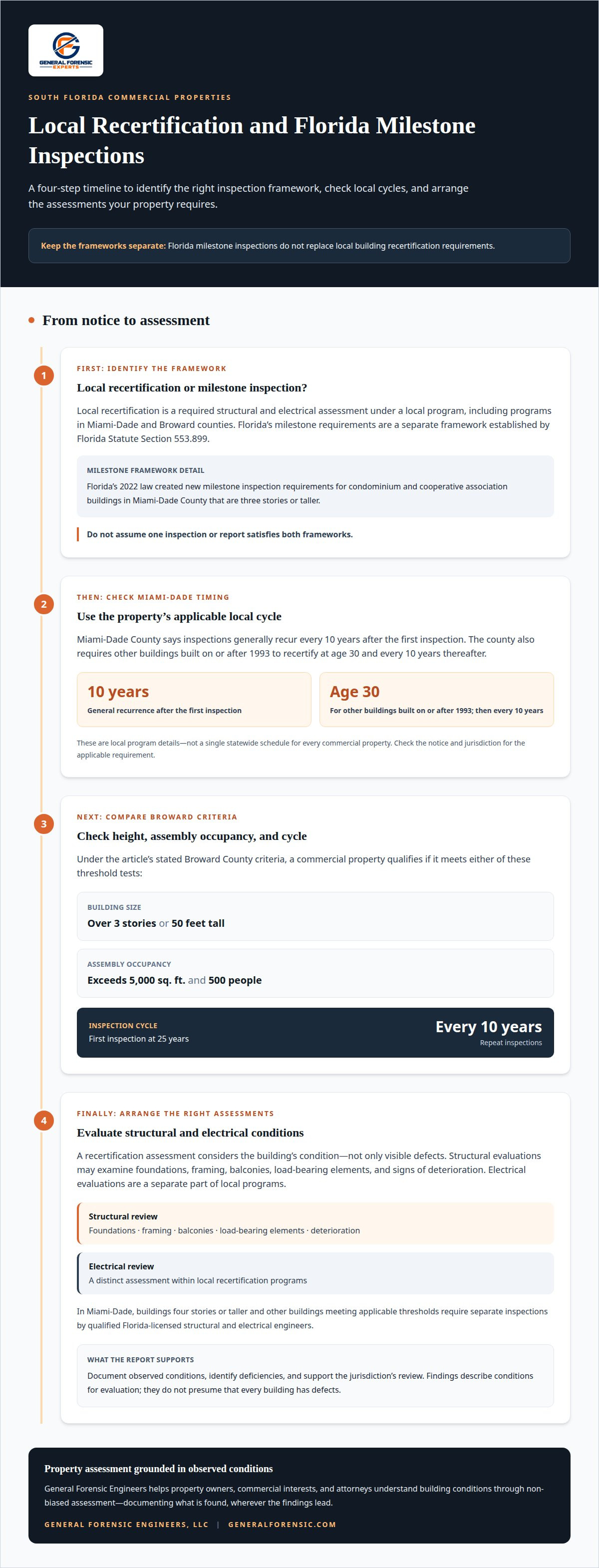
A new state inspection requirement does not replace every local recertification rule. Commercial building recertification in South Florida follows jurisdiction-specific schedules, while Florida’s milestone-inspection requirements operate separately from local programs. Miami-Dade County says inspections generally recur every 10 years after the first inspection.
Property owners searching for commercial building recertification need to know which notice and deadline apply. The process depends on the building and its location. This guide explains local recertification, possible exemptions, and how to arrange an assessment in South Florida.
It also distinguishes milestone inspections from local recertification, explains the role of the report, and outlines practical steps for responding to a notice and addressing documented conditions. Because there is no single statewide schedule for every commercial property, owners should plan around the requirements of the relevant local program.
Table of Contents
How are building recertifications affected by the new law?
Unlike a routine property inspection, recertification is a required structural and electrical assessment under a local program. Florida local programs include those in Miami-Dade and Broward counties. Milestone inspection requirements are separate.
Identify the Applicable Recertification ProgramDetermine whether the property falls under a local recertification program or Florida’s separate milestone framework. Miami-Dade County says inspections generally recur every 10 years after the first inspection. Miami-Dade County also requires other buildings built on or after 1993 to recertify at age 30 and every 10 years thereafter. Do not treat a milestone inspection as a replacement for local recertification.
Check Building Qualification Criteria and Inspection CyclesApply Broward County’s criteria to determine whether a commercial property qualifies: it must be over three stories or 50 feet tall, or have assembly occupancy exceeding 5,000 square feet and 500 people. The first inspection occurs at 25 years, with repeat inspections every 10 years. Compare the property’s height and occupancy with the applicable local notice and cycle.
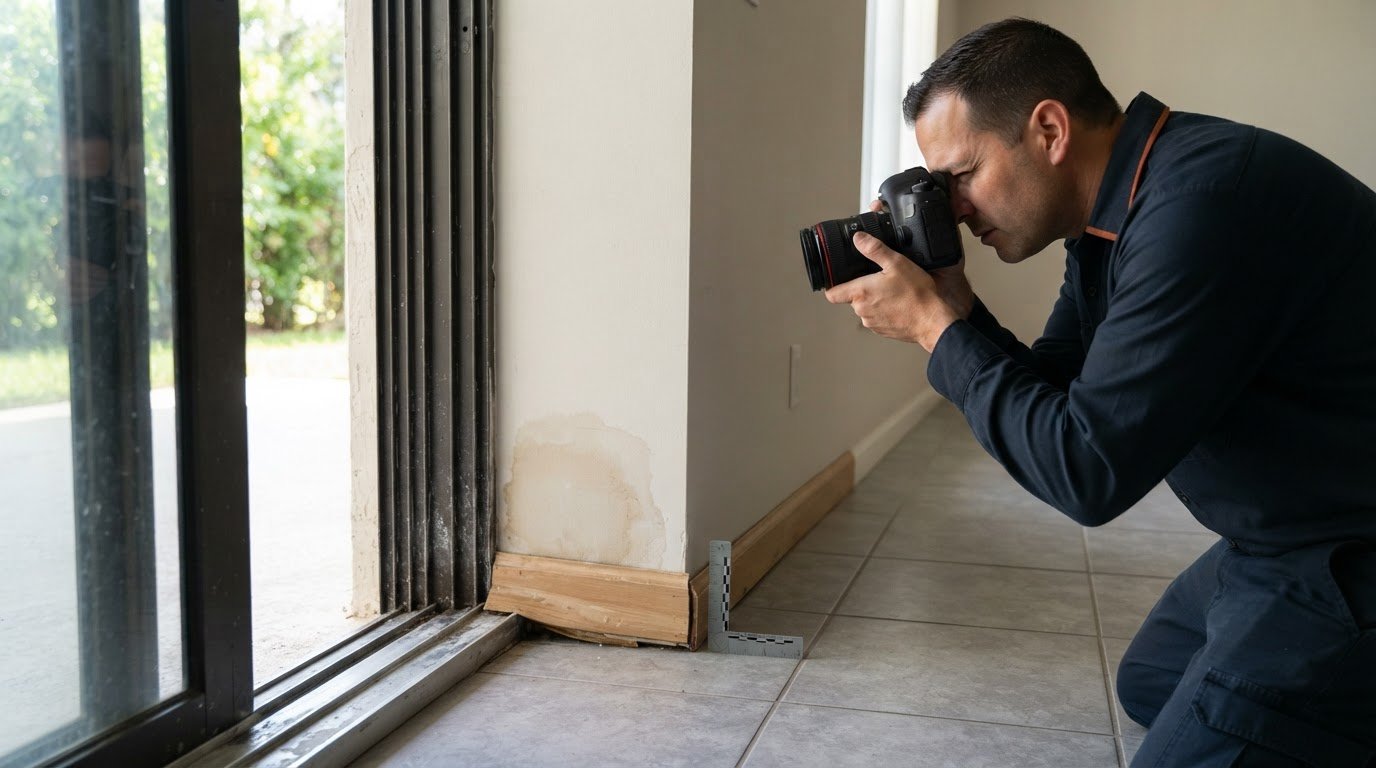
Arrange structural and electrical inspections that assess the building’s condition, not only visible defects. Structural evaluations may examine foundations, framing, balconies, load-bearing elements, and signs of deterioration. Electrical evaluations are a separate part of local programs. In Miami-Dade, buildings four stories or taller and other buildings that meet the applicable thresholds require separate inspections by qualified Florida-licensed structural and electrical engineers.
Keep milestone inspections distinct from local recertification. Florida Statute Section 553.899 establishes a statewide milestone framework separate from local programs. Florida’s 2022 law created new milestone inspection requirements for condominium and cooperative association buildings in Miami-Dade County that are three stories or taller. Identify which framework applies before arranging inspections or treating one report as satisfying both.
Recertification reports by engineers or architects
A useful report documents observed conditions, identifies deficiencies, and supports the jurisdiction’s review. Organize relevant records, arrange a qualified assessment, and track the report submission and any repairs.
Gather Recertification Documents and PermitsGather original construction plans, previous inspection reports, maintenance logs, repair reports, and applicable permits. These records help the engineer or architect compare current conditions with documented construction and repairs. Include permits for completed work so the assessment can distinguish documented corrections from unresolved conditions. Required records and permits depend on the building and the jurisdiction’s recertification requirements.
Prepare the Engineering ReportArrange a formal assessment by a licensed Florida engineer or architect. The report should identify the property, describe observed structural or electrical conditions, and state whether deficiencies require correction. Miami-Dade County’s new report templates apply to recertifications due in the 2025 cycle and thereafter. Use the template applicable to the property’s jurisdiction and cycle, rather than relying on an outdated form.
Submit the Report to the JurisdictionSubmit the completed report to the responsible jurisdiction or building department through its designated process. Retain the signed report and submission confirmation, then monitor the department’s review status and respond to requests for additional material. Miami-Dade County may grant an extension of up to 60 days when an engineer or architect makes a written request with a signed and sealed statement that the building may remain occupied during recertification.
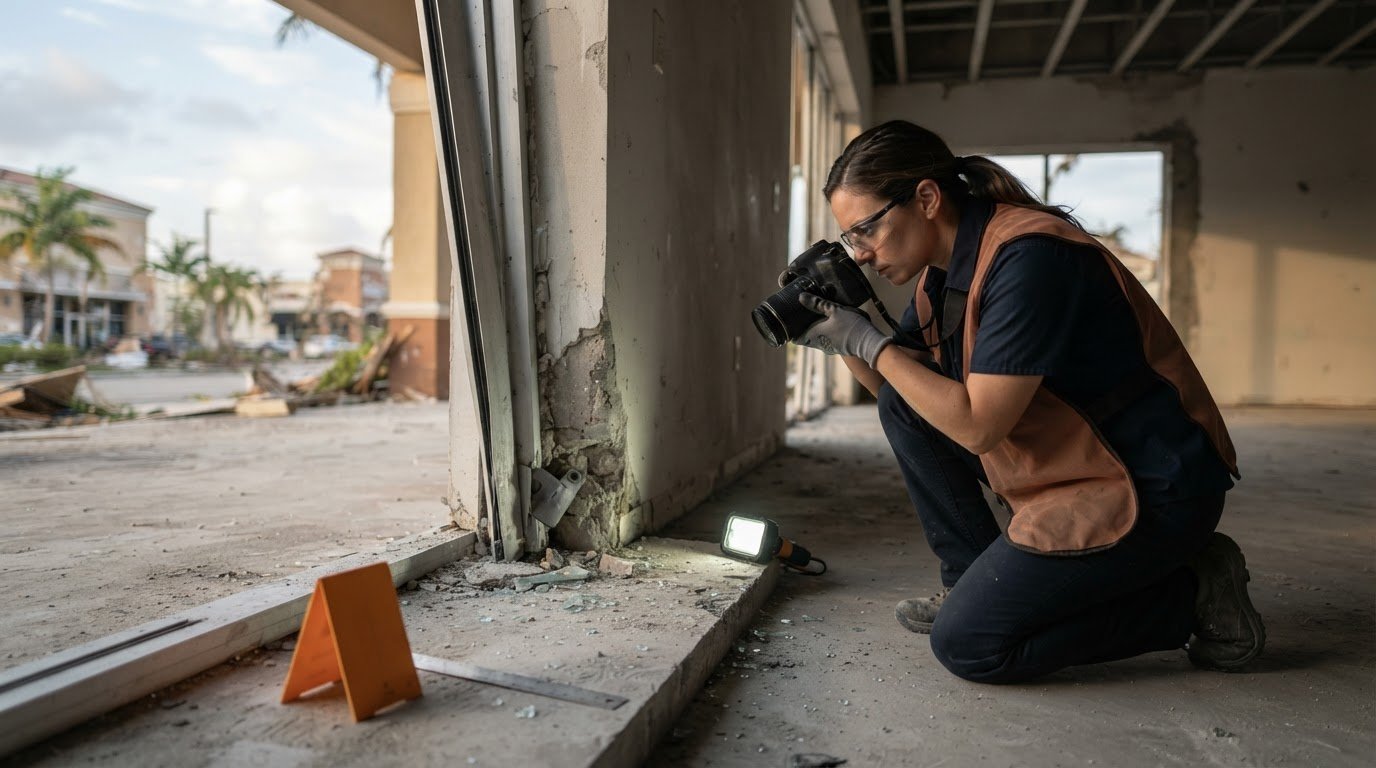
Address Repairs and Safety RisksUse the report’s findings to prioritize corrective work under qualified engineering guidance. Commonly documented concerns include deterioration in foundations, framing, balconies, and other load-bearing elements. These findings describe conditions for evaluation, not a presumption that every building has defects. Complete repairs and retain relevant permits and repair records for the jurisdiction’s review. A focused recertification inspection can document conditions and support the report process.
Building recertification eligibility and exemptions
Eligibility depends on factors such as the property’s use, dimensions, occupancy, location, and construction age. Review the local program’s criteria before treating a building as exempt.
Determine Whether a Building Is Subject to RecertificationIdentify the property’s jurisdiction, occupancy, construction age, and building type. In Miami-Dade coastal areas, some buildings are subject to recertification 25 years after construction; many inland buildings are subject at 30 years. Coastal condominium and cooperative buildings may follow distinct criteria. Use the applicable local program rather than assuming one age threshold governs every property.
Check Threshold Definitions and ExemptionsCompare the building with Florida’s threshold-building definition: greater than three stories or 50 feet tall, or assembly occupancy exceeding 5,000 square feet and 500 people. These criteria identify threshold buildings; they do not, by themselves, establish every local recertification exemption. Review the local process separately and avoid treating structural integrity or electrical condition as proof of exemption.
Assess residential exclusions separately from commercial eligibility. Miami-Dade County’s recertification process excludes single-family homes and duplexes. It also excludes a building with an occupant load of 10 or less and an area of 2,000 square feet or less. Both occupancy and area matter for that exclusion, so a small building with higher occupancy does not meet the stated criteria.
Apply the local rule to the property’s classification before scheduling structural and electrical evaluations. An exemption under Miami-Dade’s process should not be assumed to apply in Broward County or another jurisdiction. Boca Raton, for example, requires threshold buildings, including commercial buildings, to recertify at 30 years and every 10 years thereafter. Local program criteria control the recertification process.
Record the facts relevant to eligibility, including occupancy, use, height, area, and construction age. A licensed professional can assess building condition, but the jurisdiction determines whether its program covers the property. Keep structural and electrical inspection requirements separate from exemption criteria, and do not assume that an exclusion for residential properties applies to a commercial building.
South Florida commercial building recertification
In South Florida, deadlines and inspection scopes depend on the local program. Track the notice, required assessments, and report status as separate compliance tasks.
Start with the written notice and identify the county or city responsible for the property. Miami-Dade County property owners must submit building recertification reports within 90 days of the notice of required recertification. Record the notice date, required disciplines, and any submission instructions together, so the inspection and report schedule address the actual local requirements.
Plan the evaluation around the systems named by the jurisdiction. Structural review examines integrity and documented conditions; electrical review is a separate component of local programs. In Miami-Dade County, electrical systems operating at 400 amperes or greater require infrared thermography inspections. Confirm that the qualified professionals and report documentation cover the applicable disciplines, rather than treating a milestone inspection as a substitute for local recertification.
Use Broward County’s timelines as a distinct example, not a South Florida-wide rule. The county requires a recertification report within 180 days of notice, with repairs due within 180 days after the report is filed. Coordinate the assessment and corrective work against those separate deadlines. A report that identifies deficiencies does not itself complete required repairs or close the jurisdiction’s review.
Inspection fees depend on the property and assessment scope, including the required disciplines and observed building conditions. Request a quote for the service fee. County review fees are separate from professional assessment charges, so account for these as distinct costs when planning compliance.
Keep the recertification inspection record, report, submission confirmation, and repair documentation together. This creates a clear record of the property’s condition and actions taken for county review. For an assessment focused on structural and electrical requirements, request a recertification assessment to establish the inspection scope and document findings.
General Forensic Engineers: Recertification & Milestone Inspections
General Forensic Engineers provides Recertification & Milestone Inspections to assess building conditions and document findings. The assessment helps property owners understand observed structural or electrical concerns and the next steps indicated by the report. Findings are evidence-based, whether they confirm satisfactory conditions or identify issues that need further attention.
For attorneys evaluating property damage or building conditions, a documented assessment can clarify physical evidence without presuming what it shows. General Forensic Engineers also provides Expert Forensic Damage Assessment, Pre & Post-Commercial Property Hurricane Assessments, and Residential & Commercial Property Inspections. These services help property owners and legal stakeholders establish a clear technical record.
Contact General Forensic Engineers to discuss a recertification or milestone inspection for your property.
Make the Next Assessment Actionable
Keep the recertification record as a reference for future property decisions. Linking inspection findings with maintenance and repair records helps owners track changing conditions and gives attorneys a clearer factual basis for evaluating property issues. An impartial assessment documents observed conditions, even when the findings do not support an expected explanation.
General Forensic Engineers, LLC provides Expert Forensic Damage Assessment, Pre & Post-Commercial Property Hurricane Assessments, and Residential & Commercial Property Inspections. These services can help property owners and legal stakeholders obtain an objective assessment beyond the immediate recertification process. The appropriate scope depends on the property question being examined.
For a measured assessment of a property’s condition, contact General Forensic Engineers, LLC. A clear technical record is a practical next step toward informed decisions.
Frequently Asked Questions
Can delaying inspections increase repair costs?
Yes. Delays can allow an existing defect to progress and involve more areas or systems in repairs. For example, unresolved water intrusion can affect adjacent building materials. Early identification gives owners a clearer basis for planning repairs and tracking conditions. An inspection does not prevent damage, but it can document observed conditions before further deterioration complicates the repair scope.
How have the approved guidelines and report templates changed?
Miami-Dade County’s new report templates are required for recertifications due in the 2025 cycle and thereafter. Owners should use the template applicable to the property’s jurisdiction and recertification cycle, rather than reusing an older form. The report still needs to reflect the actual inspection findings. A current template does not make Miami-Dade and Broward requirements interchangeable.
Should buyers request recertification records?
Yes. Buyers can request previous reports, notices, repair documentation, permits, and submission records as part of due diligence. Compare report findings with records of completed work, and note recommendations that remain unresolved. A repair invoice, for example, may not show whether the related permit was closed or whether a later assessment documented the condition after repairs.
What Does the Recertification Process Look Like?
The process starts by identifying the applicable local program, then arranging the required assessment, preparing its report, and responding to findings. Keep the notice, inspection records, correspondence, and submitted documents together in a property file. This makes completed items and required follow-up easier to track. Local requirements determine both the assessment scope and the jurisdiction’s submission process.
What Happens If Repairs Are Needed?
Address documented safety concerns promptly under qualified engineering guidance. Report findings help define the affected building components and inform the repair scope. Keep repair records, permits, and supporting documents with the inspection file. If an assessment identifies deterioration in a load-bearing element, for example, the repair response should address that specific finding, not rely on unrelated maintenance records.
What Happens If You Miss the Deadline?
Missing a local deadline may lead to fines, insurance challenges, occupancy restrictions, or enforcement action. The consequences depend on the jurisdiction and circumstances. Respond promptly to the notice, organize required reports and submission records, and follow the responsible local process to address outstanding requirements. Missing a deadline does not remove the need to document the building’s condition or complete required follow-up.

Comments