
How to Become an Eligible FHA 203k Consultant
Eligibility as an FHA 203k consultant depends on documented professional qualifications. Applicants need at least three years of experience as a remodeling contractor, general contractor, or home inspector, or may submit a current state license as an architect or engineer instead. HUD approval is required for placement on the FHA 203(k) Consultant Roster.
For prospective FHA 203k consultants, meeting the experience requirement is only one part of understanding eligibility. This article explains the approval process and identification numbers, what to consider when selecting a professional, and how a consultant assesses a property’s condition and repair needs. It also clarifies how an FHA 203k consultant’s evaluation contributes to a documented renovation scope.
Table of Contents
Experience and education to look for in an FHA 203(k) consultant
The repair scope determines which loan type may fit.
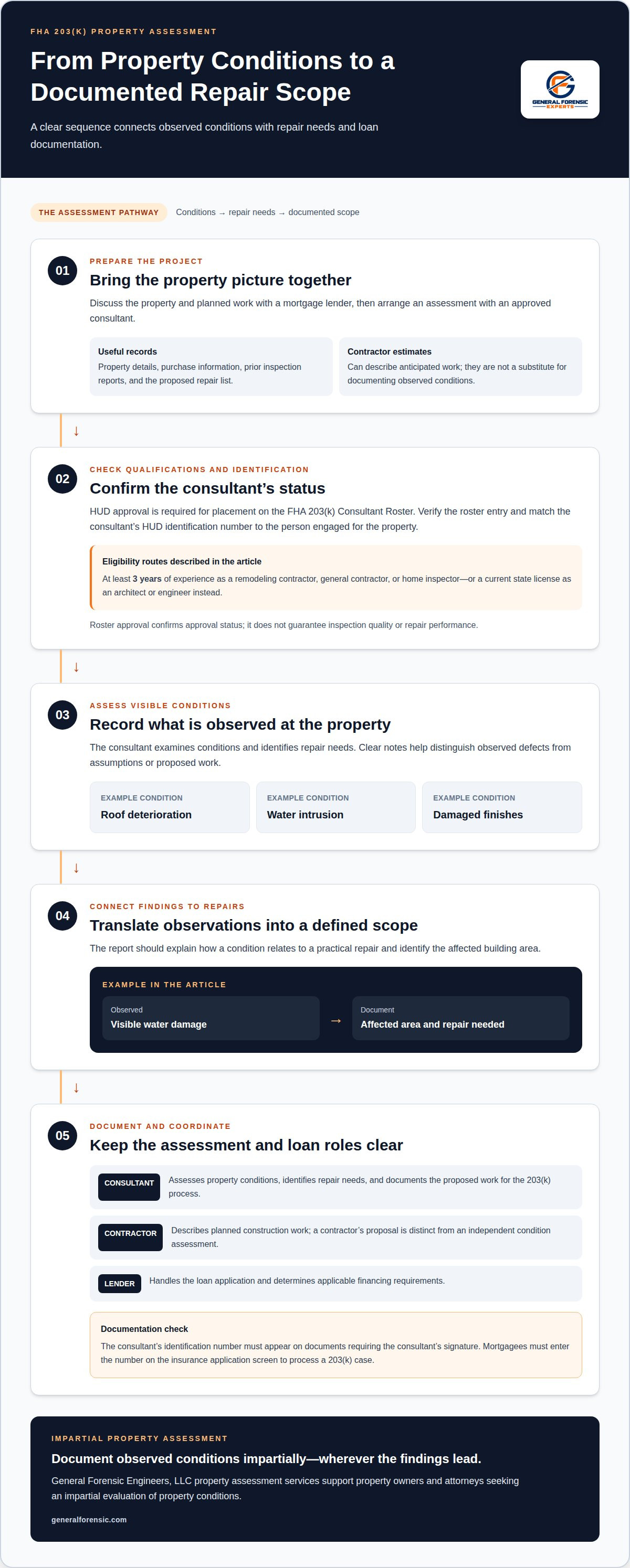
To apply, first discuss the property and planned work with a mortgage lender, then arrange an assessment with an approved consultant. The consultant evaluates conditions and repair needs; the lender handles the loan application and determines the applicable financing requirements.
Review the consultant’s relevant experience. HUD requires applicants to document at least three years of experience as a remodeling contractor, general contractor, or home inspector. A state-certified engineer or architect license may be submitted instead of that experience documentation.
Assess education and technical understanding. Applicants must certify that they have read and understand HUD Handbook 4240.4, REV 2, and related materials listed in Mortgagee Letter 2000-25. Look for the ability to explain how observed conditions connect to practical repairs and a defined scope.
Verify applicable licensing. A state-licensed architect or engineer may qualify for the consultant roster by providing proof of a current license. For a property in Miami, consider whether the professional’s credentials and experience are relevant to work in Florida.
Prepare property and project records. Share available property details, purchase information, prior inspection reports, and the proposed repair list. Contractor estimates can help describe anticipated work, while the consultant’s assessment should document observed conditions rather than simply repeat proposed repairs.
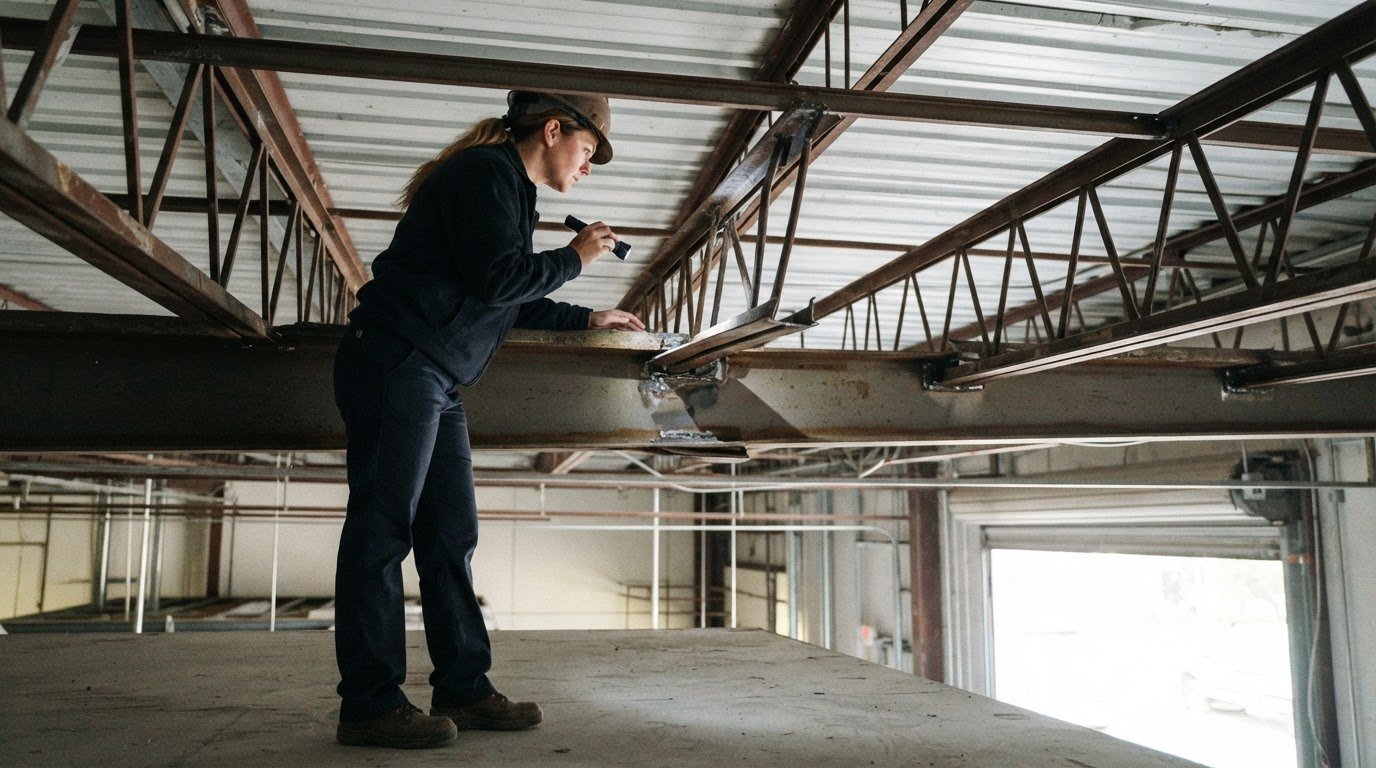
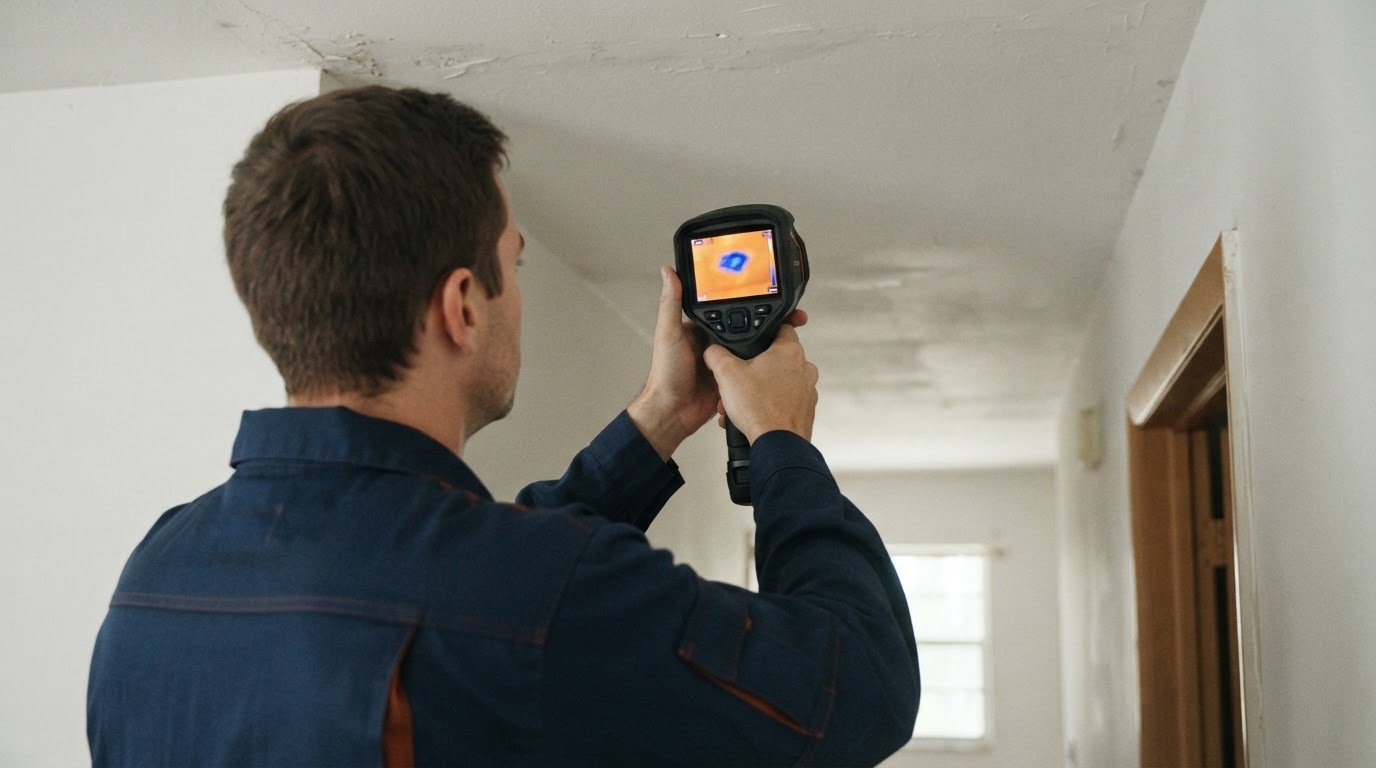
Evaluate the assessment method. Ask how the consultant examines visible conditions, such as roof deterioration, water intrusion, or damaged finishes, and translates findings into repair needs. Clear documentation, construction knowledge, and precise communication help distinguish observed defects from assumptions.
How to verify an FHA 203(k) consultant's approval and identification number
Working with someone who lacks HUD approval or providing incorrect identification details can complicate loan processing. HUD approval does not guarantee or endorse the quality of a consultant’s work, so roster status and technical findings serve different purposes.
Confirm roster placement. HUD approval is required to become an approved 203(k) consultant, and approved consultants are placed on the FHA 203(k) Consultant Roster. Locate the consultant’s entry and confirm that the name corresponds to the person engaged for the property. Roster placement establishes approval status, not a warranty of inspection quality or repair performance.
Obtain the correct identification number. Ask for the consultant’s HUD identification number and match it against the roster entry. An incorrect or mismatched number can create a documentation problem because mortgagees must enter the consultant’s identification number on the insurance application screen to process a 203(k) case.
Check signed documents. Review the consultant’s reports and other documents requiring their signature for the identification number. The number must appear in every document requiring the consultant’s signature. Missing or inconsistent details can make records harder to reconcile during loan processing, particularly when the property report and loan file use different identifiers.
Distinguish approval from a performance guarantee. HUD approval confirms roster status; it does not create, endorse, or imply an FHA warranty of work performed. Evaluate the consultant’s property findings separately, including whether observations, repair descriptions, and supporting documentation are clear and internally consistent.
Account for continued eligibility. Consultants must recertify every two years from the date of placement on the roster to retain that placement. They must also recertify continued compliance with applicable laws, regulations, licensing, certification, registration, and other approval requirements in the states where they do business. For a Miami property, Florida credentials and relevant scope documentation provide useful context.
For an independent view of property conditions, an impartial property assessment can help document observed issues without treating HUD roster status as proof of physical condition.
203(K) consultant role
A consultant connects observed property conditions with a documented repair scope. In a 203(k) case, the assessment helps distinguish physical needs, proposed work, and supporting observations.
Understand the Consultant RoleUse the consultant’s report to understand how property observations inform the renovation plan. The consultant assesses conditions, identifies repair needs, and documents the proposed work for the 203(k) process. For example, a report can connect visible water damage with the affected building area and describe the repair needed. Review whether findings are specific and supported by observations, rather than accepting a broad estimate that does not explain the condition.A consultant’s assessment is not the same as a contractor’s proposal. A contractor describes planned construction work, while the consultant documents property conditions and develops a scope based on those findings. Keep these roles distinct when comparing proposed repairs with the consultant’s report. This helps the lender evaluate the renovation documents without treating a contractor’s estimate as an independent condition assessment.
Determine When a Consultant Is RequiredFor a 203(k) case, the mortgagee must enter the consultant’s identification number on the insurance application screen to process the case. The consultant’s number must also appear on every document requiring the consultant’s signature. These requirements make accurate consultant identification part of the case documentation.Clarify the professional’s role early in the loan process, then ensure the report and signed records identify the same consultant. Roster placement is not a guarantee of workmanship: HUD approval does not create or imply an FHA warranty for work performed. Approval status and the quality of a specific property assessment are separate considerations, so evaluate the findings and documentation on their own merits.
Define the Repair ScopeUse the consultant’s documented observations to define repairs that address identified property conditions. A scope may describe work related to a leak, damaged building materials, or a system that does not function as intended. The report should connect each proposed repair to an observed condition rather than combine unrelated improvements without explanation.Compare the scope with the property findings and contractor proposal. If a report identifies water damage but the proposed work addresses only surface finishes, the documents should explain how the underlying condition will be resolved. The consultant documents needs and describes the work clearly, but does not guarantee repair quality or decide whether a lender will approve every proposed item.
How an FHA 203(k) consultant assesses property and borrower eligibility
A property assessment addresses physical conditions and renovation needs. Borrower qualification is a separate lending decision, so distinguish the consultant’s findings from the lender’s review.
Define the property and transaction. Provide the consultant with the property address, available purchase information, and the planned renovation goals. An FHA 203(k) loan combines purchase and renovation financing into one mortgage. The consultant’s evaluation focuses on the building and proposed work, not the borrower’s credit or income qualifications.
Document observable conditions. The consultant examines the property and records conditions relevant to the proposed improvements. For example, visible moisture staining may warrant documenting its location and affected materials, rather than assuming the stain identifies the source. Clear observations help separate evidence from assumptions and connect repair recommendations to specific parts of the building.
Relate repairs to property needs. Review how the proposed scope addresses documented conditions. A renovation list might include repair of damaged finishes, while the property assessment identifies whether underlying materials also show damage. The consultant’s findings provide a basis for understanding the work required; they should not be treated as a guarantee of contractor performance.
Keep lender and consultant decisions distinct. The consultant evaluates the physical property and repair scope. The lender evaluates the borrower’s loan application and determines whether the financing requirements are met. A favorable property assessment does not itself establish borrower qualification, and borrower approval does not substitute for documented property findings.
Use the report to resolve gaps. Compare each recommended repair with the condition it addresses and the supporting observations. If a report describes damage without identifying its location or repair rationale, request clarification through the loan process. In Miami, a well-organized record can help property owners, lenders, and attorneys understand the distinction between observed damage and proposed renovation work.
For an independent review of residential or commercial property conditions, request a property inspection to document findings objectively.
General Forensic Engineers
General Forensic Engineers, LLC helps property owners, commercial stakeholders, and attorneys assess building conditions through objective, evidence-based evaluations. When an FHA 203(k) renovation plan raises questions about existing damage or repair needs, its residential and commercial property inspections can document observed conditions. Expert Forensic Damage Assessment can help examine the nature and cause of property damage, while pre- and post-commercial property hurricane assessments address building conditions before or after a storm.
The findings may clarify whether reported conditions align with visible evidence, regardless of where that evidence leads. This independent assessment can support informed decisions by owners and provide attorneys with a factual basis for evaluating property concerns. Plaintiff’s attorneys, contact General Forensic Engineers, LLC or property owners to discuss an impartial property assessment.
Move forward with an objective property record
The next step is to ensure property decisions rest on documented conditions, not assumptions. The work of an FHA 203k consultant informs a renovation plan, while an independent assessment can help clarify questions about existing damage or the condition of a building. This distinction matters to property owners and attorneys evaluating what the available evidence supports.
General Forensic Engineers provides Expert Forensic Damage Assessment, Residential & Commercial Property Inspections, and Pre & Post-Commercial Property Hurricane Assessments. These services help stakeholders examine property conditions and establish a factual basis for the decisions that follow. Findings remain useful whether they confirm an initial understanding or point to another explanation.
Plaintiff’s attorneys, property owners, or their representatives can contact General Forensic Engineers for an objective assessment of a property concern. A clear record can support the next informed decision.
Frequently Asked Questions
What does an FHA 203(k) consultant do?
An FHA 203k consultant assesses a property’s condition and documents renovation needs for a 203(k) project. The report can help connect an observed issue, such as damaged flooring, to proposed repair work. The consultant evaluates the building and scope, while the lender separately reviews the borrower’s financial eligibility and loan application. A consultant’s findings do not guarantee loan approval or contractor performance.
How do I find an FHA 203(k) consultant approved by HUD?
Use the FHA 203(k) Consultant Roster to identify consultants with HUD approval. Match the roster entry to the professional’s name and identification number before relying on their reports in a loan file. For a Miami property, confirm that the consultant works in Florida and that the professional’s experience relates to the property and planned renovation. Roster status establishes approval, not a guarantee of work quality.
How do I verify a consultant's HUD approval and credentials in my area?
Confirm HUD roster placement, then compare the listed name and identification number with the consultant’s signed documents. For a Florida project, also verify relevant state credentials if the professional relies on an architect or engineer license. HUD approval and state licensure are distinct: a roster entry does not replace a required professional license, and a license alone does not establish HUD approval.

Comments